
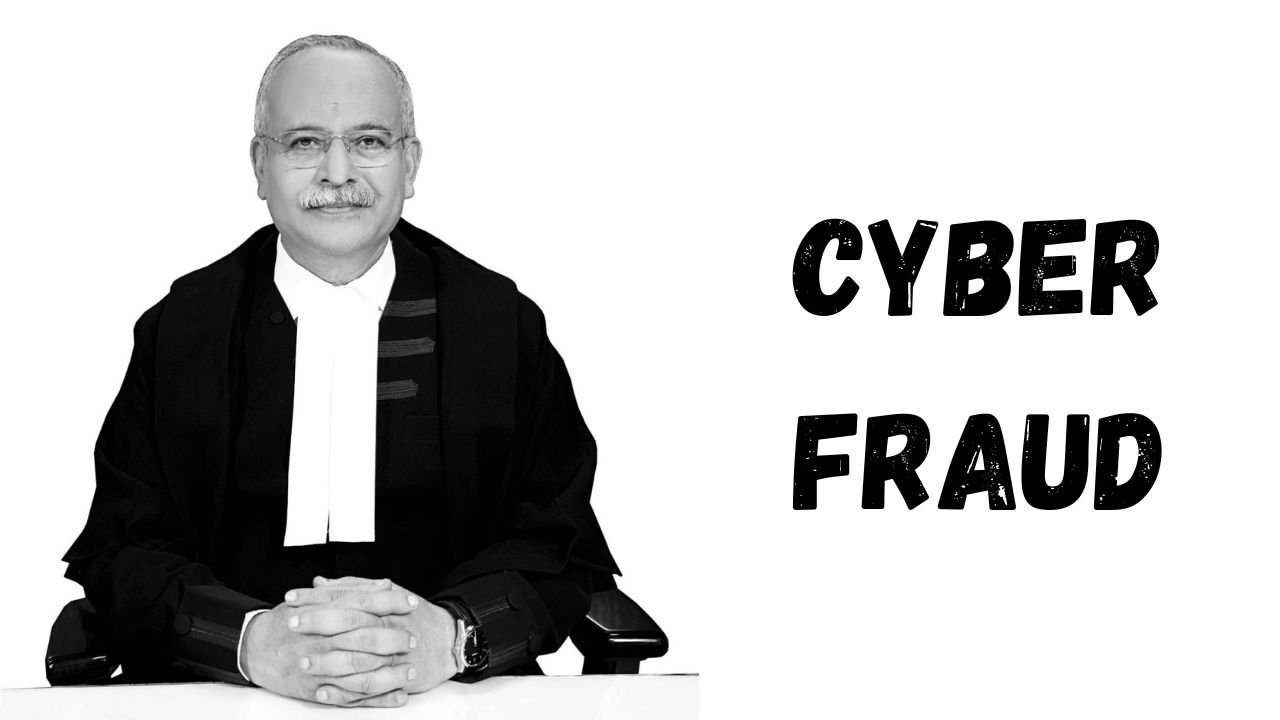

New Delhi | Supreme Court judge Justice Satish Chandra Sharma has disclosed that he was recently targeted in an attempted cyber fraud involving a fake traffic challan sent through an SMS, underlining the growing sophistication of digital scams and the expanding reach of cybercrime across the country.
Speaking during court proceedings, Justice Sharma said he received a text message claiming that a traffic violation had been recorded against his vehicle. The message contained a web link which, when opened, redirected him to a website that appeared to closely resemble an official government traffic enforcement portal.
Certified Cyber Crime Investigator Course Launched by Centre for Police Technology
According to the judge, the website’s design, layout, colour scheme and language were convincingly similar to those used on legitimate government platforms, making it difficult at first glance to identify it as fraudulent. However, a closer examination revealed certain technical and procedural inconsistencies, prompting him to treat the message with caution. He refrained from making any payment or sharing personal or financial information.
Justice Sharma noted that his familiarity with official processes and his attention to detail helped him detect the fraud attempt in time. At the same time, he observed that the incident illustrates how cybercriminals have become adept at replicating official digital infrastructure, increasing the risk for unsuspecting citizens.
Highlighting the broader implications, the judge remarked that if individuals occupying constitutional positions can be targeted by such scams, the vulnerability of ordinary citizens is significantly higher. He pointed out that cybercriminals are increasingly misusing the identity of government agencies and law enforcement bodies to gain credibility and exploit public trust in digital systems.
Justice Sharma further observed that fake traffic challans, phishing messages and cloned government websites have emerged as common tools in the arsenal of cyber fraudsters. These scams often rely on creating a sense of urgency or fear, pushing recipients to act quickly without verifying the authenticity of the communication.
The judge’s remarks come at a time when cybercrime cases are steadily rising across India. Data from law enforcement agencies and cases before courts indicate a growing number of incidents involving fraudulent payment links, impersonation of official authorities and fake websites designed to look like government portals. Experts note that such frauds frequently target individuals who are unfamiliar with digital verification mechanisms or who panic upon receiving what appears to be a legal notice.
Justice Sharma also emphasised the need for stronger institutional preparedness to address cyber threats. While acknowledging that digital governance and online enforcement systems have enhanced efficiency and accessibility, he cautioned that these advancements have also introduced new vulnerabilities that organised cybercrime networks are actively exploiting.
He called for improved coordination among law enforcement agencies, regulatory bodies and technology service providers to ensure the swift identification and takedown of fraudulent websites and malicious links. The judge also stressed the importance of sustained public awareness campaigns to help citizens recognise warning signs such as suspicious URLs, unofficial payment gateways, formatting errors and unsolicited demands for sensitive information.
Legal experts say the incident underscores the non-discriminatory nature of cybercrime. Fraudsters, they point out, do not target victims based on status or profession, but instead rely on scale—sending out large volumes of messages in the hope that a small fraction of recipients will fall prey to the deception.
Members of the legal community have noted that courts have repeatedly flagged concerns over the rapid evolution of cybercrime, which often outpaces traditional investigative and enforcement mechanisms. In several judgments and observations, the judiciary has highlighted the need for updated legal frameworks, enhanced cyber forensic capabilities and specialised training for investigating agencies.
Cybersecurity specialists reiterate that personal vigilance remains the first and most effective line of defence against such frauds. Citizens are advised to verify traffic challans and penalties only through official government portals, avoid clicking on links received via unsolicited messages and promptly report suspected fraud attempts to designated cybercrime authorities.
Justice Satish Chandra Sharma’s experience serves as a stark reminder of how convincingly cybercriminals can mimic official digital platforms. His disclosure has once again brought cyber fraud into sharp focus, reinforcing the need for robust institutional safeguards and responsible digital behaviour.
As digital transactions, e-governance platforms and online enforcement systems continue to expand, the warning sounded by the Supreme Court judge highlights a critical reality: cybersecurity is no longer a niche concern but a central issue affecting governance, the justice system and everyday life.
About the author — Suvedita Nath is a science student with a growing interest in cybercrime and digital safety. She writes on online activity, cyber threats, and technology-driven risks. Her work focuses on clarity, accuracy, and public awareness.
