
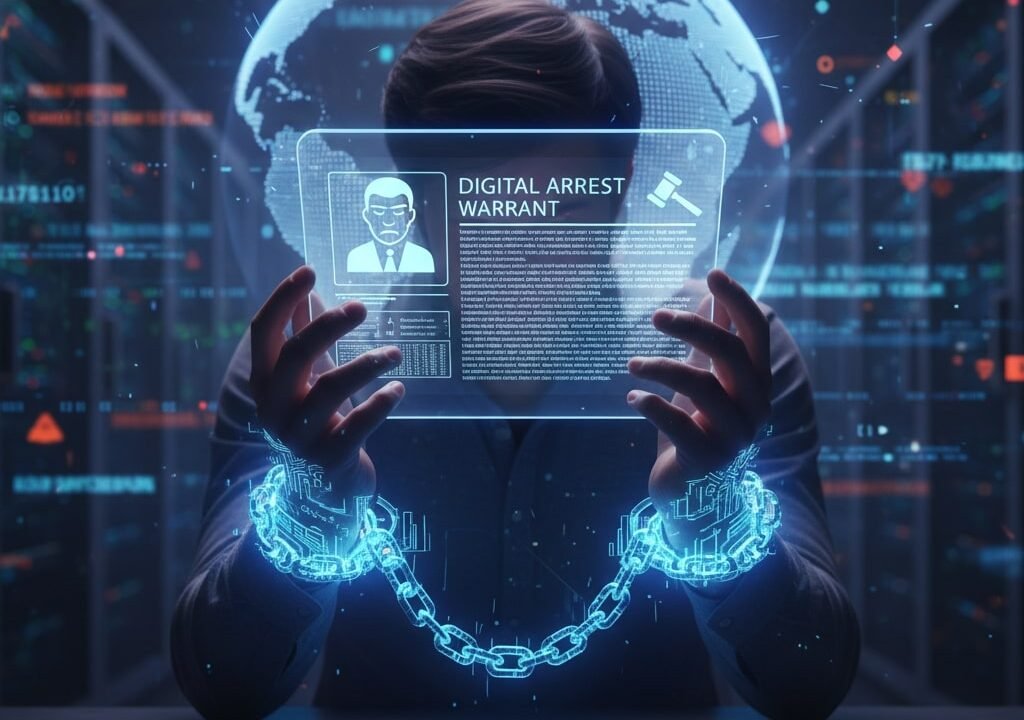
A shocking case of cybercrime has surfaced in the national capital, where fraudsters siphoned off ₹14.85 crore from an elderly NRI doctor couple after keeping them under so-called “digital arrest” for nearly two weeks. Using fake legal notices, arrest warrants, money laundering laws and threats to national security, the accused maintained round-the-clock surveillance of the victims through video calls and coerced them into transferring money to multiple bank accounts.
According to police, the victims — Dr Om Taneja and his wife Dr Indira Taneja, residents of Greater Kailash — were targeted between December 24 and January 10. The couple had spent nearly 48 years in the United States working with the United Nations and returned to India after retirement in 2015. Post-retirement, they were actively involved in social and charitable work. Despite being highly educated and aware, they fell prey to what investigators describe as a sophisticated psychological cyber trap.
Certified Cyber Crime Investigator Course Launched by Centre for Police Technology
Investigations revealed that the fraudsters posed alternately as law enforcement officials, bank representatives and officers from investigating agencies. The couple was told that multiple cases related to money laundering and serious financial crimes had been registered against them and that their arrest was imminent. Fake arrest warrants and forged legal documents were then shared, pushing the victims into a state of extreme fear and compliance.
Two Weeks of Video Call Coercion
Dr Indira Taneja told police that she was forced to remain on continuous video calls with the fraudsters. She was instructed not to step out of the house, not to contact relatives or friends, and not to disclose any details of the situation to anyone. Before every visit to the bank, the accused rehearsed a false “cover story” with her, instructing her on what to tell bank staff if questioned. Over this period, money was transferred in phases to eight different bank accounts — sometimes ₹2 crore, sometimes ₹2.10 crore at a time.
Police sources said the fraudsters repeatedly invoked intimidating terms such as PMLA, money laundering laws, CBI, ED and “national security” to ensure the victims remained silent and unquestioning. The repeated emphasis on the sensitivity of the case convinced the couple that speaking to anyone could worsen their legal trouble.
Future Crime Research Foundation Warning
Reacting to the case, Future Crime Research Foundation has issued a strong warning, calling “digital arrest” one of the most dangerous emerging forms of cybercrime in India. According to the foundation, such scams do not begin with direct monetary demands. Instead, victims are first isolated psychologically through fear, shame and the threat of legal action, eventually leading them to voluntarily follow every instruction issued by the fraudsters.
Cybercrime experts associated with the foundation said this scam is far more dangerous than traditional phone frauds because it combines technology with sustained psychological pressure. By creating the illusion of 24×7 surveillance through video calls, fraudsters make victims believe they are genuinely in the custody of an investigating agency, leaving little room for rational decision-making.
The fraud came to light on the morning of January 10, when the accused told Dr Indira Taneja that the entire amount would be refunded through the Reserve Bank of India and instructed her to visit the local police station. Even at the police station, the fraudsters remained connected via video call and spoke to police personnel. However, the interaction raised suspicion, prompting further questioning. Subsequent verification revealed that the couple had been defrauded of ₹14.85 crore.
Given the gravity of the case, the investigation has been handed over to the Special Cell’s cyber unit (IFSO) of Delhi Police. Investigators are now tracking bank accounts, call detail records and digital footprints to identify the inter-state and possible international network behind the fraud.
Both experts and police officials have termed the case a serious warning for the public. The Future Crime Research Foundation and Delhi Police have urged citizens to remain alert and remember that no government agency carries out arrests or investigations through phone or video calls. Any claim of “digital arrest” should immediately be treated as fraud.
Delhi Police officials said stricter action will be taken against such gangs in the coming days, with coordinated inter-state operations and public awareness campaigns planned to curb the rising menace of digital arrest scams.
About the author – Ayesha Aayat is a law student and contributor covering cybercrime, online frauds, and digital safety concerns. Her writing aims to raise awareness about evolving cyber threats and legal responses.
