

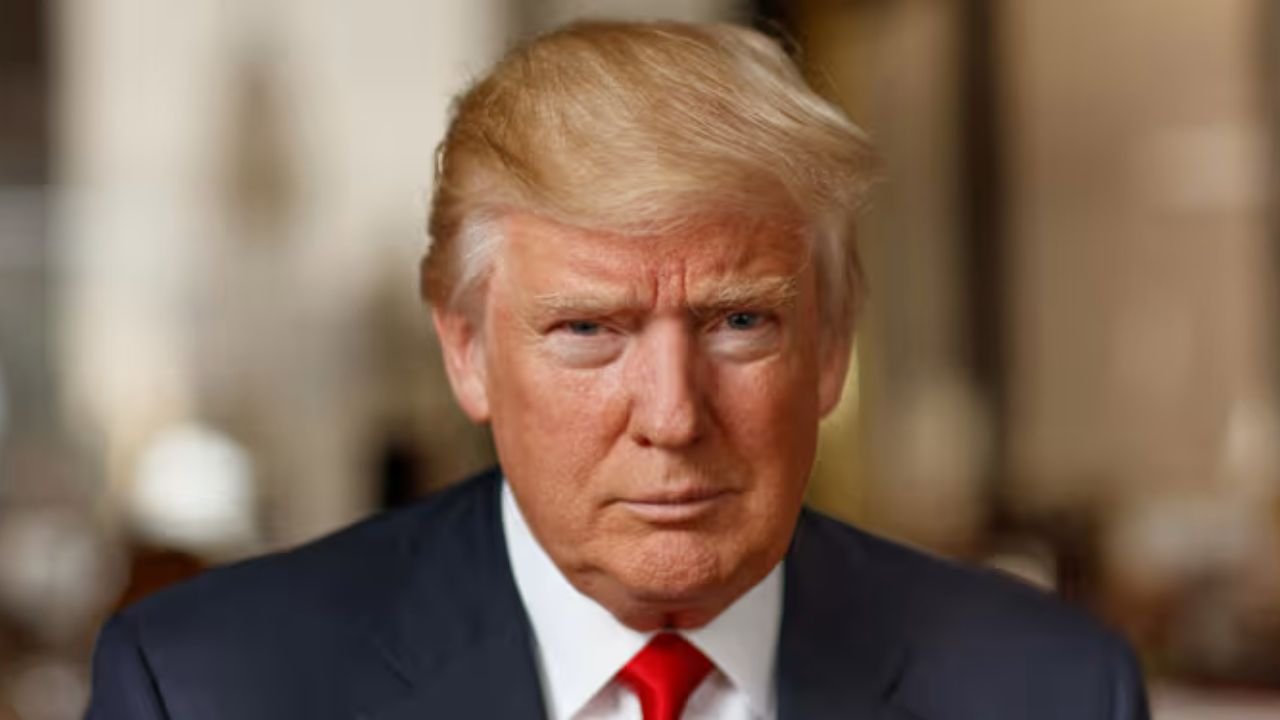

Washington | The United States is bracing for a potentially landmark day in trade policy, with the US Supreme Court expected to deliver a crucial ruling on the legality of sweeping tariffs imposed during the tenure of former President Donald Trump. At stake is an estimated $210 billion (around ₹17.55 lakh crore)—a sum with far-reaching implications for the US economy, global trade flows and financial markets worldwide.
The court had earlier described Friday as a possible “Decision Day.” While there is no certainty that the tariff case will be decided immediately, markets, policymakers and global investors remain sharply focused on the Supreme Court’s proceedings.
Final Call: FCRF Opens Last Registration Window for GRC and DPO Certifications
What is the case about?
At the heart of the dispute is whether the Trump administration lawfully used the International Emergency Economic Powers Act (IEEPA) to impose large-scale tariffs on imports, particularly from China and select other countries. The administration had argued that the tariffs were justified under emergency powers, citing national security and public health concerns.
The Supreme Court is now examining two core questions. First, does IEEPA grant the US President authority to impose such broad and punitive tariffs? Second, if the court rules that the tariffs were imposed unlawfully, will the federal government be required to refund the duties already collected from importers?
Not an ‘all-or-nothing’ ruling?
Legal experts tracking the case suggest that the verdict is unlikely to be a clean sweep in either direction. Instead, the court may opt for a middle path, allowing the government limited tariff-setting powers under IEEPA while placing constraints on how those powers can be exercised.
Such an outcome would mean that not all Trump-era tariffs are struck down, nor would the government necessarily be forced to return the entire amount collected. Instead, selective relief or conditional refunds could be ordered, depending on how the court frames its ruling.
White House strategy and concerns
US Treasury Secretary Scott Bessent has already indicated that the administration is preparing for a mixed verdict. He has downplayed fears of a complete shutdown of tariff collections, stating that revenue flows are unlikely to stop entirely.
According to senior officials, the bigger concern is that an adverse ruling could significantly curb presidential authority in areas related to national security and trade negotiations. The Trump administration had justified its reliance on IEEPA partly as a measure to curb imports of fentanyl-linked substances and to strengthen negotiating leverage in trade talks.
Officials have also pointed out that even if the court limits the use of IEEPA, the government retains alternative legal tools, including provisions under the Trade Act of 1962, which could allow many of the tariffs to remain in force through other mechanisms.
How much money is involved?
Government data shows the scale of revenue linked to the disputed tariffs:
- FY25: Approximately $195 billion collected through tariffs
- FY26 (so far): More than $62 billion already raised
Given the magnitude of these figures, the case is not merely a legal battle but a fiscal one. Any directive to issue refunds could place additional strain on efforts to rein in the US fiscal deficit.
What markets and economists say
Jose Torres, senior economist at Interactive Brokers, believes that even if the Supreme Court curtails the tariffs, the administration will move swiftly to find alternative routes to keep most of them intact. Prediction market Kalshi currently pegs the probability of a ruling fully favouring Trump-era policies at just 28%.
Interestingly, several anticipated economic side effects of the tariffs—such as a sharp spike in inflation or a widening trade deficit—have not materialised. Instead, the US trade deficit has fallen to its lowest level since 2009, defying earlier forecasts.
What could happen next?
Analysts broadly see three likely outcomes:
- Presidential authority to impose tariffs is upheld, but with tighter limits
- Partial refunds are ordered for select categories of importers
- The overall tariff framework is softened or recalibrated
Whatever the verdict, its impact will extend beyond the United States, influencing the dollar index, global interest rates, international trade dynamics and even Indian equity markets.
The ruling is widely viewed as the biggest test yet of Trump’s trade legacy—and Wall Street is watching the courtroom as closely as the trading floor.
About the author — Suvedita Nath is a science student with a growing interest in cybercrime and digital safety. She writes on online activity, cyber threats, and technology-driven risks. Her work focuses on clarity, accuracy, and public awareness.
