
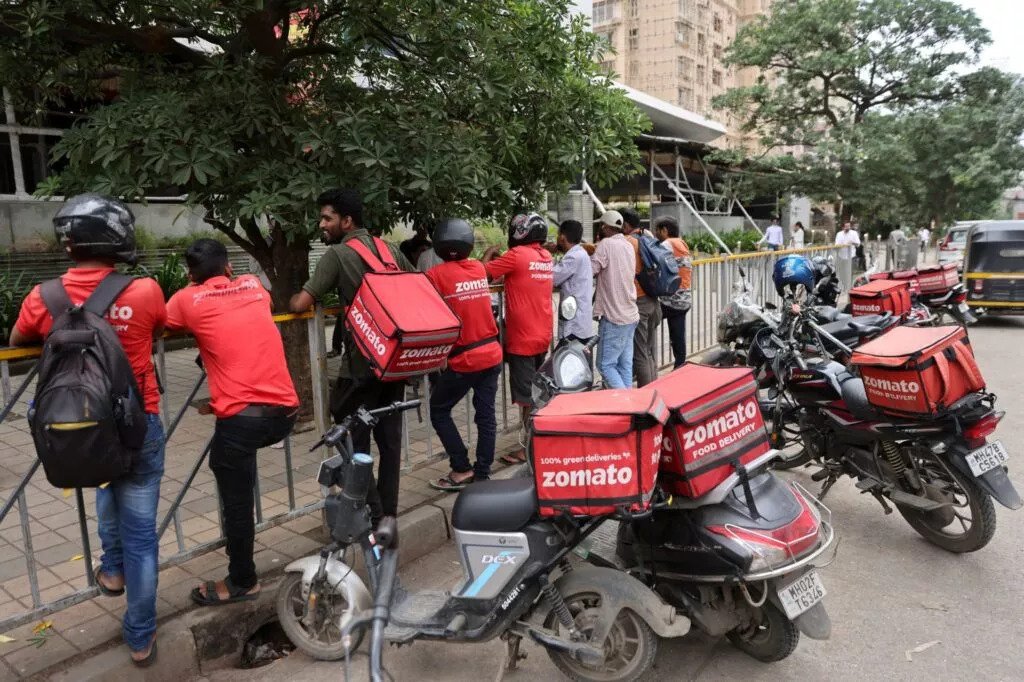
Online food delivery platform Zomato removes around 5,000 gig workers every month due to fraud-related issues, while nearly 1.5 to 2 lakh workers leave the platform voluntarily each month. The disclosure was made by Eternal founder and CEO Deepinder Goyal during a video podcast.
According to Goyal, a large section of workers who exit the platform view gig work as a temporary source of income and move on as soon as they find better opportunities. He noted that this transient nature is inherent to the gig economy, where long-term retention is often not a priority for workers.
Final Call: FCRF Opens Last Registration Window for GRC and DPO Certifications
Zero-tolerance policy on fraud
The Zomato CEO said the company follows a strict zero-tolerance policy against fraud. Action is taken in cases involving fake deliveries, incorrect location sharing, order manipulation and customer-related fraud. As a result, an average of 5,000 gig workers are removed from the platform every month.
The company maintains that such strict action is essential not only to protect consumer trust but also to safeguard the interests of honest delivery partners working on the platform.
Protests ahead of the New Year
It is noteworthy that on the eve of the New Year, gig workers associated with Zomato and other quick-commerce and food delivery platforms went on strike, demanding better pay, fixed working hours, insurance coverage and accident protection. Workers argued that amid rising inflation, current earnings are inadequate, while work pressure continues to increase.

Government’s move: protection for gig workers
Meanwhile, the Ministry of Labour and Employment has released draft rules under the four labour codes, explicitly including gig and platform workers. The proposed provisions aim to extend several benefits to gig workers, including:
- Minimum wages
- Health and accident insurance
- Occupational safety
- Social security coverage
The government has invited feedback from all stakeholders—companies, workers and unions—on the draft rules. As per the plan, all four labour codes are proposed to be implemented nationwide from April 1, 2026.
The dual reality of the gig economy
Experts believe that while platforms like Zomato provide quick employment opportunities to millions of young people, job insecurity remains a defining feature of the gig economy. The large number of workers leaving the platform every month indicates that gig work has yet to evolve into a sustainable long-term livelihood for most.
The road ahead
While Zomato and other platforms continue to tighten controls to curb fraud, the government’s new labour codes are being seen as a significant step toward providing gig workers with a legal safety net for the first time. The coming months will determine how far these reforms succeed in improving the working conditions and security of those employed in India’s rapidly expanding gig economy.
