
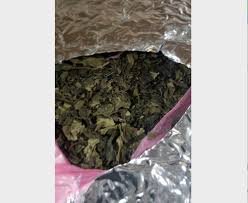
In a major crackdown on narcotics trafficking, the Narcotics Control Bureau (NCB) has seized nearly 160 kg of khat, an illicit stimulant, from Bengaluru, with the consignment valued at approximately ₹8 crore in the international market. Officials described it as Karnataka’s largest khat seizure since the substance was banned in India in 2018.
According to investigators, the seizure followed an intelligence-driven operation that exposed a highly organised transnational drug syndicate. Preliminary findings suggest the network was active across more than 20 countries, exploiting international courier and postal services to traffic khat into India and onward to other destinations.
Drugs Disguised as ‘Tea’, Students Used as Cover
NCB officials said the syndicate routinely misdeclared khat consignments as ‘tea’ and other routine commercial goods to evade customs and courier scrutiny. The investigation has also revealed that several foreign nationals linked to the network were residing in India on student or medical visas, using local facilitators to manage storage and distribution.
Authorities said storage and distribution points within Bengaluru were used to break bulk consignments into smaller packets before further circulation. This method, they noted, made tracking difficult while enabling swift local deliveries.
550 Parcels, 2,100 kg of Narcotics
Investigators have established that the syndicate had dispatched over 550 international parcels, with a combined weight of nearly 2,100 kg, to destinations across North America, Europe, the Gulf region and the Middle East.
NCB officials said the source of the khat was traced to Ethiopia and Kenya, from where consignments were routed through international courier networks into India and other countries.
Information related to in-transit shipments linked to India has been shared with enforcement agencies in the respective countries to facilitate coordinated action.
What Is Khat and Why Is It Banned?
Khat (Catha edulis) is an evergreen shrub native to the Horn of Africa and the Arabian Peninsula. Its leaves contain the psychoactive compounds cathinone and cathine, which produce amphetamine-like stimulant effects when consumed.
In India, these substances are classified as controlled psychotropic compounds under the Narcotic Drugs and Psychotropic Substances (NDPS) Act, leading to a nationwide ban on khat in 2018.
Medical experts warn that khat consumption can cause psychological stimulation, insomnia, increased heart rate, and, with prolonged use, serious mental and physical health complications.
Shifting Patterns in Global Drug Trafficking
Investigators said the case highlights a shift in international drug trafficking patterns, with syndicates increasingly avoiding traditional smuggling routes and instead abusing postal, courier and logistics networks.
Major cities like Bengaluru, officials said, are being exploited as logistics hubs, where bulk narcotics are repackaged and redistributed in smaller quantities, complicating enforcement and detection.
Probe Continues, More Revelations Expected
The NCB has indicated that the seizure may represent only one segment of a much larger network. Investigations are being expanded to map domestic and overseas linkages, and officials have not ruled out further arrests and additional recoveries in the coming days.
Authorities said the operation underscores a growing concern: India is increasingly being used not just as a consumer market, but also as a transit and distribution point for global drug syndicates, necessitating stronger intelligence-sharing and international coordination to counter the threat.
