
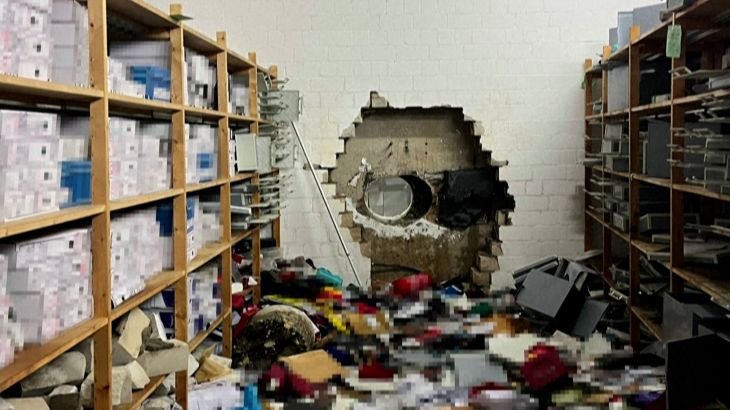

GELSENKIRCHEN| GERMANY: A meticulously planned bank heist in western Germany has intensified scrutiny of Europe’s most secure institutions, coming on the heels of a major robbery at Paris’s Louvre Museum that exposed vulnerabilities even in heavily guarded vaults.
A Precision Heist in Western Germany
Robbers armed with a large industrial drill broke into the vault room of a bank in western Germany, making off with cash, gold and jewellery estimated at around 30 million euros, or about $35 million, according to police. The burglary took place in the city of Gelsenkirchen, where investigators say the thieves gained access to more than 3,000 safe deposit boxes before fleeing the scene.
Authorities described the operation as highly organized. After breaching the high-security vault area, the attackers systematically opened deposit boxes containing money and valuables. The suspects have not been apprehended, and no arrests have been announced so far.
Inside the Vault: How Security Was Breached
Police officials said the use of heavy drilling equipment suggests careful preparation and detailed knowledge of the bank’s layout and security systems. Investigators are now examining closed-circuit television footage and forensic evidence to determine how the criminals bypassed existing safeguards without triggering an immediate response.
The scale of the theft — both in value and in the number of deposit boxes accessed — has raised questions about how long the perpetrators were inside the vault and whether they had inside knowledge or assistance. Authorities have not publicly speculated on those possibilities, saying the inquiry is ongoing.
A Continent on Alert After the Louvre Robbery
The Gelsenkirchen heist follows a high-profile robbery earlier this year at Paris’s Louvre Museum, where thieves targeted a secure gallery housing historic crown jewels. Artefacts valued at tens of millions of euros were stolen, prompting a major security review in France and an international investigation.
That incident reignited debate across Europe about the vulnerability of even the most heavily guarded institutions. In its aftermath, authorities in several countries began reassessing protections at banks, museums and other sites holding high-value assets, examining whether traditional security measures are sufficient against increasingly sophisticated criminal operations.
Cross-Border Questions and an Ongoing Investigation
German authorities said they have not ruled out cross-border links as they work to identify and trace those responsible for the bank robbery. The possibility of connections to organized networks operating across national boundaries is part of the investigation, officials said.
For now, the case remains open, with law enforcement agencies focused on reconstructing the sequence of events and determining how a high-security vault was penetrated so effectively.
