

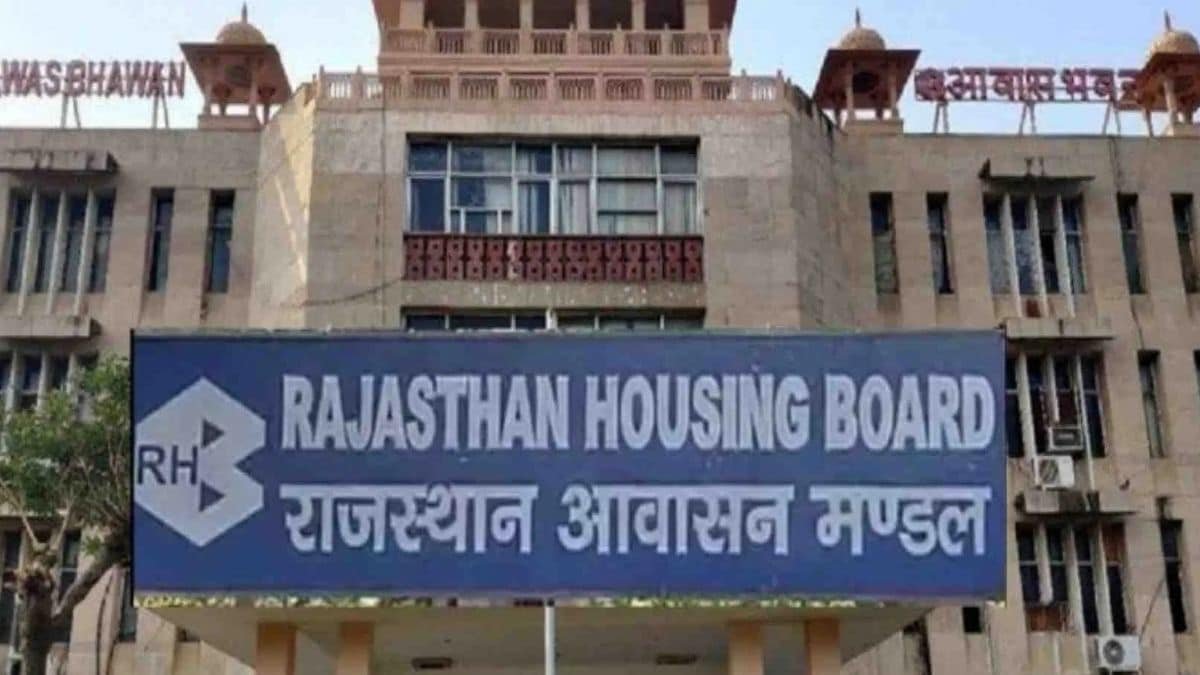

JAIPUR: A recent decision by the Rajasthan Housing Board to extend special financial concessions to All India Services officers for a luxury housing project in Jaipur has triggered internal unease and wider public scrutiny, raising questions about mandate, equity and the use of public funds.
A Housing Board’s Mandate and a Shift in Focus
The Rajasthan Housing Board was established to provide subsidised housing for the Economically Weaker Section (EWS), Lower Income Group (LIG) and Middle Income Group (MIG). Its schemes were designed to bridge affordability gaps for ordinary citizens, with pricing and fees structured to reflect that social purpose.
Recent decisions, however, indicate a departure from that focus. Board approvals have cleared a set of concessions exclusively for All India Services (AIS) officers—including IAS, IPS and IFS cadres—under a premium residential project in Jaipur’s Pratap Nagar area. The move has drawn attention not only because of who benefits, but also because of how those benefits are structured and funded.
Preferential Pricing in AIS Residency Phase-3
AIS Residency Phase-3 will consist of multi-storey flats reserved for Rajasthan-cadre IAS officers. The flats are priced between ₹1.53 crore and ₹1.84 crore, placing them firmly in the luxury segment of the local housing market.
Under standard RHB rules, an administration fee amounting to 10 per cent of the total cost is charged on houses, flats or auctioned land. In a board meeting held on Friday, this fee was reduced to 5 per cent, but only for AIS officers applying to this specific project. The reduction translates into savings of roughly ₹8.75 lakh per officer.
Ordinary citizens applying for RHB housing—including those in EWS, LIG and MIG categories—continue to pay the full 10 per cent fee, with no comparable concession announced for them.
CSR Funds and Land-Use Changes
Beyond the fee reduction, the board has also converted the land use for the project from commercial to residential, a step that further benefits buyers by lowering associated costs.
Critics within the housing board point to another layer of subsidy: the effective use of the board’s Corporate Social Responsibility (CSR) funds. By absorbing certain development expenses through CSR allocations, the board has reduced the overall burden on AIS allottees. In effect, public funds earmarked for broader social objectives have helped offset costs for a small, elite group of beneficiaries.
This pattern is not new. In AIS Residency Phase-1, several amenities were constructed using CSR funds, facilities valued at around ₹1.18 crore. Those costs were not added to the price of the flats, further lowering the effective purchase cost for officers.
Internal Dissent and Questions of Fairness
The latest concessions have sparked internal controversy within the housing board. Critics argue that the measures contradict the board’s original mandate and establish a precedent in which government employees receive preferential treatment over the intended beneficiaries of public housing schemes.
They also question the transparency and fairness of extending subsidised benefits—through reduced fees, land-use changes and CSR funding—to luxury housing, while applicants from EWS, LIG and MIG categories receive no parallel relief.
