



On January 10, the second batch of the Certified Data Protection Officer (CDPO) programme will commence. With the Digital Personal Data Protection (DPDP) Rules now notified and an 18-month enforcement window effectively underway, the timing has sharpened the stakes for organisations and professionals alike.
Unlike earlier years—when data protection in India remained largely aspirational—the regulatory architecture is now concrete. The DPDP framework places explicit obligations on entities processing personal data, particularly Significant Data Fiduciaries, requiring demonstrable readiness in areas such as consent management, grievance redressal, breach response, internal audits and regulatory engagement.
For many organisations, this has translated into a simple but urgent question: who, internally, is equipped to own this responsibility?
Why Data Protection Has Become a Career Imperative
The emergence of the Data Protection Officer as a core institutional role marks a shift in how compliance is understood in India. The DPDP regime does not treat privacy as a narrow legal checkbox. It embeds data protection within governance, risk management and operational accountability.
As a result, demand has risen not only among lawyers and compliance officers, but also among CISOs, risk professionals, auditors, senior managers and government officials. What organisations are seeking is not surface-level awareness, but practitioners who can translate statutory language into operational systems—data inventories, consent architectures, breach playbooks and board-level reporting.

This convergence explains why structured, practitioner-led training programmes have moved from optional upskilling to strategic necessity.
Inside the CDPO Programme and Its First Cohort
The CDPO programme is delivered by FCRF Academy, the education and training arm of the Future Crime Research Foundation. Its first cohort trained over 500 senior professionals, drawn from government departments, public-sector institutions, corporates, law firms, consulting organisations and technology teams.
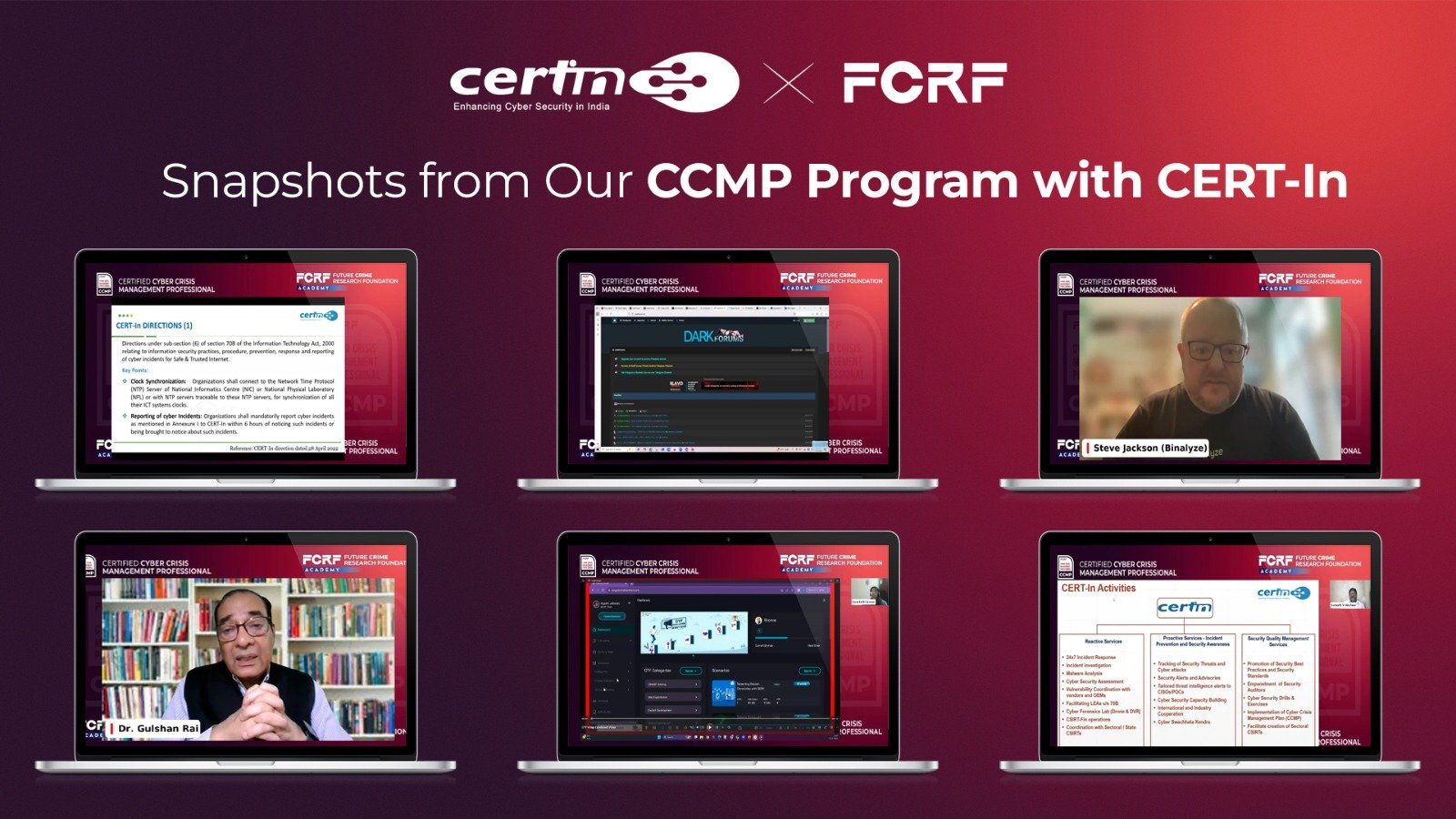
The programme’s design reflects lessons drawn from FCRF’s earlier professional certifications, including its work on cybercrime investigation, cyber law and compliance training through initiatives such as CCMP with CERT-In and CCLP. Over the years, FCRF has built a reputation for practitioner-oriented education, grounded in India’s enforcement realities rather than abstract frameworks.
In the CDPO curriculum, the DPDP Act and Rules are taught alongside related domains:
- data governance and lifecycle management
- breach and incident response aligned with CERT-In timelines
- sectoral regulatory overlap (RBI, SEBI, IRDAI)
- accountability of Significant Data Fiduciaries
- board-level governance, audits and documentation
Sessions are led by professionals with direct experience in regulation, policy, cybersecurity and compliance—an approach that participants from the first batch have cited as critical to making the law operational.
The Final Window Before the DPDP Era Settles In
With the second batch set to begin on January 10, the remaining two-week registration window has taken on added significance. For professionals tasked with implementing DPDP compliance in 2025, the choice is increasingly between structured preparation now and reactive learning later—often under regulatory pressure.
The broader shift is already visible. Data protection in India is no longer a peripheral discipline waiting for clarity. The rules are in place, enforcement expectations are forming, and organisations are beginning to map accountability.
In that context, programmes like CDPO are less about credentials and more about readiness—about building internal capability before compliance becomes a test rather than a plan.
Interested professionals can view full programme details and apply here: Click here to register now
With the clock ticking toward enforcement, the window to prepare deliberately is narrowing fast.
