

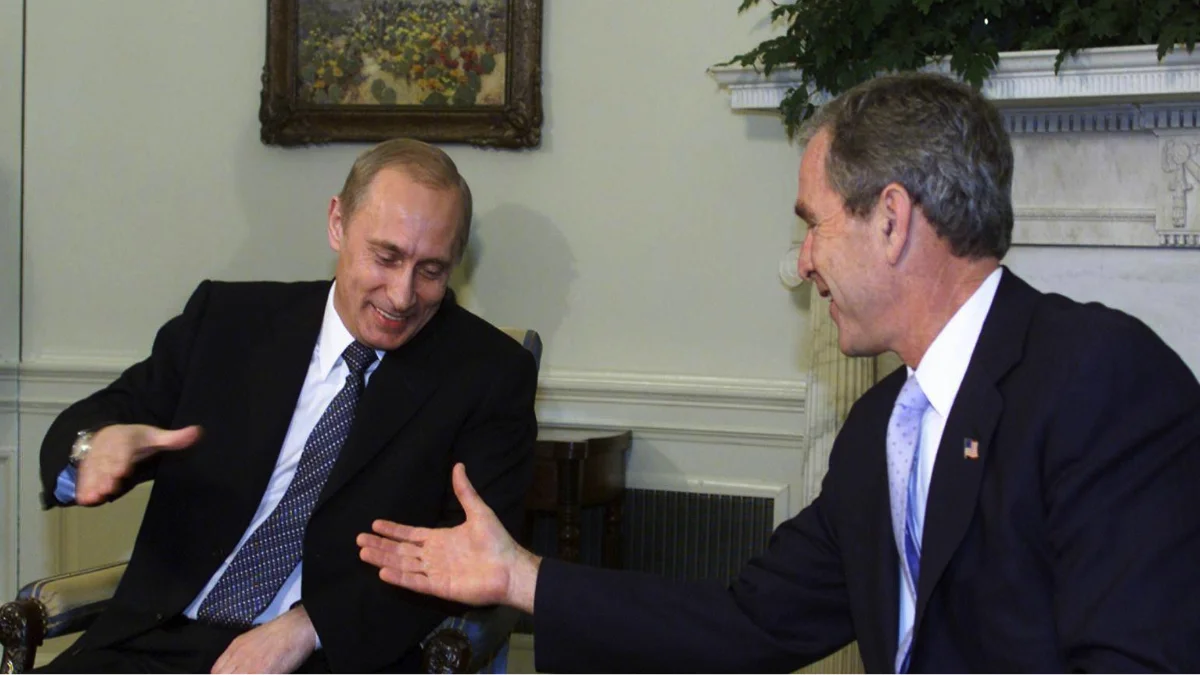

New Delhi | December 27, 2025: Long-standing anxieties at the highest political levels in the United States and Russia over Pakistan’s nuclear programme have come into sharp public focus following the release of newly declassified documents. According to records made public by the National Security Archive, conversations held in 2005 between then US President George W Bush and Russian President Vladimir Putin contained unusually blunt and critical assessments of Pakistan.
Among the most striking remarks attributed to Putin is his description of Pakistan as “just a junta with nuclear weapons”, a characterisation that Bush reportedly acknowledged with concern. The two leaders discussed serious apprehensions about nuclear command and control, proliferation risks, and Pakistan’s alleged links to Iran and North Korea in the transfer of sensitive nuclear material and know-how.
Documents released after FOIA litigation
The records were released following litigation under the Freedom of Information Act (FOIA) and include verbatim transcripts of meetings and telephone conversations between Bush and Putin spanning 2001 to 2008.
Taken together, the documents underscore that Pakistan’s nuclear programme has long been viewed not merely as a regional issue, but as a matter of global security concern, particularly after the exposure of the AQ Khan proliferation network.
Reference to Pakistani-origin uranium in Iran
During a key Oval Office meeting in 2005, Putin informed Bush that Western intelligence agencies had uncovered evidence suggesting that uranium of Pakistani origin had been found in Iranian centrifuges. Putin was quoted as saying:
“It’s not clear what laboratories Iran has or where they are. Cooperation with Pakistan still exists.”
Bush responded by referring to his discussions with then Pakistani President Pervez Musharraf, noting that Washington had sought explanations from Islamabad regarding possible transfers of nuclear material to Iran and North Korea.
Focus on the AQ Khan network
Bush told Putin that Pakistan had placed Abdul Qadeer Khan under detention and some of his associates under house arrest, but stressed that the US wanted clarity on what had emerged during questioning. Putin reiterated:
“As far as I understand, the uranium found in Iranian centrifuges was of Pakistani origin.”
Bush acknowledged that such undeclared material constituted a violation of International Atomic Energy Agency (IAEA) safeguards and conceded that the revelations were “deeply worrying” for Washington as well.
Earlier blunt assessment in 2001
The declassified material also recalls an earlier exchange during a 2001 meeting in Slovenia, where Putin questioned Western tolerance of Pakistan’s political and nuclear posture.
“I am concerned about Pakistan,” Putin said at the time. “It is not a democracy. It is a military regime with nuclear weapons, yet the West does not criticise it.”
The comment was made when Pakistan was under the military-led rule of Musharraf and its nuclear decision-making was firmly under the control of the armed forces.
Old suspicions, new context
Analysts say the documents reinforce long-standing international doubts over Pakistan’s nuclear command-and-control architecture. Subsequent investigations confirmed that the AQ Khan network had transferred nuclear technology to Iran, North Korea and Libya, lending weight to the concerns voiced by both Bush and Putin.
Link to recent developments
The timing of the disclosures has added to their significance. In recent months, India has once again highlighted Pakistan’s nuclear conduct on the international stage, particularly after US President Donald Trump alleged that Islamabad had been conducting covert nuclear tests.
Responding to those remarks, India’s Ministry of External Affairs spokesperson Randhir Jaiswal issued a sharp rebuttal, saying such behaviour was consistent with Pakistan’s historical record.
“Clandestine and illegal nuclear activities have been a defining feature of Pakistan’s past,” Jaiswal said, citing decades of smuggling, export-control violations, secret partnerships and the AQ Khan network.
The candid 2005 exchanges between Bush and Putin remain relevant today, as unresolved questions about nuclear proliferation, regional instability and transparency continue to challenge the international security architecture.
