
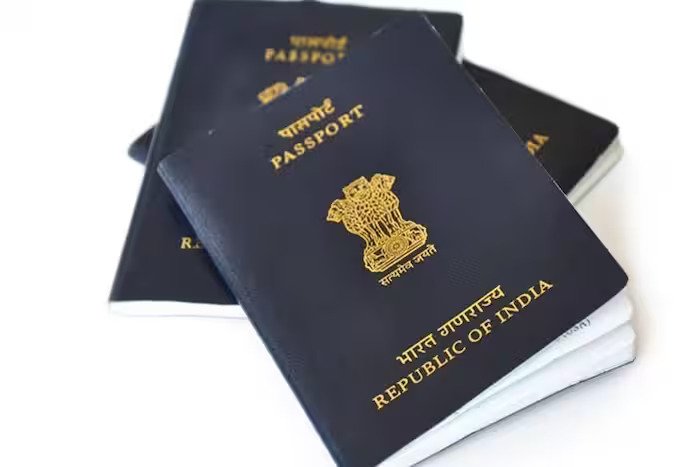
If you have ever had a passport photograph taken, you have likely heard the photographer’s familiar instruction: “Please don’t smile.” While this may seem unusual to many, the restriction has little to do with appearance and everything to do with identity accuracy and national security. According to a recent report by the Centre for Police Technology, smiling in passport photographs interferes with facial recognition and biometric verification systems, which is why the global ‘no smile’ rule is enforced.
The report notes that a passport is not an ordinary identity document, but an international travel credential that is scanned by machines at airports, border checkpoints and automated e-gates. These systems are not designed to interpret emotions; instead, they rely on stable geometric measurements (fixed facial points) to confirm identity.
Why Smiling Becomes a Problem
According to the Centre for Police Technology, when a person smiles, the facial structure temporarily changes. The cheeks lift, the eyes narrow slightly, the mouth widens and the jaw position shifts. All of these changes affect the facial landmarks used by biometric systems to identify an individual.
The report explains that biometric verification measures stable features such as the distance between the eyes, the length of the nose, the position of the mouth and the shape of the jaw. Smiling alters these measurements, increasing the risk of matching errors and false rejections during identity verification.
Software Reads Patterns, Not Emotions
The report also underlines that facial recognition software does not perceive human emotions. For such systems, a face is simply data and patterns. Studies in computer vision have shown that changes in facial expressions alter the digital facial pattern, making it harder to match a current scan with a photograph taken years earlier.
This becomes especially critical at high-traffic locations such as airports, where thousands of passengers are screened daily through automated systems. Even a small mismatch can lead to delays, manual checks and security alerts, slowing down passenger movement and increasing operational strain.
A Rule Aligned with International Standards
The Centre for Police Technology clarifies that the no-smile rule is not an arbitrary decision by any single country. It is aligned with international civil aviation and border security standards. Passports must function seamlessly not just in the issuing country, but across borders worldwide.
Allowing smiles would introduce inconsistency—some subtle, some broad—making machine-based verification slower and less reliable. To ensure speed and uniformity, neutral facial expressions have been adopted as a global norm.
What Happens If the Rule Is Ignored
According to the report, passport photographs showing visible teeth, unnaturally narrowed eyes or strained facial muscles are liable to be rejected during the application process. This can delay passport issuance and force applicants to resubmit photographs at additional cost.
The issue does not end with the application. During travel, a smiling passport photograph can cause automated e-gates to fail in recognising the traveller, resulting in longer manual verification and questioning at immigration counters.
Why a ‘Neutral Face’ Matters
The Centre for Police Technology points out that passports are typically issued for many years. Over time, faces naturally change due to age, weight fluctuation, hair loss or skin changes. A neutral, relaxed expression remains more consistent over time, making long-term identity verification more reliable.
In contrast, smiles are affected by dental changes, muscle tone and ageing, making them less stable reference points for biometric comparison.
A Technical Rule, Not a Personal One
The report stresses that the prohibition on smiling is neither personal nor aesthetic. It is a purely technical and security-driven requirement. Maintaining a serious expression for a few seconds during a photo session can prevent hours of inconvenience later.
In conclusion, while a passport photo without a smile may feel uncomfortable or unfriendly, this small requirement plays a crucial role in ensuring that your identity remains fast to verify, accurate and globally accepted throughout the validity of your passport.
