


As generative artificial intelligence slips quietly into the art market’s paperwork—its invoices,z certificates and ownership trails—insurers, brokers and scholars are confronting a subtler kind of forgery, one that leaves fewer fingerprints and raises deeper questions about trust itself.
When Paperwork Becomes the Weak Link
For decades, the art world has relied on provenance—the documented history of a work’s ownership—as a bulwark against fraud. Catalogues, invoices, letters and certificates of authenticity often carry as much weight as the object itself. Now, according to recent reporting by the Financial Times, that paper trail is increasingly being manufactured not by skilled forgers with typewriters and seals, but by large language models capable of producing fluent, plausible documentation on demand.
Fine art underwriters and brokers say they are seeing a rise in claims supported by documents that, at first glance, appear convincing. The language is polished. The formatting looks right. Dates and names align neatly. Yet beneath the surface, inconsistencies lurk—metadata anomalies, stylistic mismatches, references to galleries that never existed. Detecting them, specialists say, has become a race against tools designed to sound certain even when they are wrong.
AI’s Talent for Plausibility
Analysts who study the intersection of art and technology describe the problem less as outright deception and more as systemic plausibility. One researcher at the art research firm Flynn and Giovani characterized AI in this context as “quite conniving”—not because it intends to deceive, but because it is engineered to supply an answer regardless of certainty.
That tendency, often described as “hallucination,” has had concrete effects. In several documented cases, collectors used AI tools to search for ownership records in reference databases, only to receive confident but fabricated results. These false trails, once introduced into a claim or a sale, can be difficult to untangle. As one claims adjuster put it, the industry is nearing a point where it may no longer be obvious when a document “looks wrong” at all.
Inside the Insurance Files
The strain is particularly visible in the insurance sector, where documentation underpins risk assessment and payouts. Grace Best-Devereux, a claims adjuster at the investigations firm Sedgwick, told the Financial Times that staying ahead of fraud has become harder as highly probable-looking documents can now be generated with minimal effort.
Olivia Eccleston, a fine art broker at insurance firm Marsh McLennan, said chatbots and other large language models are being used to convincingly forge sales invoices, valuations and certificates of authenticity. In one case cited by the publication, an adjuster reviewing a loss claim received dozens of certificates for a large painting collection. The documents seemed credible. Only later did clues embedded in the files’ metadata reveal that the entire collection was likely fictitious.
A Long Tradition, New Tools
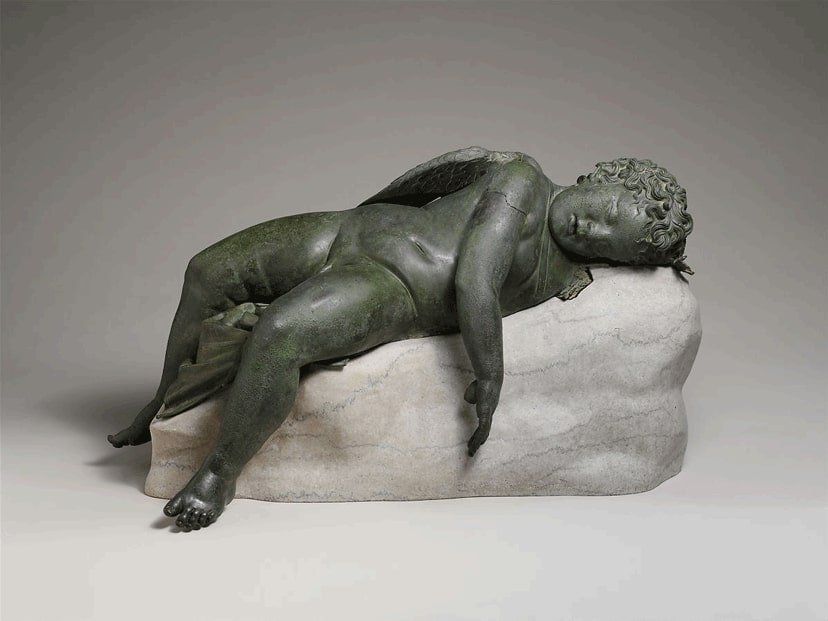
Forgery, of course, is not new. Art historians often recount how, in 1496, Michelangelo, then just 21, altered a sculpture to make it appear ancient, selling it as a Roman antiquity. He rubbed acidic soil into the surface to simulate age—a tactile, manual deception that relied on chemistry and craft.
The comparison surfaces frequently among today’s experts. Had Michelangelo lived centuries later, some quip, he might have turned to a chatbot instead of loam and acid. The difference, they note, is scale and speed. Where past forgeries required time, expertise and risk, generative AI can produce endless variations instantly. The challenge now facing the art world is not merely identifying fake objects, but navigating a documentary landscape where certainty itself can be synthetically produced.
