

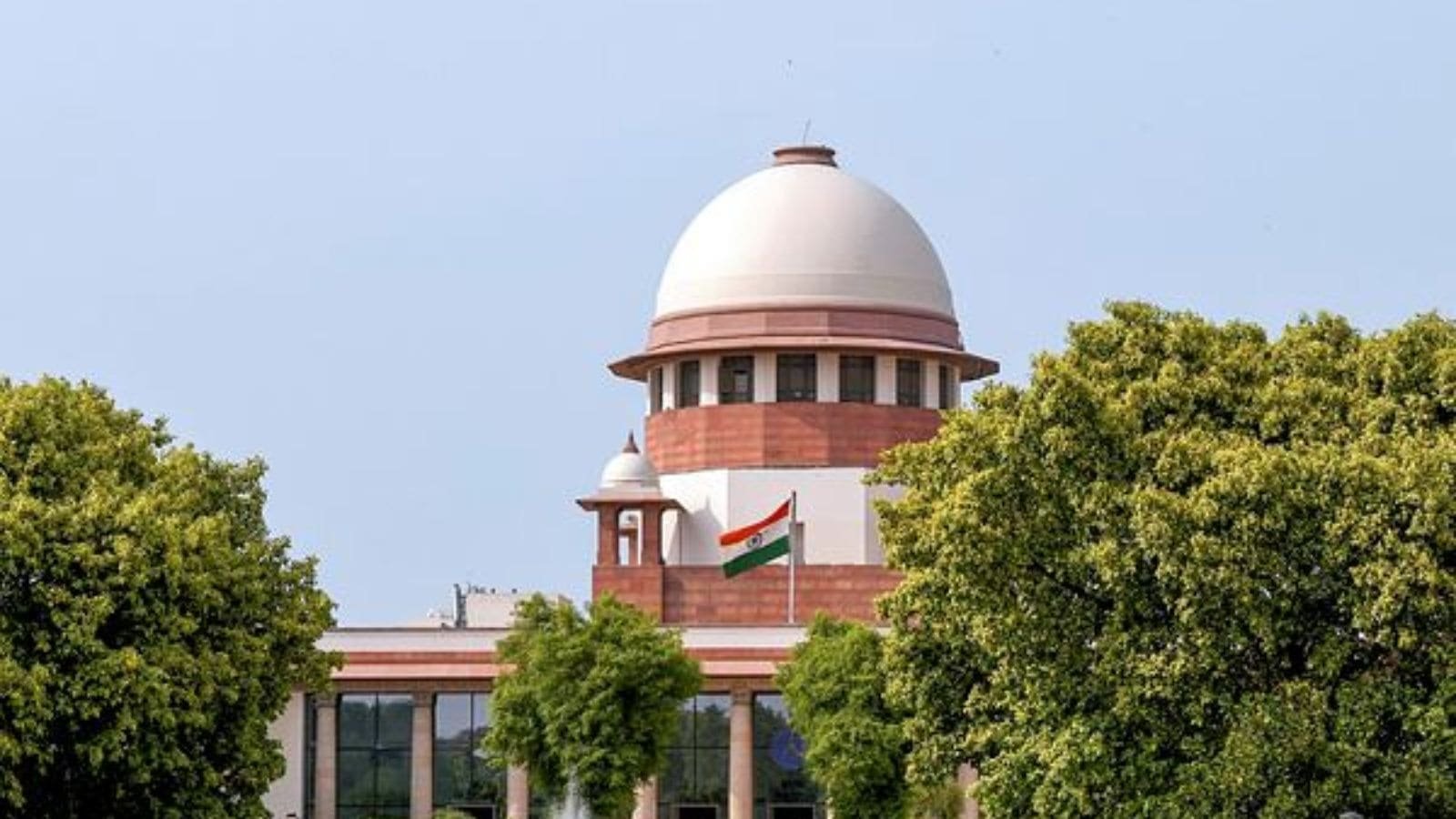

New Delhi: The Supreme Court of India has directed the passport authority to re-issue a passport to a person accused under the Unlawful Activities (Prevention) Act (UAPA), holding that procedural safeguards cannot be converted into rigid barriers that undermine individual liberty. The court observed that when temporary restrictions harden into indefinite exclusions, the constitutional balance between State power and personal dignity is disturbed.
A Bench comprising Justice Vikram Nath and Justice Augustine George Masih underscored that the freedom to move, travel, pursue livelihood and opportunity, subject to law, is an integral part of the guarantee under Article 21 of the Constitution. While the State may impose restraints in the interest of justice, security or public order, such measures must be narrowly tailored, proportionate, and clearly anchored in law, the court said.
Background of the case
The appellant was chargesheeted under Section 120B (criminal conspiracy) of the IPC, read with Sections 17 and 18 of the UAPA, along with provisions of the Criminal Law Amendment Act, 1908 and Section 201 IPC. An interim order of the Jharkhand High Court had required him not to leave India without prior permission and to deposit his passport before the trial court—conditions with which he complied by depositing the passport before the NIA Court, Ranchi.
Separately, the appellant faced trial in a CBI coal block case before a Special Judge under the Prevention of Corruption Act in Delhi, where he was convicted and sentenced to a maximum of four years’ imprisonment. The Delhi High Court later suspended the sentence and permitted passport renewal, subject to the condition that he would not travel abroad without court approval.
Denial by passport authority
After his passport expired, the appellant applied for re-issue before the Regional Passport Office in Kolkata. The passport authority refused renewal citing pending criminal cases—a decision upheld by the Calcutta High Court. The authority relied on statutory provisions aimed at ensuring that persons facing criminal proceedings remain amenable to the jurisdiction of courts.
Supreme Court’s reasoning
Setting aside the refusal, the Supreme Court held that the objective of ensuring court jurisdiction was already achieved through stringent conditions imposed by the criminal courts, including prior permission for foreign travel and re-deposit of the passport after renewal. To add an indefinite denial of a renewed passport, despite conscious permissions granted by the criminal courts, would be disproportionate and unreasonable, the Bench said.
The court cautioned against speculative apprehensions that an accused might misuse a passport, noting that such assumptions would amount to second-guessing judicial assessments and wrongly placing a supervisory role on the passport authority. It also observed that the Calcutta High Court erred in treating the relevant statutory provision as an absolute bar merely because criminal proceedings were pending.
Directions issued
The Supreme Court quashed the refusal order and directed the authorities to re-issue an ordinary passport to the appellant for the normal period of 10 years, subject to compliance with standard procedural requirements, within four weeks.
Significance of the ruling
The judgment reinforces that personal liberty under Article 21 cannot be curtailed by administrative rigidity when judicial safeguards are already in place. Legal experts say the ruling will guide passport authorities and courts on balancing national security concerns with constitutional freedoms, especially in cases involving pending criminal proceedings.
