


As India overhauls its criminal justice framework, the Ministry of Home Affairs has quietly begun reshaping the backbone of forensic investigations: the scientists who run the country’s crime laboratories. A new directive urges states to rewrite recruitment rules to keep pace with emerging technologies, new criminal laws and a rapidly changing crime landscape.
A Push to Modernise Forensic Manpower
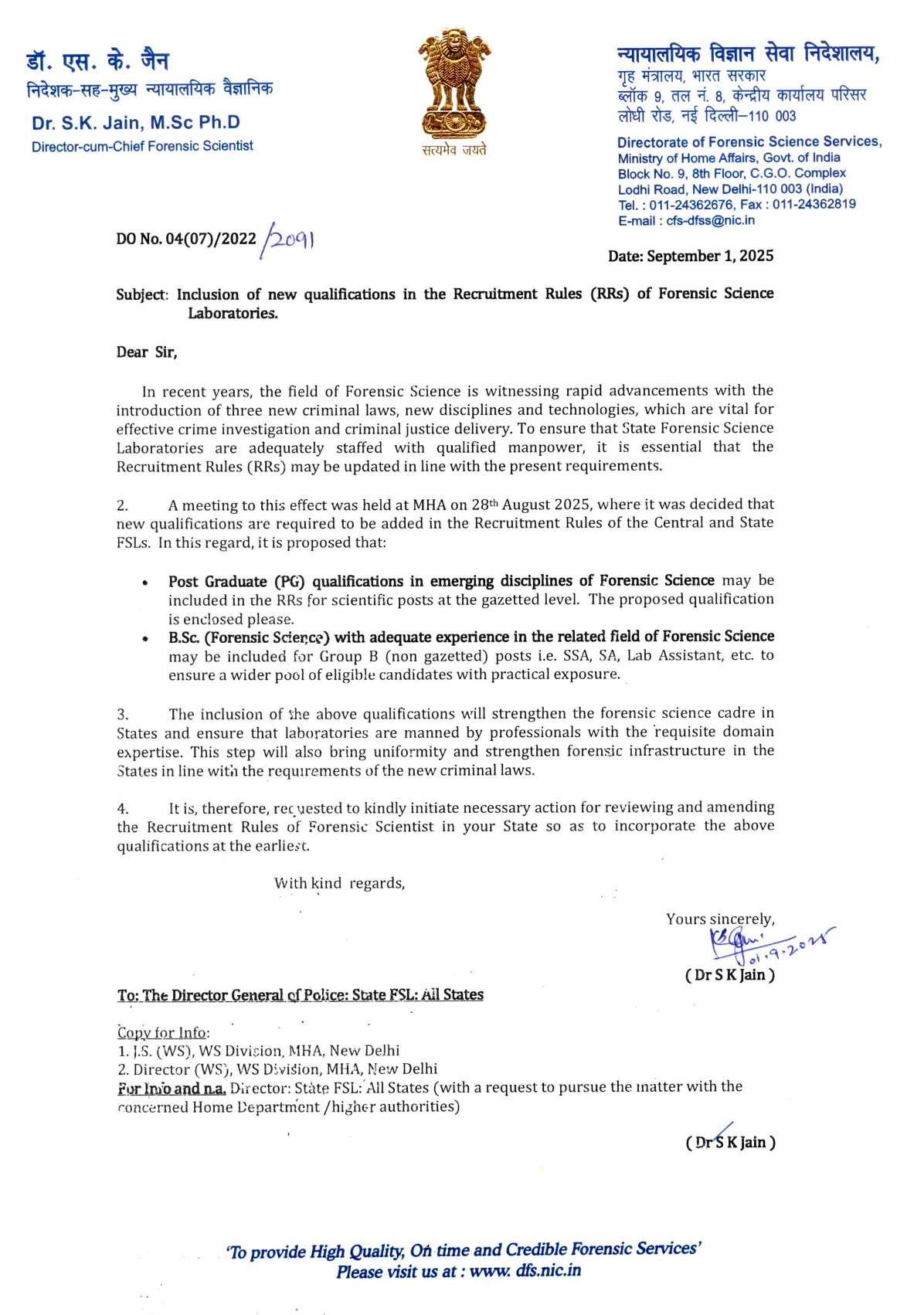
In a directive circulated to all Directors General of Police and heads of State Forensic Science Laboratories (FSLs), the Union government (Directorate of Forensic Science Services) has asked states to urgently update recruitment rules for forensic scientists, signalling a major shift in how India staffs its crime labs. The letter, issued by the Directorate of Forensic Science Services under the Ministry of Home Affairs (MHA), underscores that existing eligibility norms no longer reflect the realities of modern crime investigation.
The move comes amid the rollout of three new criminal laws and a growing reliance on scientific evidence in courts. Officials say outdated recruitment rules have left laboratories understaffed or ill-equipped to deal with emerging domains such as cyber forensics, artificial intelligence–driven crimes, digital evidence, and complex biological and chemical analyses.
New Degrees for a New Crime Landscape
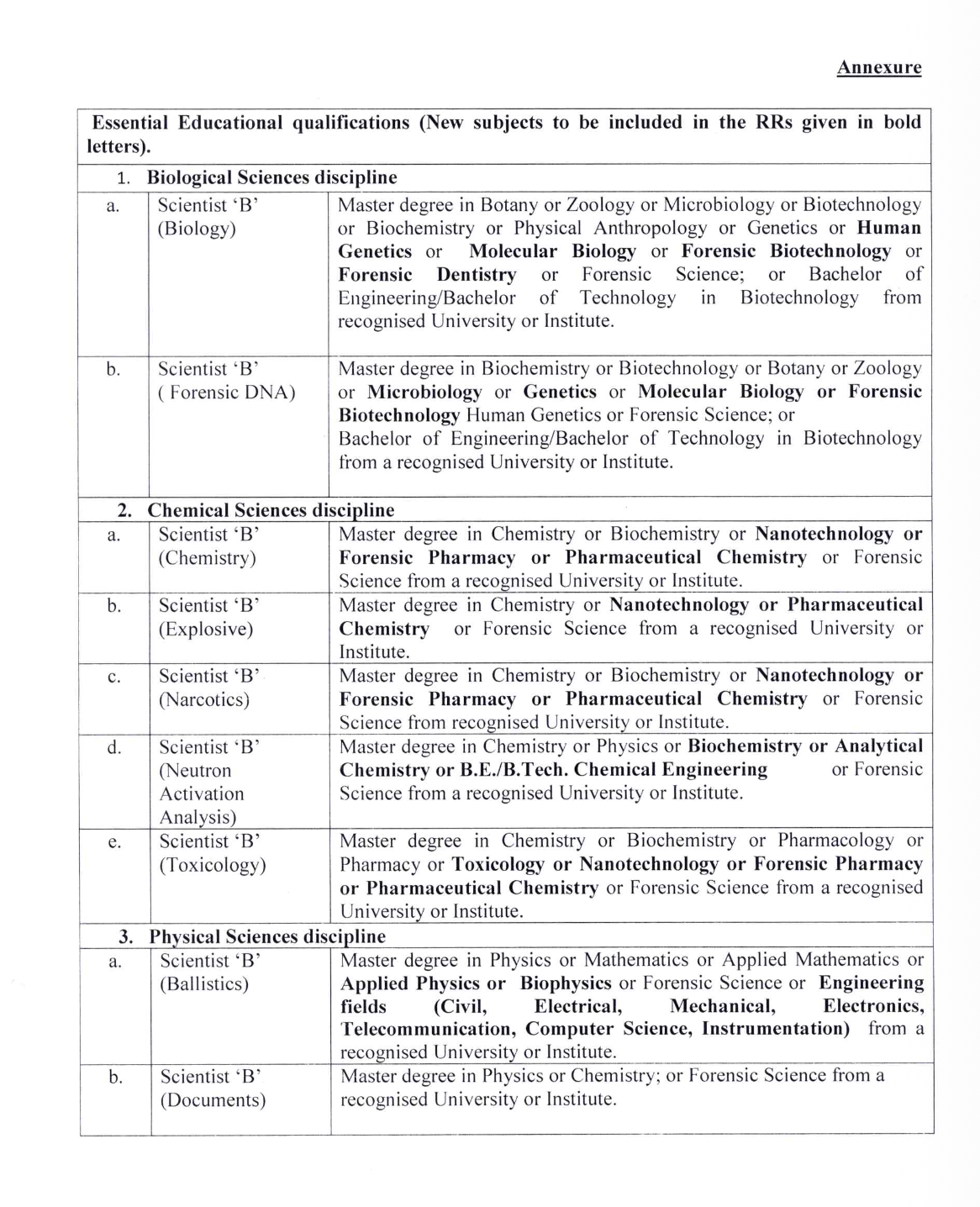
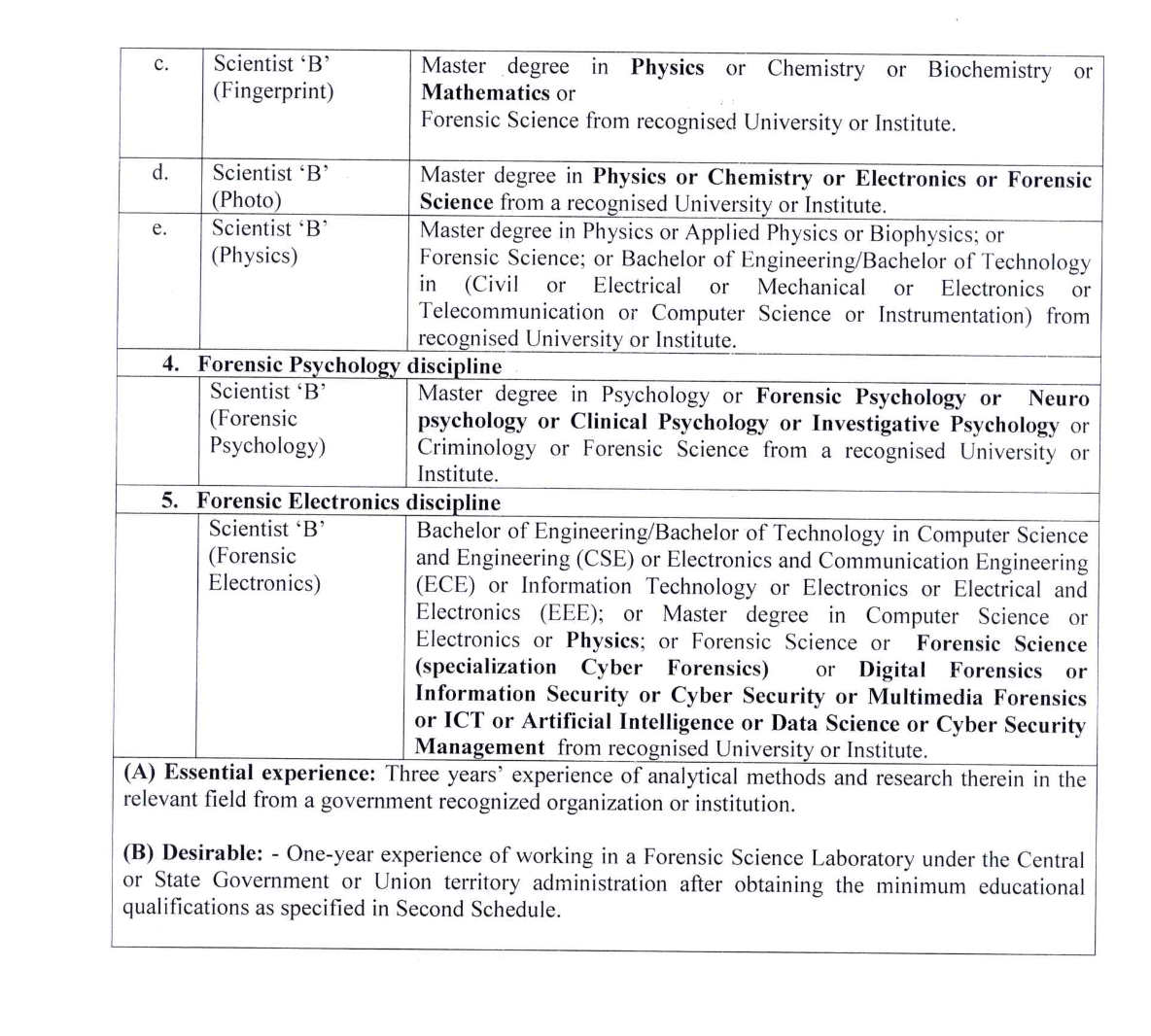
At the heart of the proposal is a significant broadening of educational qualifications eligible for forensic posts. States have been advised to include postgraduate degrees in newly emerging disciplines—ranging from forensic biotechnology and forensic psychology to nanotechnology, digital forensics, artificial intelligence, data science and cyber security—for gazetted scientific positions.
FCRF Academy Opens Call for Compliance, Governance and Cybersecurity Trainers
For non-gazetted technical roles, such as senior scientific assistants and laboratory assistants, the Centre has proposed opening doors to candidates with B.Sc. degrees in forensic science, provided they have relevant practical experience. Officials argue this will widen the talent pool while ensuring hands-on expertise inside laboratories that are already burdened with backlogs.
Annexures to the directive lay out detailed discipline-wise qualifications across biological, chemical, physical, psychological and electronic forensic sciences, reflecting how multidisciplinary crime investigation has become.
Uniformity Across States, Speed in Courts
Beyond recruitment, the directive points to a deeper institutional concern: uneven forensic capacity across states. Some laboratories operate with modern equipment and specialised staff, while others struggle with vacancies and outdated skill sets. By standardising qualifications nationwide, the MHA hopes to bring a measure of uniformity to forensic infrastructure—an issue that directly affects the quality and speed of investigations.
Officials involved in the process say better-staffed and better-trained laboratories could shorten examination timelines, improve the reliability of expert opinions and reduce delays that often weaken prosecutions. In an era where digital trails, DNA evidence and electronic records increasingly decide outcomes, the credibility of forensic reports has become central to justice delivery.
Preparing for DPDP Enforcement: How FCRF’s CDPO Program Is Shaping India’s Privacy Readiness
The Quiet Reform Behind High-Profile Laws
While the spotlight has largely remained on the new criminal codes passed by Parliament, forensic capacity has emerged as a less visible but equally critical reform area. Senior officials note that modern laws are only as effective as the institutions enforcing them. Without scientists trained in contemporary methods, even the most ambitious legal changes risk faltering at the investigation stage.
The Centre has asked states to initiate amendments to their recruitment rules “at the earliest,” indicating urgency but leaving implementation timelines to state governments. Whether states move swiftly—or treat the advisory as yet another administrative suggestion—will determine how quickly India’s forensic system adapts to the crimes of the digital age.
For now, the directive marks a clear acknowledgement from the Union government: the future of policing and prosecution depends not just on laws and technology, but on the people qualified to interpret evidence in a rapidly evolving world.
