

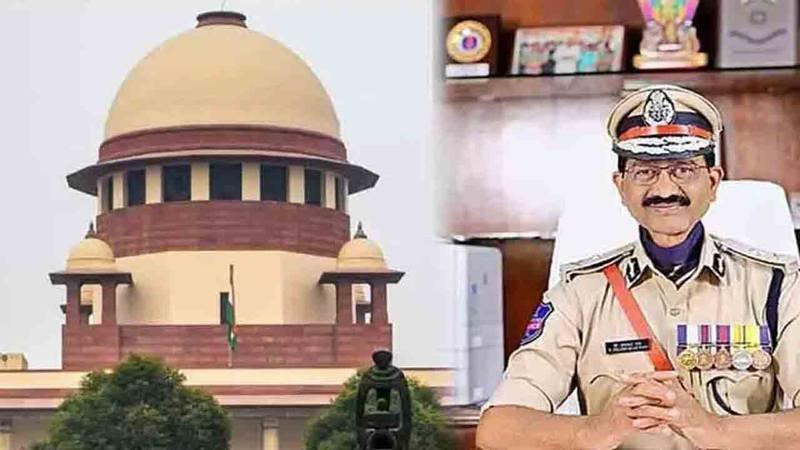

NEW DELHI: The Supreme Court of India has once again stepped into the fraught intersection of policing, politics and civil liberties, extending the custodial interrogation of a former top intelligence official while simultaneously imposing limits meant to temper the harshness of detention. The case, centered on allegations of illegal phone tapping in Telangana, has become a prism through which broader questions about investigative power, due process and political accountability are being examined.
A Custody Order, Softened at the Edges
On Friday, a Supreme Court bench declined to grant immediate relief sought by the defense of T. Prabhakar Rao, the former chief of Telangana’s Special Intelligence Bureau, who is accused in a high-profile case of unlawful surveillance. While the court rejected an appeal to bring an immediate end to his custodial interrogation, it extended the period of questioning under police custody.
At the same time, the bench sought to strike a balance. It directed that Rao be permitted to take his prescribed medicines and consume food prepared at home—conditions that, while modest, signal judicial awareness of concerns over the physical and psychological toll of prolonged interrogation.
The court’s order closely tracks recent steps taken by the Telangana government, which has constituted a nine-member Special Investigation Team (SIT) under the supervision of Hyderabad Police Commissioner C.V. Sajjannar. The move, officials say, is intended to accelerate and streamline the probe.
Defense Claims of Coercion and Political Motive
Rao’s lawyers forcefully opposed the extension of his custodial interrogation, arguing that their client had already been subjected to exhaustive questioning—allegedly from 10 a.m. to 10 p.m. each day. They described the process as “third-degree” interrogation, contending that investigators were attempting to extract a confession by wearing him down.
The defense also raised alarms about Rao’s health, telling the court that continued detention risked serious medical consequences. Beyond physical well-being, they alleged a political subtext: that the state government was seeking to weaken Rao in order to retroactively legitimize public statements made by Telangana’s chief minister about alleged abuses during the previous administration.
These claims, while contested, have added a sharp political edge to a case that already sits at the crossroads of law enforcement and partisan rivalry.
The State’s Case: ‘Paper Cooperation’ and Missing Links
Representing the Telangana government, Solicitor General Tushar Mehta and senior advocate Siddharth Luthra painted a very different picture. In court, they submitted a detailed status report outlining the progress of the investigation and argued that Rao’s cooperation had been largely superficial.
According to the state, Rao had engaged in what it termed “paper cooperation,” providing documents while continuing to withhold critical information. Prosecutors told the court that key facts remained obscured, particularly regarding the scope of alleged unauthorized surveillance and the individuals involved.
The state’s insistence on extended custody, they argued, was driven not by vendetta but by the complexity of the case and the need to uncover what they described as a deeply embedded and possibly systemic abuse of power.
Surveillance, Accountability and the Court’s Tightrope
Rao surrendered before the SIT on December 12, complying with a Supreme Court directive issued a day earlier. Since then, he has remained in custody as investigators attempt to reconstruct events dating back to the previous government’s tenure, including alleged unauthorized phone tapping of political leaders, judges and private citizens.
Earlier, the Supreme Court had ordered that Rao remain in police custody for an additional week, identifying him as a principal accused in what has become one of Telangana’s most politically sensitive criminal investigations. In a subsequent order, a bench comprising Justices B.V. Nagarathna and R. Mahadevan directed that Rao be released from custody on December 26, while granting him interim protection from coercive action until the next hearing, scheduled for January 2026. That protection, the court clarified, is contingent on Rao’s full cooperation with investigators whenever summoned.
