

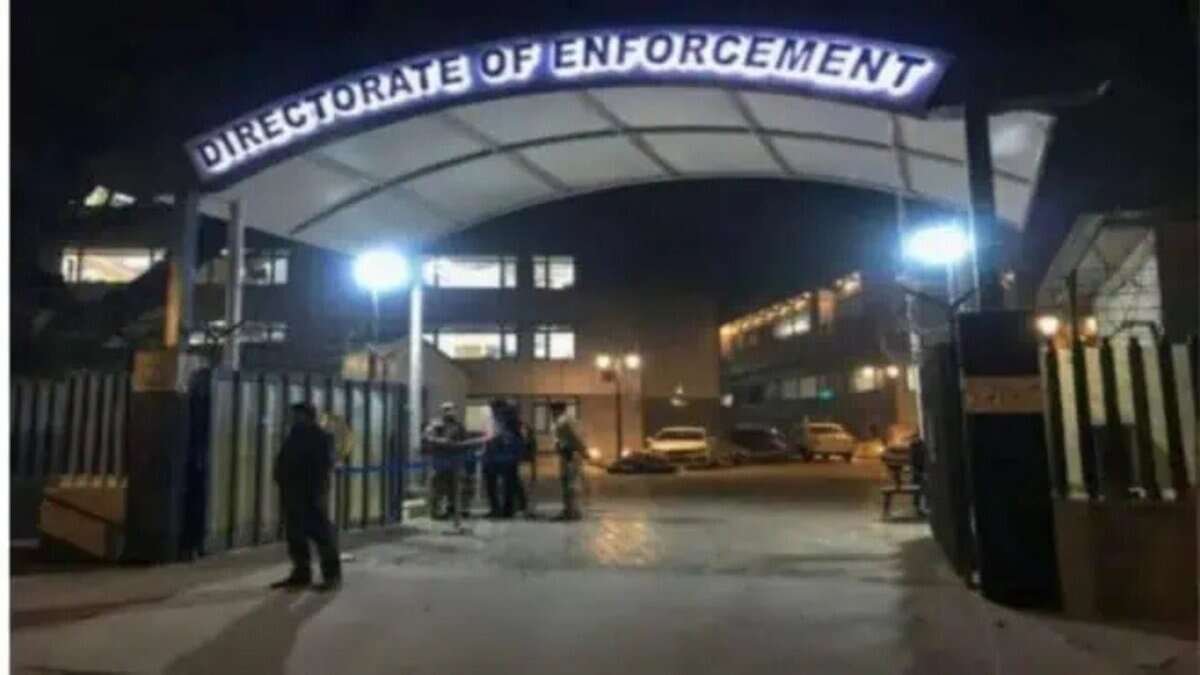

CHENNAI: For years, homebuyers waited for flats that never came. Now, as the Enforcement Directorate tightens its probe, investigators say the alleged deception behind a pre-launch housing scheme reveals a familiar but sprawling pattern of financial abuse in India’s real-estate sector.
A Long Trail of Complaints From Homebuyers
The arrest of Kakarla Srinivas, Managing Director of Jayathri Infrastructures India Private Limited, marks a key escalation in an investigation that began not with a single transaction but with a steady accumulation of grievances. Homebuyers, according to multiple police complaints in Telangana, alleged that they were persuaded to invest in pre-launch housing projects, paying substantial sums upfront with assurances of early delivery and discounted prices.
Those promises, investigators say, went unfulfilled. Flats were neither delivered nor were the advances returned, leading buyers to approach local police stations over several years. The complaints, spread across jurisdictions, eventually formed the basis for multiple First Information Reports, which in turn triggered the involvement of the Enforcement Directorate (ED) under the Prevention of Money Laundering Act, 2002.
The ED Steps In, Tracing the Money
The ED’s Hyderabad unit initiated its probe by focusing on the alleged flow of funds rather than the construction delays alone. According to the agency, Jayathri Infrastructures is suspected of fraudulently collecting around ₹60 crore from homebuyers through what it described as deceptive pre-launch schemes.
In November, the agency conducted coordinated searches at eight locations over two days, examining premises linked not only to Jayathri Infrastructures but also to a network of associated firms and individuals. These included entities connected to Janapriya Group, Raja Developers and Builders, R.K. Ramesh, Satya Sai Transport, Sri Gayathri Homes and Siva Sai Constructions.
Investigators said the objective was to establish whether the funds collected from buyers were used for genuine project development or diverted elsewhere. Their findings, according to officials, pointed toward systematic layering and diversion of money through multiple entities with no clear commercial justification.
Alleged Shell Entities and Layered Transactions
The ED has alleged that the proceeds of crime were routed through a web of companies and accounts that lacked genuine business operations. Several of these entities, officials said, were operating from residential or even fictitious addresses, raising suspicions that they functioned primarily as conduits to obscure the origin and destination of funds.
According to investigators, transactions between these entities were structured to resemble legitimate business dealings but were, in effect, non-genuine. The pattern, they argue, fits a broader template seen in other real-estate fraud cases, where advances from buyers are cycled through related firms to evade scrutiny and delay accountability.
The agency maintains that this financial architecture was designed to conceal the proceeds generated from non-delivery of flats, complicating recovery efforts for affected homebuyers.
Arrest, Bail History and the Road Ahead
Srinivas had previously been arrested by Hyderabad Police in related cheating cases and was later released on bail. The ED said he had been absconding during the money-laundering investigation, prompting intensified efforts to locate him. He was ultimately arrested in Chennai on December 18, 2025.
Officials said he would be produced before the Special PMLA Court in Ranga Reddy district the following morning. The agency is expected to seek custodial interrogation to further trace funds, identify additional beneficiaries and determine_toggle the extent of involvement of associated entities.
