

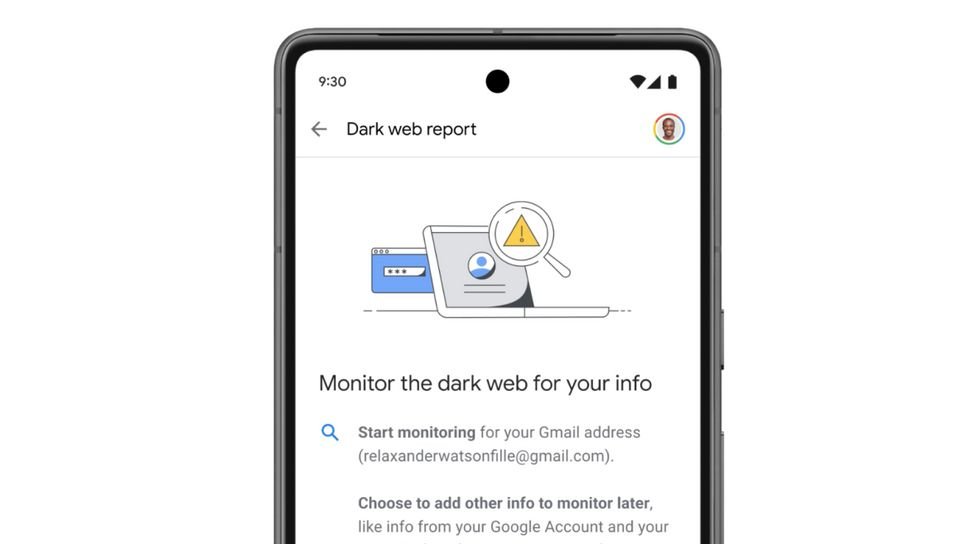

In a move that reflects both the limits of consumer cybersecurity tools and the evolving nature of online threats, Google has announced it will discontinue its Dark Web Report feature early next year. The tool, introduced in 2023 to help users track whether their personal information had surfaced on illicit online marketplaces, will stop scanning for new breaches on January 15, 2026, and will be fully retired by February 16, 2026.
Google said all data associated with the feature will be deleted once the service is shut down. Users, however, can manually delete their monitoring profiles ahead of time through their account settings. The decision brings to a close an initiative that was positioned as a response to the surge in identity theft and data breaches affecting millions worldwide.
A Tool Born Out of the Data Breach Era
The Dark Web Report was launched in March 2023, at a time when large-scale data breaches had become a routine feature of the digital economy. Designed to scan dark web forums and marketplaces, the tool alerted users if sensitive information—such as names, email addresses, phone numbers, physical addresses, or Social Security numbers—was detected.
Initially available only to Google One subscribers, the feature was expanded in July 2024 to all Google account holders, significantly broadening its reach. The expansion underscored Google’s ambition to position itself not just as a search and advertising company, but as a central hub for digital safety and identity protection.
Yet despite its promise, the tool remained largely informational. It could tell users that their data had been exposed, but offered limited guidance on what to do next—an issue that ultimately shaped Google’s decision to pull the plug.
‘Not Enough Next Steps,’ Google Says
In a support document outlining the change, Google acknowledged that the Dark Web Report fell short of user expectations. “While the report offered general information, feedback showed that it didn’t provide helpful next steps,” the company said, adding that it wants to focus on tools that deliver “clear, actionable steps to protect your information online.”
That shift reflects a broader trend in cybersecurity, where alerts alone are increasingly seen as insufficient. Users confronted with repeated warnings about breaches often face “alert fatigue,” unsure how to meaningfully respond when exposure is widespread and remediation options are limited.
By retiring the Dark Web Report, Google appears to be conceding that passive monitoring—without direct intervention or recovery mechanisms—may not meaningfully reduce harm in an ecosystem where stolen data can circulate indefinitely.
A Pivot Toward Preventive Security Measures
Even as it sunsets the tool, Google is urging users to adopt other privacy and security measures that it sees as more effective. These include creating passkeys to enable phishing-resistant multi-factor authentication, and using the company’s “Results about you” feature to request the removal of personal information from Google Search.
The emphasis on passkeys in particular signals Google’s growing focus on prevention rather than detection. Unlike passwords, passkeys are designed to be resistant to phishing and credential theft—two of the primary drivers of account compromise.
The retirement of the Dark Web Report does not signal a retreat from cybersecurity, but rather a recalibration. As online threats grow more complex and industrialized, technology companies are grappling with how much responsibility they can realistically shoulder in protecting users—and where the limits of consumer-facing tools lie.
For Google, the end of the Dark Web Report marks an acknowledgment that awareness alone is no longer enough in an age of perpetual data exposure.
Follow for daily updates on cybercrime, corporate fraud, DFIR, hacking, investigations, and digital forensics
