

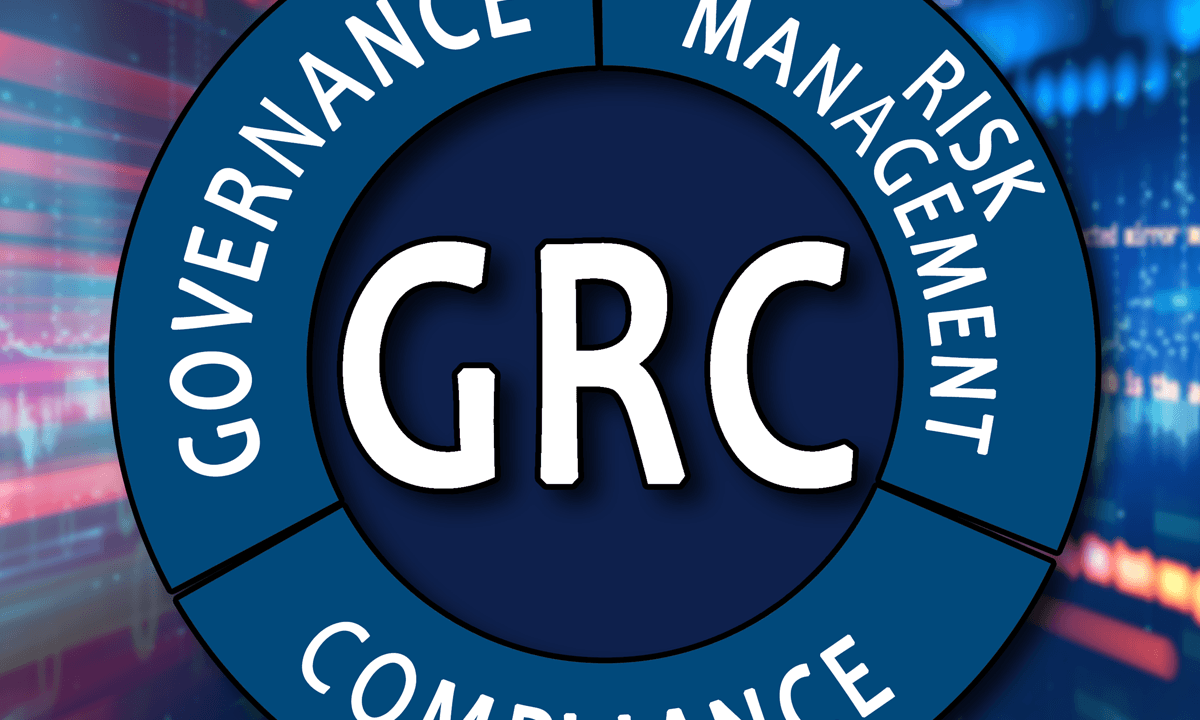

When the Future Crime Research Foundation (FCRF) opened registrations for its Certified Governance, Risk & Compliance Professional (GRCP) program, the response was swift and telling. Within weeks, enrolments crossed into the hundreds—drawing participants from government departments, public-sector banks, private financial institutions, Big Four consulting firms, technology companies, and law practices.
What distinguishes this demand is its diversity. The cohort includes senior bureaucrats responsible for oversight and policy implementation, compliance officers navigating RBI and SEBI mandates, CISOs grappling with CERT-In reporting obligations, company secretaries managing board-level risk disclosures, and students positioning themselves for careers in risk and regulatory roles.
In an ecosystem where compliance is often treated as an afterthought, the early traction of GRCP suggests a shift: governance, risk, and compliance are now being viewed as core professional competencies rather than niche specialisations.
Why Governance, Risk and Compliance Has Become a Career Imperative
The surge in interest comes at a moment of regulatory acceleration. Over the past three years, Indian organisations have faced a convergence of mandates—from CERT-In’s cyber incident reporting rules and the Digital Personal Data Protection Act, 2023, to RBI’s cyber security frameworks, SEBI’s cloud and outsourcing norms, IRDAI’s cyber guidelines, and emerging expectations around AI governance.
For many professionals, this has created a gap between responsibility and preparedness.
“Most people handling compliance today learned it piecemeal, reacting to circulars as they arrived,” said a senior risk consultant familiar with the program. “What’s changing is the realisation that governance and risk require structured training—especially when penalties, audits, and board scrutiny are intensifying.”
GRCP is designed precisely for this moment. Rather than isolating cyber, legal, or risk functions, the program treats GRC as an integrated discipline—bridging technical controls, legal mandates, organisational governance, and strategic decision-making.

What the GRCP Program Actually Teaches—and Why That Matters
Participants cite the program’s curriculum as a key driver behind its rapid uptake. Structured as a four-week immersive course, GRCP moves beyond theory into implementation-focused learning tailored to the Indian regulatory environment.
The syllabus spans:
- Governance frameworks aligned with RBI, SEBI, IRDAI, and CERT-In
- The Digital Personal Data Protection Act, 2023 and fiduciary obligations
- Zero Trust Architecture (ZTA) and its governance implications
- MITRE ATT&CK–based risk assessments and gap analysis
- SOC governance, SIEM, SOAR, and incident reporting workflows
- Cloud compliance, vendor risk (TPRM), and outsourcing controls
- AI governance concepts, including RBI’s ‘Free-AI’ framework and algorithmic risk
For students and early-career professionals, the program offers structured entry into a domain that is increasingly influencing hiring decisions. For senior professionals, it provides a common language to engage with boards, auditors, regulators, and technical teams.
This breadth—combined with its India-first regulatory focus—has made GRCP relevant across experience levels.
Built on Institutional Credibility and a Growing National Footprint
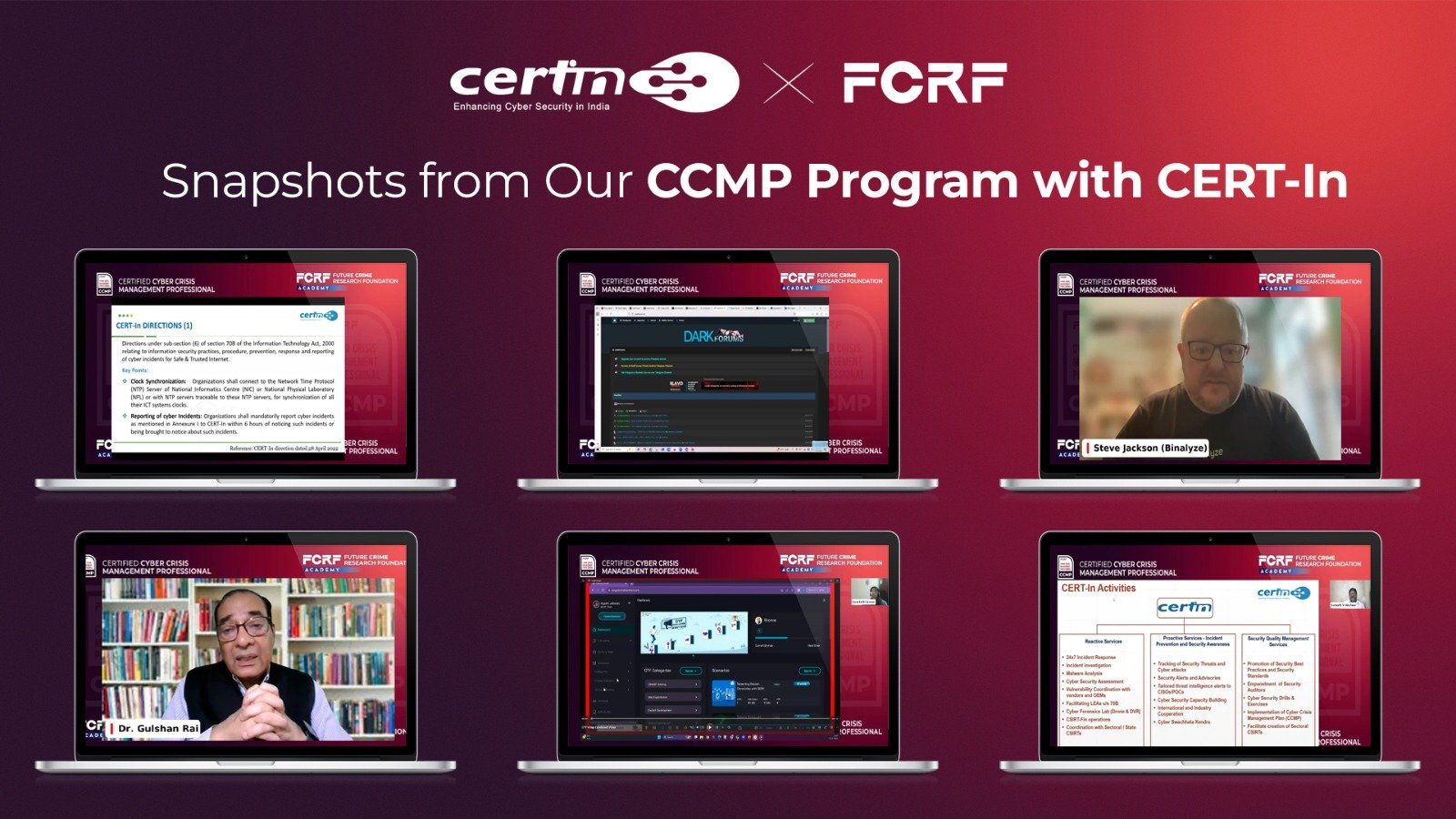
FCRF’s ability to attract such enrolment is also rooted in its track record. The foundation has already trained thousands of professionals through its earlier flagship programs—the Certified Cyber Crisis Management Professional (CCMP) in collaboration with CERT-In, Certified Data Protection Officer (CDPO), and the recently concluded Certified Cyber Law Practitioner (CCLP).
Its credibility was further reinforced by a landmark Memorandum of Understanding signed with NIELIT (MeitY) in the presence of Union Minister for Electronics and IT Ashwini Vaishnaw—positioning FCRF as an institution aligned with India’s national skilling and cyber governance priorities.
For many participants, GRCP represents continuity rather than experimentation—a natural extension of a training ecosystem that has consistently emphasised regulatory realism over generic global frameworks.
As organisations confront rising cyber incidents, compliance audits, AI-related risks, and regulatory scrutiny, the early success of the GRCP program reflects a broader truth: India’s compliance challenge is no longer about awareness, but about capability.
And for hundreds who have already enrolled, GRCP appears to offer a way to stay ahead of a regulatory curve that shows no sign of slowing down. For those interested to join the GRCP program, CLICK HERE to register now.
