

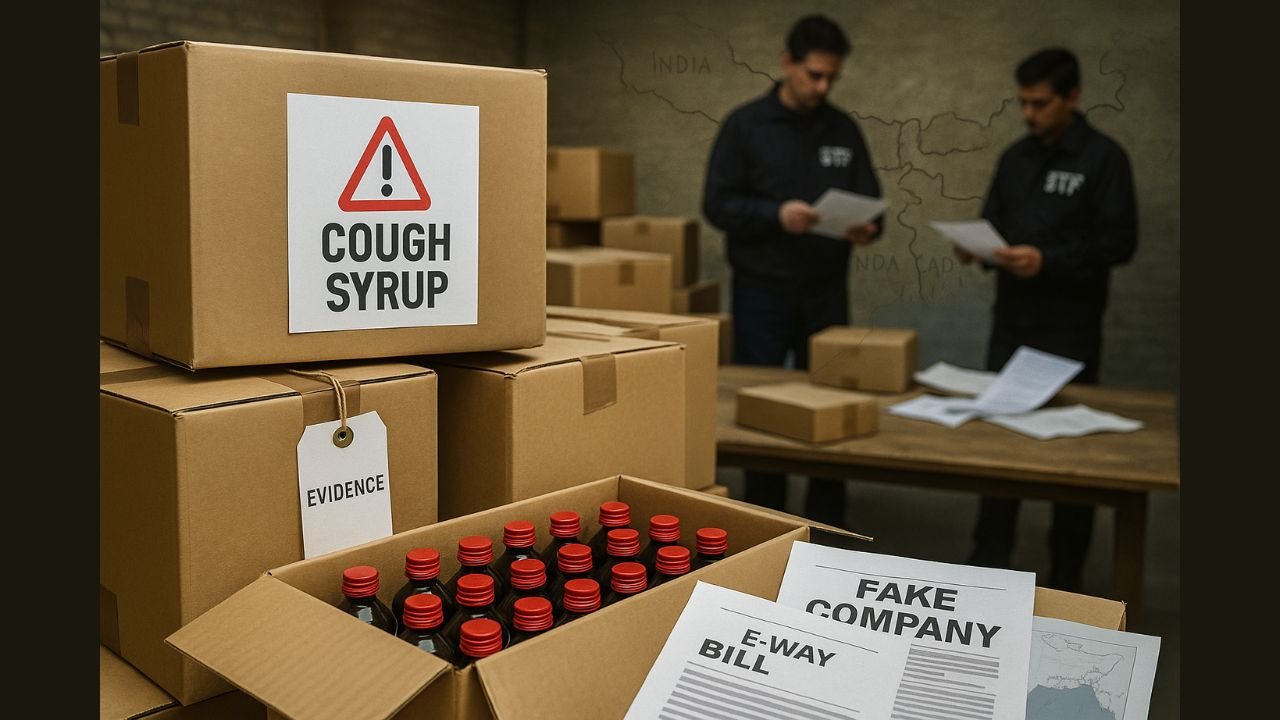

Lucknow: A shocking revelation has emerged of large-scale trafficking of narcotic cough syrup through 65 fake firms in Uttarakhand. The Uttar Pradesh Special Task Force (STF) has found that banned syrup brands like Phensedyl were being smuggled illegally to Bangladesh, allegedly with the collusion of Abbott Pharmaceutical Company officials. The prime accused, Abhishek Sharma, has confessed to several startling details of this cross-border drug syndicate.
Abhishek revealed that the racket spanned across Uttarakhand, Delhi, West Bengal, Tripura, and several UP districts — including Lucknow, Kanpur, Varanasi, Gorakhpur, and Agra. To make the business appear legitimate, the traffickers created a web of fake firms and forged e-way bills.
The Abbott Connection: How the Syndicate Operated
According to Abhishek Sharma, the network was initiated by Vibhor Rana and Vishal Singh, who had earlier operated a firm named GR Trading. After it shut down, they allegedly struck a deal with Abbott company officials, forming a new entity—BN Pharmaceuticals—which was appointed as a “Carrying and Forwarding Agent (CFA)” for Abbott’s syrup distribution.
Abhishek admitted that their chartered accountant, Arun Singhal, registered several fake firms in the names of acquaintances, including Abhishek’s brother, Shubham Sharma. These firms were then used to procure cough syrup in bulk from Abbott and divert it into the black market.
65 Fake Firms in Uttarakhand
The STF report revealed that 65 fake companies in Uttarakhand were showing fake sales on paper. Abhishek also admitted that another firm, “AV Pharmaceuticals,” was created in Delhi under his name in partnership with Pappan Yadav.
From there, consignments of syrup were purchased and transported using fabricated e-way bills through West Bengal and Tripura, finally being smuggled into Bangladesh. The network was managed by Saurabh Tyagi and Pappan Yadav.
Abhishek added that when Abbott stopped producing Phensedyl in December 2024, the syndicate switched to smuggling other codeine-based brands like Scaf and Onarex. All transactions were documented to appear legitimate, disguising what was essentially cross-border drug trafficking.
The Dubai Connection: Shubham Sharma as a Frontman
Abhishek’s younger brother, Shubham Sharma, who worked at “Port World” in Dubai in 2017, was roped into the racket after returning to India. Vibhor and Vishal registered a company named “Shri Balaji Sanjeevani” in Shubham’s name to show legal business activity.
During interrogation, Shubham admitted he was not directly involved in operations but received ₹1 lakh per month for lending his name. The real operations were run by Vibhor and Vishal, while Shubham and others served merely as fronts to mask the illegal trade.
Crores Earned Through Illegal Cough Syrup Trade
According to STF sources, the racket made crores of rupees through illegal sales of cough syrup. Investigators believe the network had direct links with Bangladeshi drug trafficking groups that smuggle codeine-based syrups across the border for recreational abuse.
After Abbott ceased Phensedyl production, the company recalled its stock from CFAs and handed it over to Shubham Jaiswal’s “Shaili Traders.” Later, the SIT found suspicious financial transactions worth over ₹425 crore in Shaili Traders’ accounts—now under scrutiny.
SIT Probe to Expose More Names
The STF has seized several crucial documents and digital records, and the case is being handed over to a state-level Special Investigation Team (SIT).
An STF officer stated, “Abhishek Sharma’s arrest has exposed how this was not just a local operation but an inter-state and international syndicate. Further questioning of Abbott officials and CA Arun Singhal will be conducted soon.”
Pharma Business or Drug Mafia?
The cough syrup scandal has raised serious concerns over the regulation and monitoring of India’s pharmaceutical sector. What should have been used to treat asthma and cough was instead fueling a cross-border narcotics trade.
Officials say once the probe concludes, the entire fake company network, financial trail, and international links will be revealed. The case stands as a grim reminder that corporate collusion and regulatory lapses can turn legitimate pharma trade into a vehicle for organized crime.
