

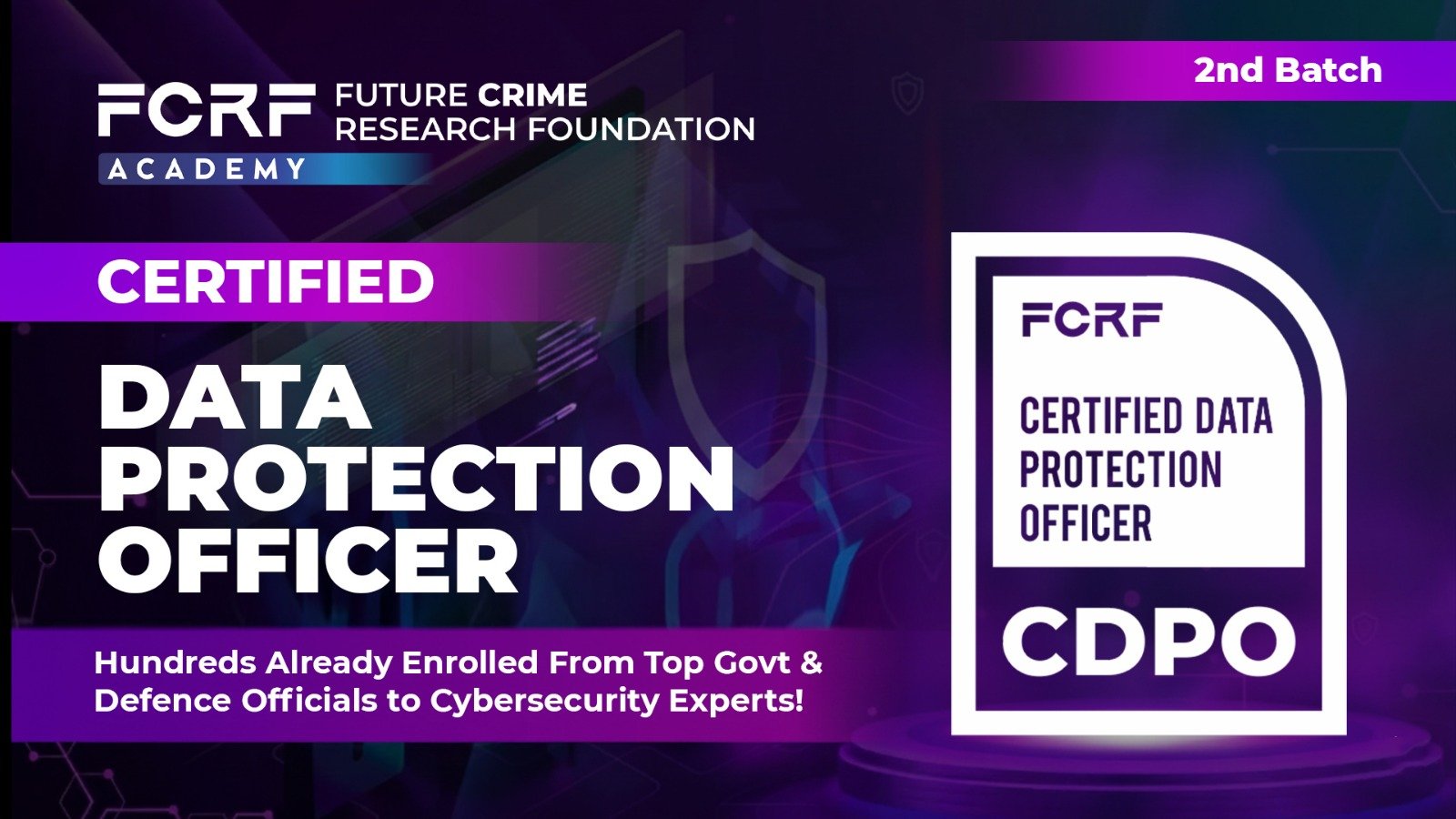

NEW DELHI — With India’s Data Protection Rules now officially notified and set to become fully operational after an 18-month transition window, organisations across sectors are scrambling to build internal expertise before compliance obligations harden into enforceable duties. Into this moment steps the Future Crime Research Foundation’s (FCRF) second cohort of the Certified Data Protection Officer (CDPO) programme—an initiative that has rapidly positioned itself as one of the country’s most sought-after practitioner-led courses on the DPDP Act.
The first cohort, launched earlier this year, recorded over 500 participants including senior IAS officers, law enforcement leaders, chief information security officers, in-house counsels, compliance teams, and professionals from banking, fintech, telecom, healthcare, and Big Tech. The demand, FCRF officials say, reflects a structural shift in how Indian organisations understand data responsibility—not merely as a legal requirement but as a governance function.
A Think-Tank Expands Its Portfolio Amid Regulatory Momentum
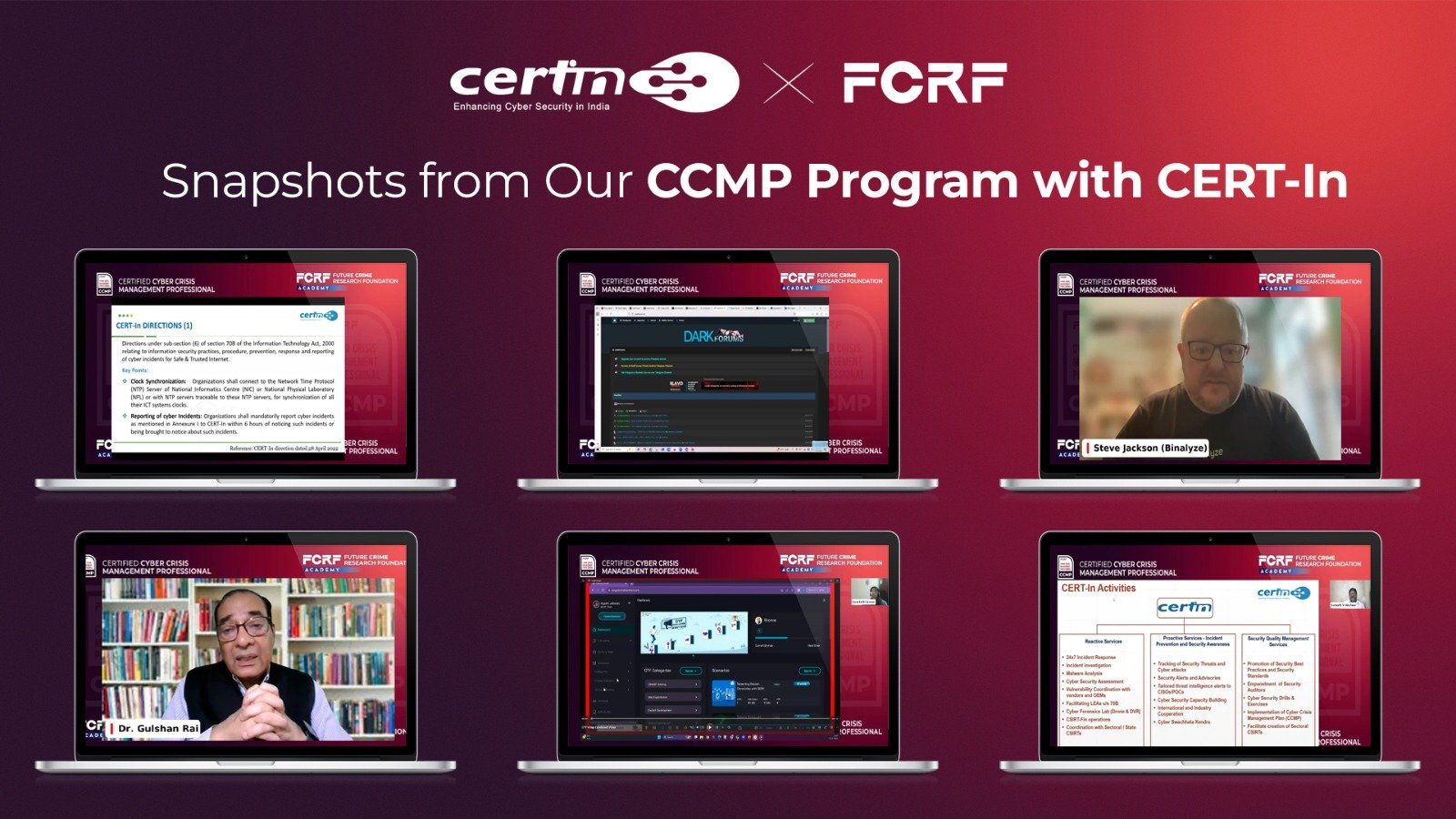
The rise of the CDPO programme comes as FCRF steadily expands a training portfolio that now spans incident response, cyber law, data privacy, governance risk & compliance, and crisis management. The foundation, built around the expertise of veteran cybercrime investigator Prof. Triveni Singh and a network of domain specialists, has already delivered multiple national-level programmes such as the Cyber Crisis Management Professional (CCMP) course with CERT-In and the Certified Cyber Law Practitioner (CCLP) programme, both of which have attracted participation from senior industry stakeholders and government agencies.
These programmes, taken together, have turned FCRF into one of the most visible hubs for applied cybersecurity research and training outside the formal government ecosystem. The CDPO course, however, marks a distinct pivot: an attempt to bridge the wide talent gap in data protection leadership at a time when regulatory timelines are tightening and digital ecosystems are expanding.

India’s Data Ecosystem Braces for New Rules and New Accountability
The newly released Data Protection Rules under the DPDP Act outline, for the first time, specific compliance contours for data fiduciaries and processors—including consent standards, grievance redressal, breach notifications, age-gating requirements, storage obligations, and obligations for significant data fiduciaries. Although enforcement will begin after an 18-month preparation window, regulatory expectations are already taking shape within boardrooms and compliance units.
Experts note that India’s data economy—spanning embedded finance, cloud services, AI platforms, UPI-linked digital commerce, and sprawling government databases—requires an unprecedented scale of privacy leadership. The demand for trained Data Protection Officers is therefore expected to accelerate as companies recalibrate internal processes, contracts, supply chains, and digital infrastructure to align with the incoming regime.
FCRF’s CDPO programme aims to respond to that demand through a practitioner-first curriculum built around 16 modules covering the DPDP Act, comparative global privacy standards, AI governance, cross-border transfers, incident handling, contract and policy drafting, privacy-by-design frameworks, and organisational risk management. The course also integrates case studies from Indian enforcement trends, breach analysis, and real-world compliance failures that shape contemporary privacy jurisprudence.
Preparing India’s Workforce for a Privacy-Centered Future
Industry executives say the second cohort will likely draw participation from mid-level managers aiming to upskill ahead of new responsibilities as well as board-level leaders tasked with redesigning governance models. “Organisations now see data protection as a core business function,” an FCRF representative noted, adding that the first batch’s cross-sector composition demonstrated how privacy concerns are no longer confined to technology companies.
The second cohort also signals FCRF’s intent to align capacity-building with India’s broader digital governance trajectory. As new cybercrime patterns emerge, AI-driven threats intensify, and regulatory coordination deepens across agencies, the foundation’s multi-programme ecosystem—CCMP, CCLP, GRC training, and now CDPO—reflects a comprehensive strategy to prepare professionals for intersecting legal, technological, and operational risks.
Registration for the second cohort opens amid palpable urgency across corporate and government sectors. With the DPDP Act entering its operational phase, the next 18 months are expected to reshape how Indian institutions collect, store, and protect personal data. For many, the CDPO programme is not just a credential—but a pathway to navigating one of the most significant regulatory transitions in India’s digital history. Interested participants can click here to REGISTER NOW!
