

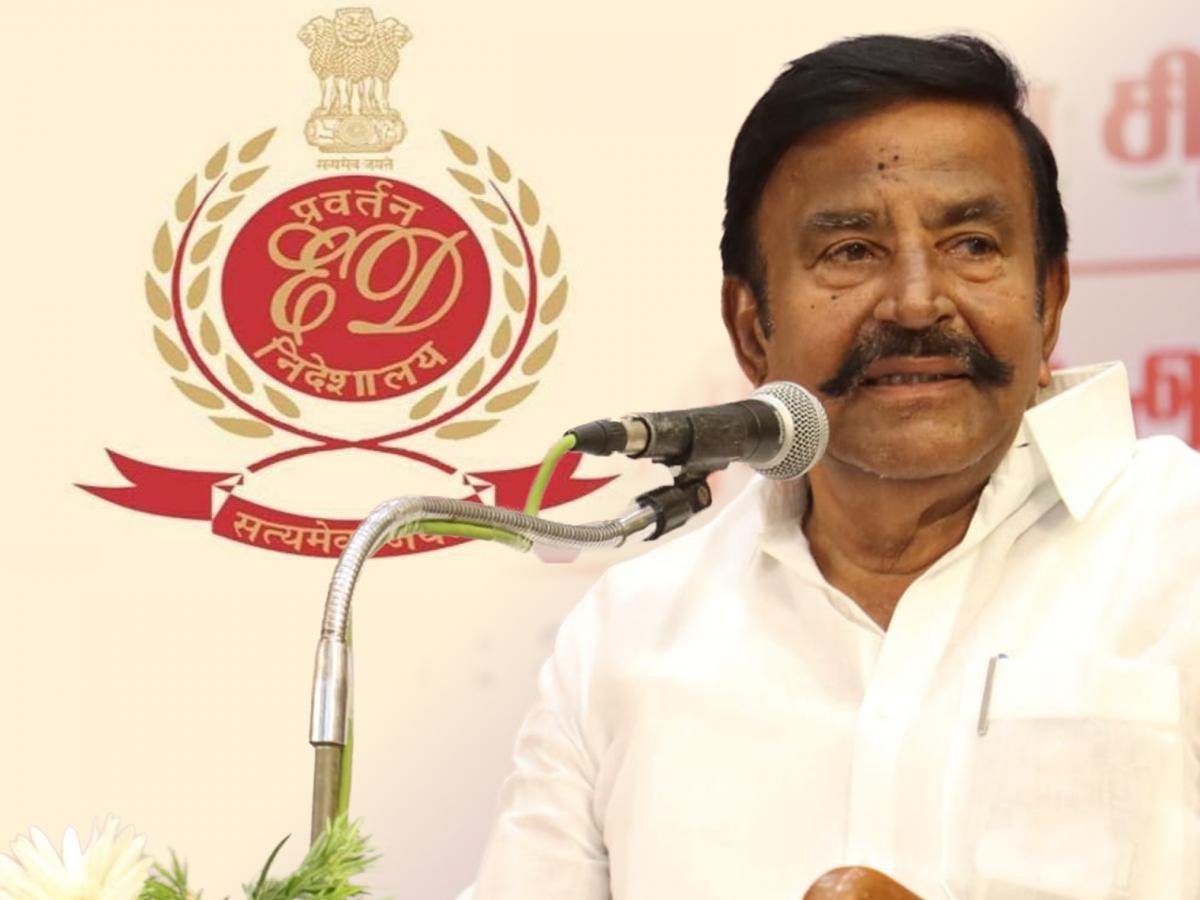

A sweeping corruption allegation in Tamil Nadu’s Municipal Administration and Water Supply Department has drawn the Enforcement Directorate into a widening confrontation with the state government, as federal investigators press for criminal cases to be registered before they can pursue money-laundering charges. At the centre of the clash is a 258-page dossier part legal brief, part political flashpoint detailing what the agency claims is a multi-layered system of bribery, tender manipulation and routed kickbacks amounting to more than ₹1,020 crore
ED Flags “Systemic” Bribe Network in Tamil Nadu’s Tender Process
When Enforcement Directorate (ED) officials arrived at the homes and offices of Tamil Nadu Minister for Municipal Administration K.N. Nehru and his associates in April, the searches were initially part of a separate probe. What investigators say they discovered on digital devices WhatsApp chats, calculation sheets, and internal communication would prompt an entirely new line of inquiry.
According to a dossier the agency sent on December 3 to the state Chief Secretary, the Head of Police Force, and the Directorate of Vigilance and Anti-Corruption (DVAC), bribes linked to municipal contracts were allegedly collected at nearly every stage of the tender process. ED claims the bribe pools ranged from 7.5% to 25% of contract values and were routed through contractors, middlemen and government officers at multiple levels.
The agency alleges that at least ₹1,020 crore was generated in this manner funds it says were used to finance “luxurious lifestyles,” personal assets and political expenditures. In its communication, the ED asserts that tenders were pre-decided or manipulated to favour certain contractors, who in turn allegedly paid commissions to associates of Minister Nehru
A Clash Over Jurisdiction and Procedure
Under Indian law, the ED cannot prosecute money laundering without an underlying criminal case an FIR filed by another investigative body. To that end, Section 66(2) of the Prevention of Money Laundering Act (PMLA) empowers the agency to share evidence with state police or anti-corruption bureaus and request that a predicate offence be registered.
The December 3 dossier is the latest in a series of such requests. In a pointed warning, the ED reminded Tamil Nadu’s police leadership that failing to register an FIR could amount to “knowingly assisting” in the generation of criminal proceeds, invoking language from the Supreme Court’s judgment in Vijay Madanlal Choudhary, the landmark ruling that reshaped PMLA enforcement.
This is not the first instance of ED seeking cooperation from state authorities. In June 2024, the agency wrote to the Head of Police Force regarding evidence it said linked government officials and contractors to an alleged river sand mining scam. Another letter in October asked the DGP to register an FIR relating to a purported cash-for-jobs operation within the same MAWS department, where several candidates allegedly paid bribes of ₹25–35 lakh to secure engineering and planning posts.
Parallel Investigations and a Pattern of Escalating Allegations
The dossier arrives against a backdrop of earlier corruption allegations in Tamil Nadu’s public works and housing sectors. In May 2025, ED shared details with DVAC of a money-laundering probe involving an alleged ₹27.9 crore bribe payment by a private developer during 2015–16 to then-AIADMK housing minister R. Vaithilingam and his sons. DVAC had already filed two FIRs in that case late in 2024, enabling ED to proceed with its inquiry.
In the current MAWS matter, however, no FIR exists. The ED’s claim of a ₹1,020 crore tender-rigging scheme relies heavily on records seized during the April searches, including notes that investigators say show payments being collected during project clearances, bill approvals, and transfers through informal hawala routes. The bribe amounts, according to the agency, mapped consistently across projects ranging from community toilets and sanitation outsourcing to village roads, NABARD works and lake-restoration contracts.
Some of the material ED cites WhatsApp chats allegedly showing pre-fixed tenders, spreadsheets tracking contractor payments, and messages referencing “party funds” is described by the agency as “direct evidence.” Officers posted in the department, ED claims, were also asked to collect money on behalf of senior officials.
Political Sensitivities and an Unfolding Institutional Standoff
Minister Nehru and the MAWS Department’s Principal Secretary, D. Karthikeyan, did not respond to calls or messages seeking comment. The state government has not publicly indicated whether it intends to register an FIR, or whether it sees the ED’s requests as overreach into matters that first require state-level scrutiny.
The tension reflects an increasingly common institutional dynamic: federal agencies invoking PMLA provisions to push state police into action, while state governments weigh political, legal and administrative considerations before opening formal corruption cases.
For now, ED officials argue that the evidence obtained during April’s searches originally part of a separate PMLA matter involving a CBI-linked case against a company owned by the Minister’s brother should have triggered immediate state action. That earlier PMLA case was closed after the underlying CBI investigation was quashed by the Madras High Court, leaving the newly uncovered material to be reassessed under fresh allegations.
