

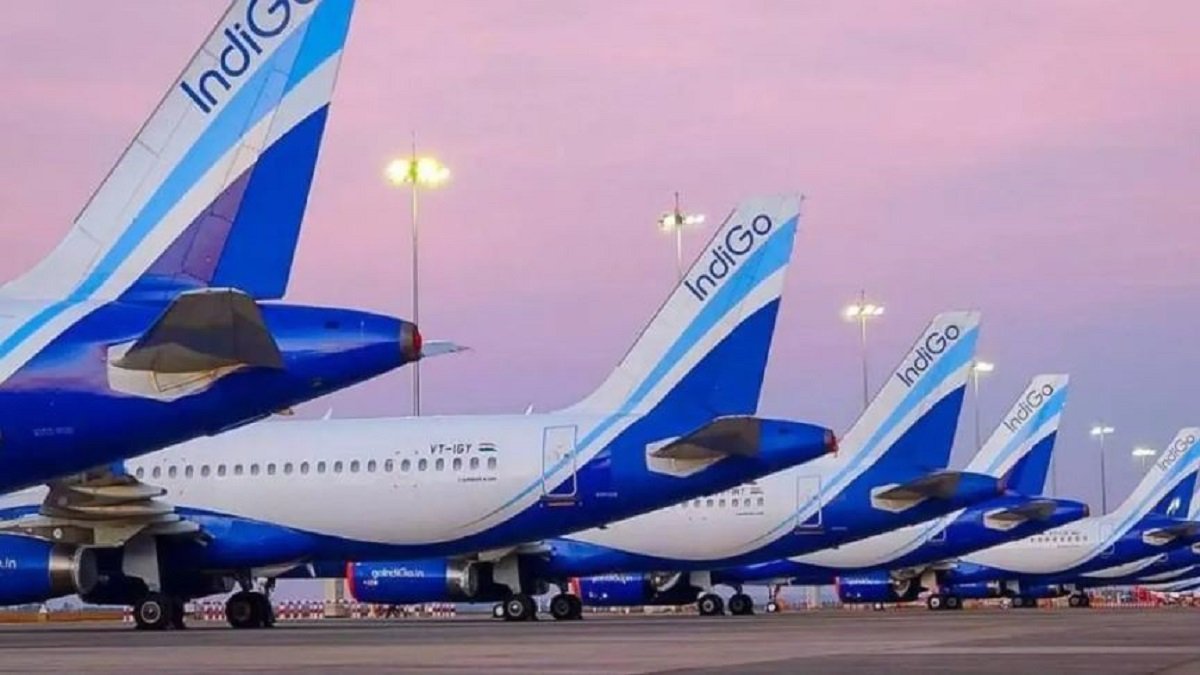

On the morning of Friday, December 5, 2025, the departures board at Terminal 3 of New Delhi’s Indira Gandhi International Airport began to flicker with a singular, ominous status update: Cancelled. It started as a trickle—a few early morning flights to Mumbai and Bengaluru—but by noon, the trickle had become a deluge. Inside the terminal, the scene resembled, in the words of one stranded passenger, “an apocalypse”. Thousands of travelers, their faces etched with a mixture of exhaustion and disbelief, camped on the cold granite floors. Luggage piled up in chaotic mounds, abandoned by a system that had simply ceased to function.
This was not a disruption caused by a freak cyclonic storm or a sudden geopolitical escalation. It was a man-made disaster, a systemic collapse of India’s aviation lifeline, engineered within the spreadsheets and rostering software of the country’s most dominant airline: IndiGo.
Over the course of 48 hours, IndiGo, the carrier that prides itself on “on-time performance” and “hassle-free” travel, cancelled more than 1,000 flights, paralyzing the movement of people and commerce across the subcontinent. The airline suspended all departures from Delhi, its primary hub, for an entire day—a virtually unprecedented move in Indian aviation history. Similar shutdowns occurred in Chennai and Bengaluru, severing the arterial connections between India’s political capital and its economic engines.
For a nation on the move, the grounding was a shock to the system. But for industry insiders, it was a reckoning long foretold. The crisis has laid bare the perilous fragility of India’s aviation market, where a single entity controls nearly two-thirds of all domestic traffic. It has brought into sharp relief the tensions between corporate efficiency and public safety, culminating in a bitter standoff between the airline, its pilots, and the government.
At the heart of the chaos lies a story of strategic gamble and regulatory brinkmanship. As competitors like Air India spent the preceding year aggressively recruiting hundreds of pilots to prepare for stricter safety norms, IndiGo stood still, banking on its “lean” operational model to weather a regulatory storm. When the storm finally broke, the airline had no shelter. The result was not just a logistical nightmare but a political firestorm, with Opposition Leader Rahul Gandhi decrying the “monopoly model” that allowed a single corporate failure to hold the entire country hostage.
As the dust settles and the backlog of stranded passengers begins to clear, the questions remaining are far more severe than the immediate inconvenience of delayed travel. They strike at the core of India’s aviation policy: Has the pursuit of low-cost dominance come at the expense of national resilience? And in a market where 90% of the capacity is held by two conglomerates, is the Indian passenger merely collateral damage in a high-stakes game of monopoly?
The Scene at Ground Zero
The scale of the disruption was biblical in its proportions. At New Delhi’s Terminal 3, the chaos was palpable. Passengers who had arrived for early morning flights found themselves trapped in a bureaucratic limbo. Check-in counters were unmanned or besieged by angry mobs. Information screens, usually a source of order, became heralds of despair, scrolling through page after page of red text.
“I reached the airport for my flight to Kolkata and was shocked to learn that it had been cancelled. No alternative arrangement was offered,” said Anand Vasant, a passenger stranded in the mayhem. His story was echoed by thousands. Sunil D. Shaligram, another traveler, watched helplessly as his son remained stranded for over 14 hours waiting for a Pune-bound flight that never took off. “Despite repeated requests, we received no assistance,” he lamented.
The disruption was not limited to the metros. In the northern territories of Jammu and Kashmir, the impact was even more severe due to the limited connectivity. Chaotic scenes unfolded at Srinagar and Jammu airports as IndiGo cancelled 16 flights from Srinagar and 11 from Jammu in a single day. Hundreds of passengers, many of them tourists ill-equipped for the harsh winter waits outside terminals, staged protests. They chanted slogans against the airline, alleging a total failure to respond to distress calls.
The crisis rippled outward, affecting the entire transportation grid. As desperate passengers scrambled for alternatives, the Indian Railways was forced to intervene. The Northern Railway frantically added extra coaches to premium trains like the Rajdhani and Shatabdi Express to accommodate the overflow from the airports. It was a stark reminder of how critical IndiGo had become to the nation’s mobility; when it failed, the shockwaves were felt on the tracks as well as in the skies.
Celebrities and public figures were not immune to the chaos, amplifying the outrage on social media. Actor-choreographer Lauren Gottlieb, caught in the melee, described the scene as “an apocalypse inside,” noting that flights to major international hubs like Dubai were also wiped out. The visibility of such high-profile passengers brought the crisis into the living rooms of the entire nation, transforming a corporate operational failure into a headline-dominating national emergency.
To understand how IndiGo, a carrier celebrated for its clockwork precision, unraveled so spectacularly, one must look past the check-in counters and into the cockpit rosters. The trigger for the December meltdown was the enforcement of new Flight Duty Time Limitations (FDTL)—a set of safety regulations designed to prevent pilot fatigue, a leading cause of aviation accidents globally.
The Directorate General of Civil Aviation (DGCA) had notified airlines of these changes well in advance. The new rules, aligned with international best practices, mandated an increase in the weekly rest period for pilots from 36 to 48 hours. More critically, they limited the number of night landings a pilot could perform between midnight and 6:00 a.m. to just two per week, down from the previous limit of six. The intent was clear: to ensure that the men and women charged with navigating millions of lives through the skies were rested, alert, and safe.
For an airline operating on a traditional model, these changes would require a significant, but manageable, adjustment in staffing—typically a 15% to 20% increase in pilot strength to cover the reduced flying hours per pilot. But IndiGo does not operate on a traditional model. It operates on a hyper-efficient, “lean manpower” strategy designed to squeeze every ounce of productivity from its assets, both human and mechanical.
The Mathematics of Failure
For years, this strategy was the secret sauce of IndiGo’s profitability. By keeping crew buffers razor-thin and aircraft utilization sky-high (often exceeding 13-14 hours a day), the airline could offer competitive fares while maintaining healthy margins. However, this efficiency came with a hidden cost: fragility. There was no slack in the system. When the new FDTL norms effectively reduced the availability of each pilot by roughly 20%, the mathematical foundation of IndiGo’s roster collapsed.
The airline’s internal planning systems, which had optimized crew deployment to the minute, flashed red. Suddenly, there were simply not enough pilots to fly the planes. The shortage was most acute for the night operations, the very backbone of the low-cost model that relies on “red-eye” flights to maximize aircraft utilization. With pilots hitting their new, stricter duty limits much faster than before, flights began to drop off the schedule like dominoes.
The airline needed 2,422 qualified crew members to operate its winter schedule effectively under the new norms. However, data submitted to the DGCA revealed that as of December, IndiGo had only 2,357 pilots-in-command—a deficit of 65 captains. While 65 might seem like a small number in an airline with thousands of employees, in a finely tuned network where every pilot is utilized to the legal maximum, a deficit of this size is catastrophic. It meant that there was zero buffer to absorb the friction of normal operations, let alone a systemic shock.
IndiGo’s management initially attributed the disruptions to a “multitude of unforeseen operational challenges,” citing winter fog and technical glitches. But the sheer scale of the cancellations—550 in a single day—belied such convenient explanations. Weather affects all airlines; the total paralysis was unique to IndiGo.
The “Hiring Freeze” Allegation
The Federation of Indian Pilots (FIP), a body representing the cockpit crew, was scathing in its assessment. In a blistering letter to the DGCA, they dismantled the airline’s defense, labeling the shortage a “direct consequence of IndiGo’s prolonged and unorthodox lean manpower strategy”. The pilots alleged that despite having a two-year preparatory window before the full implementation of the new norms, IndiGo had “inexplicably adopted a hiring freeze”.
This “hiring freeze” is the critical divergence point that turned a regulatory transition into a national crisis. While other airlines saw the writing on the wall and ramped up recruitment, IndiGo stood pat. The FIP’s letter accused the airline of not just failing to hire but engaging in “cartel-like behavior” to maintain a pay freeze and entering into non-poaching agreements to artificially suppress the market for pilot labor. The accusation suggests a deliberate corporate strategy: to gamble that the government would blink and dilute the rules before they could impact the bottom line.
The gamble failed, at least initially. The rules kicked in, the pilots timed out, and the planes stayed on the ground. The “lean machine,” stripped of its human redundancy, broke down, leaving the Indian public to pick up the pieces.
The failure of IndiGo is made starker by the relative stability of its competitors. In the same week that IndiGo cancelled over a thousand flights, other carriers managed to keep their operations largely intact. This disparity destroys the argument that the FDTL norms were inherently unmanageable. Instead, it points to a divergence in corporate foresight and preparedness.
The most telling comparison is with Air India, the flag carrier now under the stewardship of the Tata Group. While IndiGo was allegedly freezing hiring, Air India was in the midst of one of the most aggressive recruitment drives in its history. Anticipating the need for a larger crew pool to support both its expansion and the impending safety regulations, Air India had proactively hired approximately 400 pilots in the preceding months.
This figure, cited by industry observers and alluded to in the pilot union’s communications, represents a fundamental difference in philosophy. For the Tata Group, currently integrating four airlines (Air India, Vistara, Air India Express, and AIX Connect) into a single entity, operational resilience appears to have been prioritized over short-term cost optimization. Reports indicate that Air India Express alone planned to add 350 pilots to its roster, doubling its strength to meet the dual demands of fleet expansion and the new fatigue rules.
The Airline Pilots’ Association of India (ALPA) highlighted this contrast, noting that “all other airlines have provisioned pilots adequately and remain largely unaffected due to timely planning and preparation”. The union’s statement paints a picture of an industry that was largely ready for the transition—except for its biggest player.
The pilot bodies have gone further, suggesting that IndiGo’s failure was not merely incompetence but a “manufactured crisis”. By allowing the situation to deteriorate to the point of public hysteria, the theory goes, IndiGo aimed to arm-twist the regulator into rolling back the safety norms. “These events raise serious concerns that an artificial crisis was engineered to exert pressure on the government for commercial gain under the pretext of public inconvenience,” the ALPA wrote in a letter to the DGCA.
If this was indeed a calculated tactic, it was a high-risk one. It relied on the sheer “too big to fail” nature of IndiGo’s market presence. With Air India and other carriers operating fewer than half the number of flights as IndiGo, they simply did not have the spare capacity to absorb the millions of passengers stranded by the market leader. When IndiGo sneezed, the entire country caught a cold.
The disparity in preparedness also highlights the different pressures on the airlines. The Tata Group, with deep pockets and a long-term vision to restore Air India’s global reputation, could afford to carry the cost of a “bench” of pilots. IndiGo, publicly traded and relentlessly focused on quarterly margins and market share dominance, viewed such redundancy as “fat” to be trimmed.
The consequences of this “trimming” were visible at the airports. While Air India and SpiceJet counters were operational—albeit overwhelmed by desperate passengers seeking alternative bookings—IndiGo’s terminals were scenes of desolation and rage. In Mumbai and Bengaluru, police had to be deployed to manage the crowds as tempers flared.
This contrast serves as a damning indictment of the efficiency-at-all-costs model. In a safety-critical industry like aviation, efficiency without resilience is not a strategy; it is a liability. And in December 2025, that liability was transferred from the airline’s balance sheet to the schedules, wallets, and mental peace of the Indian traveler.
The chaos of December 2025 has provided a terrifying glimpse into the reality of a monopolistic market. While technically a free market with multiple players, the Indian aviation sector has effectively consolidated into a duopoly, with one giant casting a long shadow over the entire landscape.
IndiGo’s dominance is staggering. As of late 2025, the airline commanded a domestic market share estimated between 60% and 65%. In many sectors, particularly on routes connecting smaller Tier-2 and Tier-3 cities, it is the only option. The next largest competitor, the consolidated Air India group, holds approximately 26% to 28% of the market. Together, these two entities control over 90% of India’s skies.
This concentration of power means that there is no shock absorber in the system. In a healthy, competitive market, if one airline fails, others can step in to fill the void. In India’s current “monopoly model,” IndiGo is the market. When it stops flying, India stops moving.
The Economics of “Hostage” Fares
The implications of this dominance were laid bare during the disruption. With IndiGo flights cancelled, airfares on rival carriers skyrocketed, driven by the ruthless algorithm of supply and demand. Tickets for a one-way flight from Delhi to Mumbai, usually priced around ₹5,000, surged to over ₹36,000—a seven-fold increase. On the Delhi-Chennai route, last-minute fares touched an eye-watering ₹82,000.
For the “common man”—the target demographic of the government’s UDAN (Ude Desh ka Aam Nagrik) scheme—flying became an instant impossibility. Families traveling for weddings, students heading to exams, and patients seeking medical care were priced out of the sky in a matter of hours. The dream of affordable aviation, championed by the Modi government, evaporated in the face of market reality.
Padma Pande, a grandmother in Lucknow, shared the plight of her grandson, an engineering student in Guwahati. “His semester exams were over and he had a confirmed ticket for Lucknow… This last-minute cancellation means that one is stranded as all trains too are running full and indirect flights of other operators, taking advantage of the Indigo crisis, are charging a fortune,” she said. Her story was not unique; it was the story of a captive market being squeezed.
The Political Firestorm
This economic violence did not go unnoticed by the political establishment. Rahul Gandhi, the Leader of the Opposition, seized upon the crisis to launch a blistering attack on the government’s economic policies. In a widely shared tweet, Gandhi termed the “IndiGo fiasco” as the “cost of this Govt’s monopoly model”.
“Once again, it’s ordinary Indians who pay the price – in delays, cancellations and helplessness,” Gandhi wrote. “India deserves fair competition in every sector, not match-fixing monopolies”.
Gandhi’s critique resonated because it tapped into a broader anxiety about the consolidation of India’s key industries—from ports and telecom to airports and airlines—into the hands of a few powerful conglomerates. His use of the phrase “match-fixing monopolies” suggested a collusion between the state and corporate giants, creating an ecosystem where profits are privatized and risks are socialized.
The “monopoly model” critique argues that by allowing IndiGo to grow unchecked—and by failing to nurture a robust ecosystem of competitors—the government created a “single point of failure” for the national economy. The collapse of smaller carriers like Go First and the struggles of SpiceJet have only deepened this dependence.
Furthermore, the monopoly power allows for a certain arrogance in operations. The pilot unions’ allegation that IndiGo ignored the FDTL rules because it believed it could force a rollback is a symptom of this power. A smaller airline, fearing regulatory wrath or passenger exodus, might have complied. A monopoly, secure in the knowledge that passengers have nowhere else to go, can afford to play chicken with the regulator.
The data supports the “hostage” theory. With 65% of the market, IndiGo is too big to ground. If the DGCA were to suspend IndiGo’s license for non-compliance, it would bring the country to a standstill—a fact the airline’s management likely factored into their calculations.
This structural flaw in the market is the true crisis. The cancelled flights will eventually be rescheduled, and the passengers will eventually reach their destinations. But the vulnerability remains. As long as India relies on a single carrier for two-thirds of its connectivity, the nation remains one roster glitch away from paralysis.
The Safety Trade-off
In the end, the gamble paid off. Faced with a paralyzed transport network and mounting public anger, the government blinked.
On the evening of December 5, following urgent meetings between the Civil Aviation Minister Ram Mohan Naidu and airline executives, the government announced a temporary rollback of the new safety rules for IndiGo. The airline was granted an exemption from the stricter FDTL norms until February 10, 2026, giving it a two-month reprieve to “stabilize operations”.
The immediate effect was the restoration of flights. The cancellations slowed, and the queues at the airports began to shorten. But the victory for IndiGo came at a profound cost to the principles of aviation safety.
Why the Rules Mattered
The FDTL norms were not arbitrary bureaucratic red tape. They were the result of years of scientific study on pilot fatigue, circadian rhythms, and cognitive performance. They were mandated by the courts and aligned with global safety standards to prevent the kind of exhaustion-induced errors that can lead to catastrophe. By rolling them back, even temporarily, the government has effectively signaled that commercial stability trumps safety compliance.
The new rules required:
- Weekly Rest: Increased from 36 hours to 48 hours to ensure adequate recovery time.
- Night Landings: Capped at two landings between midnight and 6 AM, down from six, to mitigate the high risk of fatigue during the body’s natural circadian low point.
IndiGo’s business model, which relies heavily on night flights to keep aircraft utilization high, was directly threatened by these safety caps. By granting the exemption, the government allowed the airline to revert to rostering practices that its own regulator had deemed unsafe.
The Moral Hazard
The exemption has infuriated the pilot community. The pilots, who are the ones actually battling fatigue at 35,000 feet, view this as a betrayal. “FDTL norms exist solely to safeguard human life,” the Airline Pilots’ Association stated, warning that any dilution exposes passengers to “unacceptable risks”. The unions have flagged that the government has effectively authorized IndiGo to fly tired pilots for another two months during the peak winter fog season—the most challenging flying conditions of the year.
The irony is palpable. The rules were meant to make flying safer. The lack of compliance caused a disruption. To fix the disruption, the government suspended the safety rules.
This creates a dangerous moral hazard. It suggests that if an airline becomes large enough, it can effectively veto safety regulations by holding the public hostage. Air India, which invested heavily in hiring 400 pilots to comply with the law, now finds itself at a competitive disadvantage against a rival that was allowed to bypass the costs of compliance.
Future Outlook
As India looks to the future, the events of December 2025 will stand as a case study in the perils of unbridled consolidation. The country finds itself in a precarious position: its aviation sector is growing at breakneck speed, but its foundations are worryingly thin.
The government has ordered a “high-level probe” into the cancellations. But unless that probe addresses the root causes—the monopolistic market structure, the lack of regulatory enforcement, and the prioritization of profit over resilience—it will be little more than a paperwork exercise.
IndiGo has promised to normalize operations by February 2026, banking on the recruitment of new pilots and the stabilization of its roster. However, trust is a harder asset to rebuild. The image of the invincible, always-on-time airline has been shattered.
For now, the planes are flying again. The board at Terminal 3 no longer blinks Cancelled. But for the passengers who spent nights on the floor, and for the pilots scanning the foggy runways with heavy eyes, the trust has been broken. The “Indigo hostage crisis” may be over, but the terms of the release have left the Indian skies less safe, and its passengers less free.
