

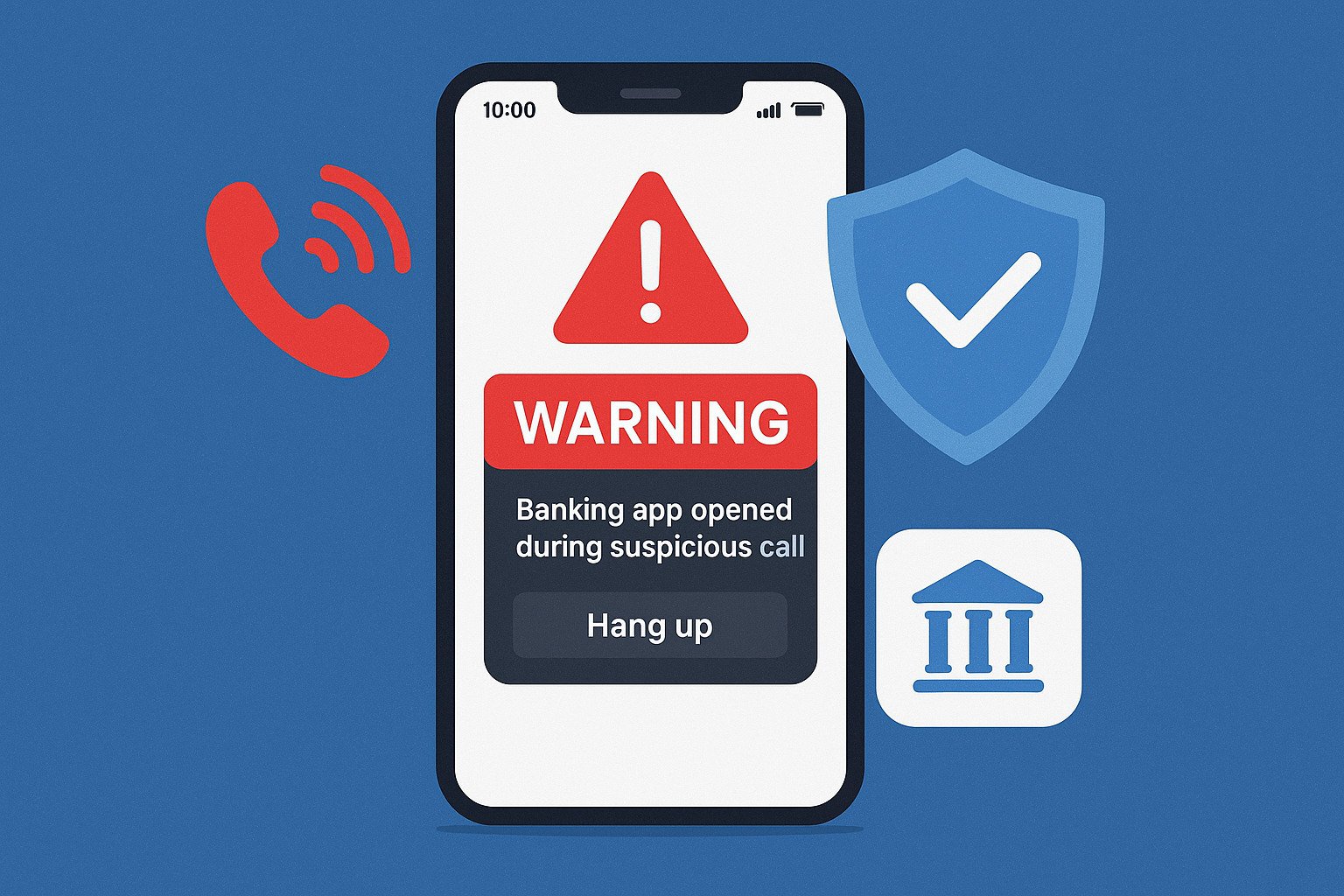

Android has introduced a new anti-fraud system intended to disrupt one of the fastest-growing forms of digital crime: financial scams conducted by phone. The feature, available on devices running Android 11 and above, issues an urgent, on-screen alert if a user attempts to open a banking or payment app while speaking to an unfamiliar caller. It also adds a 30-second processing delay, forcing a pause before any transactions can occur.
The system is designed to intervene at the moment when scam attempts are most likely to succeed—during high-pressure phone calls where impostors pose as bank officials, customer-service agents or law-enforcement representatives. The feature offers a simple one-tap option to hang up or end screen-sharing, currently a common method used to gain remote access to financial apps.
Responding to a Changing Fraud Landscape
Traditional financial cybercrimes have centered on phishing links, malware or cloned websites. But authorities and digital-security researchers say scammers are increasingly turning to social-engineering techniques intended to manipulate victims into voluntarily compromising their accounts.
Fraud rings, particularly in India, Brazil and parts of Europe, often tell victims that their bank accounts are at risk and instruct them to open a payment app to “validate identity” or “freeze fraudulent activity.” Once the victim opens the app and shares their screen, scammers can view sensitive details, manipulate transactions or transfer funds instantly.
“Human vulnerability, not software weakness, is now the primary attack vector,” said one cybersecurity expert briefed on the development. “Intervention during that psychological tipping point may significantly reduce financial losses.”
Global Rollout and Early Results
Google first piloted the real-time intervention in India, Brazil and the United Kingdom, where banks have reported steep increases in phone-based breaches. After positive testing results, the system was expanded globally, including recent release in the United States through partnerships with financial institutions and major payment platforms.
The alert mechanism is currently compatible with select apps, including Google Pay, Paytm and Navi, and will widen as additional banking and fintech partners adopt the framework. Android users must maintain updated operating systems and current app versions to enable the feature, and availability may vary by region and manufacturer.
A Tool, Not a Cure
Experts caution that the technology is only one part of a larger strategy to combat evolving scam ecosystems. The alert will not trigger in every scenario, and it does not replace precautionary behavior such as avoiding unknown callers, not responding to unsolicited requests for personal information, and independently verifying the identity of any organization seeking financial details.
Still, the combination of alerts and enforced delay represents an effort to override the psychological urgency scammers create—an approach researchers believe may be more effective than reactive fraud reporting.
As social-engineering attacks grow more sophisticated, companies and regulators are increasingly seeking real-time, behavior-based interventions rather than relying solely on endpoint security or user awareness campaigns.
