

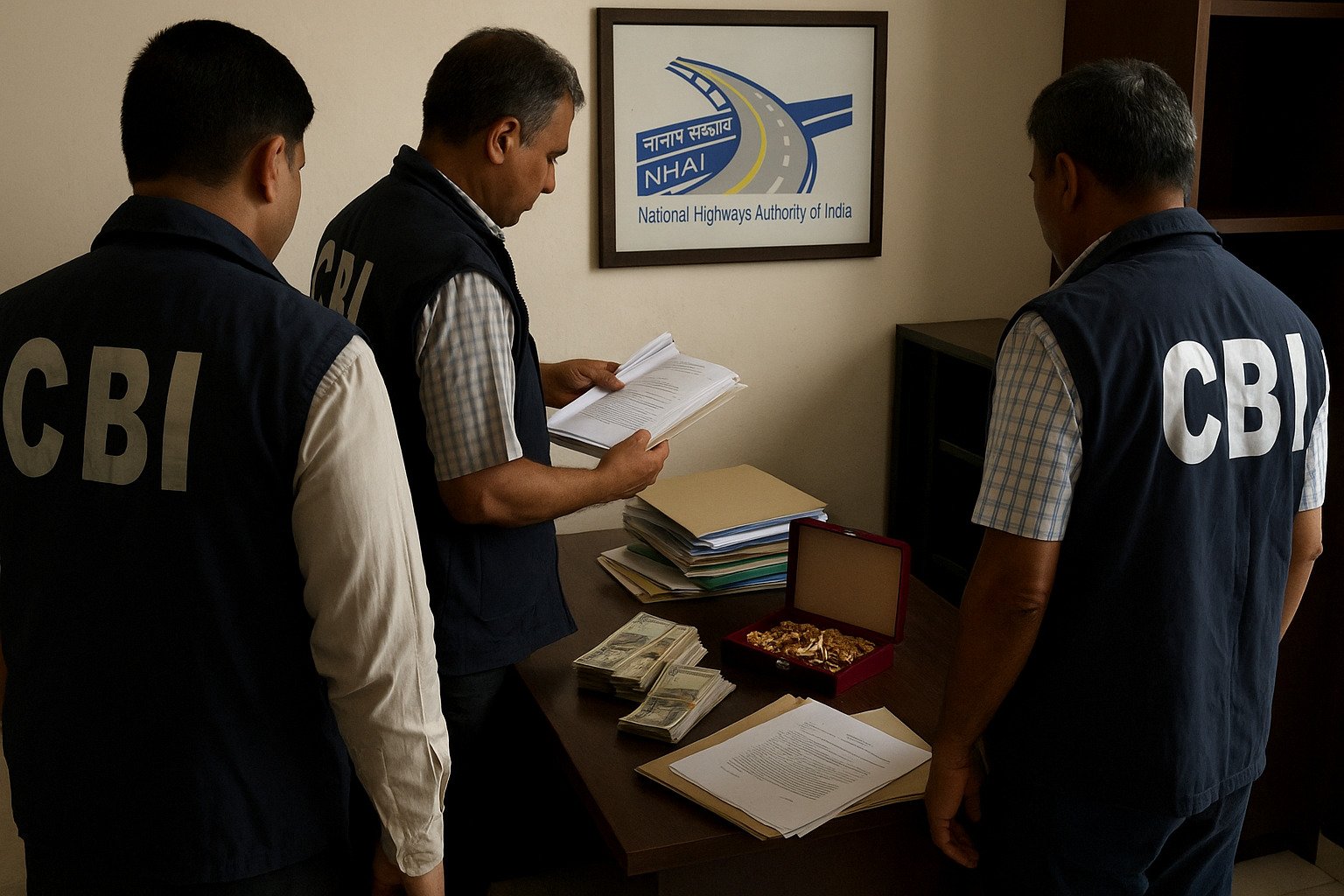

CBI Court in Visakhapatnam delivers judgment; Case registered in 2001, charges filed in 2003 after lengthy investigation
New Delhi / Visakhapatnam: A Special Court of the Central Bureau of Investigation (CBI) in Visakhapatnam has convicted and sentenced former Assistant General Manager of Steel Authority of India Limited (SAIL), Ragam Kishore, to three years of rigorous imprisonment and a fine of ₹1 lakh. The judgment, delivered on Tuesday, found the retired senior official guilty of possessing assets vastly exceeding his known sources of income — an offence punishable under the Prevention of Corruption Act.
According to CBI investigators, Kishore served in a crucial role as Regional Manager in SAIL’s Branch Transport and Shipping Division during his tenure, before retiring from the Kolkata office as AGM. During those years, the prosecution argued, he exploited his official position to unlawfully accumulate substantial wealth.
https://the420.in/fcrf-certified-grc-professional-program-governance-risk-compliance-training-india/
Unexplained Wealth Over ₹60 Lakh Accrued in Just 12 Years
The CBI’s chargesheet established that between January 1, 1988 and April 19, 2000, Kishore and his close family members acquired several movable and immovable properties worth ₹60,25,825.65.
Investigators contended that:
- This wealth far exceeded his lawful earnings
- Multiple transactions indicated concealment of illegal income
- Properties were placed in the names of relatives to mask the origins of funds
The accused failed to account for the genuine source of these assets
During trial, the defence could not provide any satisfactory explanation regarding the origin of the investments.
A Case That Took Over Two Decades to Reach Justice
The disproportionate assets case was initiated:
Key Legal Milestones Date
- FIR registered by CBI 17 July 2001
- Chargesheet filed 05 August 2003
- Final judgment delivered 02 December 2025
What followed was a prolonged legal process involving evaluation of:
- Witness testimonies
- Bank statements and transaction trails
- Income and expenditure audit
- Property valuation documents
The court noted that extensive financial scrutiny and delays inherent in white-collar crime litigation contributed to the long timeline. Ultimately, the case took 24 years to conclude from the date of registration.
Court Observes Abuse of Official Position
While pronouncing the sentence, the Special Judge underscored that Kishore, being a public servant in a prominent government-owned enterprise, betrayed public trust by utilising his authority for personal enrichment.
The order stated that corruption involving illicit accumulation of wealth:
“Undermines democratic integrity, distorts fair governance, and inflicts deep financial harm on public institutions.”
The court emphasised that criminal misconduct must invite punitive consequences to deter similar actions within government service sectors.
CBI: Strong Message of Zero Tolerance
CBI welcomed the verdict as a milestone in its anti-corruption campaign. Senior officials said:
“The judgment sends a stern warning to public officials tempted to misuse their posts for illegal gain.”
“CBI remains committed to pursuing disproportionate assets cases through rigorous investigation and sustained legal follow-up.”
The agency highlighted that asset-based corruption cases are central to ensuring accountability in public service.
DA Cases: Complex, Document-Intensive but Crucial
Legal experts note that disproportionate assets investigations are fundamentally complex as they require:
- Detailed financial forensics
- Analysis of lifestyle expenditure versus lawful income
- Property valuation over historical time periods
- Establishing beneficiary patterns within families
Though such trials may span years, once established in court, they set a firm legal precedent against economic offences.
Conclusion
The conviction of a former senior SAIL official marks another significant step in India’s ongoing battle against corruption within state-run enterprises. By mandating both imprisonment and financial penalty, the court has reinforced that:
- Every rupee earned by a public servant must withstand scrutiny
- Concealed or unjustified wealth will ultimately invite legal action
- Accountability remains paramount regardless of rank or retirement
As the CBI continues to tighten its surveillance and prosecution of economic crimes, this verdict stands as a clear reminder — corruption, at any level, is both morally unacceptable and legally punishable.
