


Civil Aviation Ministry Acknowledges GNSS Interference, Authorities Intensify Monitoring and Technical Oversight
New Delhi – India’s Ministry of Civil Aviation has confirmed that multiple major airports, including Delhi, have experienced instances of GPS spoofing and GNSS interference, leading to temporary disruptions in flight operations and prompting heightened monitoring measures. The Directorate General of Civil Aviation (DGCA) and Airports Authority of India (AAI) have initiated a thorough review and investigation.
In a written reply to the Rajya Sabha, Civil Aviation Minister Ram Mohan Naidu stated that aircraft operating near Delhi and other major airports have reported false or jammed GPS signals, which could potentially affect onboard navigation systems.
The minister noted that after the DGCA made it mandatory in November 2023 to report all GPS jamming and spoofing incidents, regular reports have been received from airports across the country. According to the Ministry, GNSS interference has been recorded at Kolkata, Amritsar, Mumbai, Hyderabad, Bengaluru, Chennai, in addition to Delhi. This indicates that navigation-related disturbances are spreading across a wide geographical area.
Impact on Flight Safety and Backup Systems
The Ministry clarified that India maintains a Minimum Operating Network (MON), which includes conventional ground-based navigation and surveillance systems such as radars, VORs, and DMEs. These backup systems ensure that aircraft can operate safely even when satellite-based navigation becomes temporarily unreliable.
Officials from the DGCA and AAI are actively monitoring the situation and investigating the source of the interference. Globally, GNSS disruptions are often associated with military activities, illegal jamming devices, cross-border signal spillovers, or rogue transmitters. The government has not yet disclosed the precise cause of the interference in India.
What is GPS Spoofing?
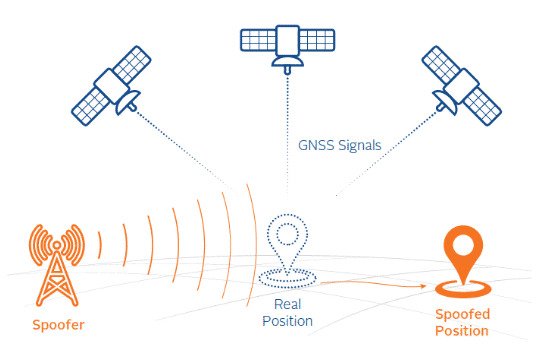
GPS spoofing occurs when a device transmits counterfeit signals on the same frequencies used by GPS satellites. These fake signals override the genuine ones, preventing aircraft receivers from locking onto accurate satellite data.
Unlike GPS jamming, which blocks signals entirely and causes an aircraft to lose positioning, spoofing misleads the navigation system by feeding it false coordinates. Pilots may be led to believe the aircraft is in a different location. Both jamming and spoofing can significantly disrupt navigation systems, increase pilot workload, and affect operational efficiency.
Government Response and Precautionary Measures
The Ministry of Civil Aviation has emphasized that enhanced reporting, technical monitoring, and stringent oversight are being implemented to safeguard flight operations. The DGCA and AAI are jointly investigating the matter and focusing on strengthening airport security protocols.
Experts note that these incidents highlight the vulnerabilities of satellite-based navigation systems and raise serious safety concerns. Airlines have been instructed to routinely test alternative navigation and backup systems, and pilots are being trained to respond effectively in such scenarios.
The ongoing situation also underscores the global importance of aviation navigation security. For now, flight operations and air traffic safety continue under close monitoring, while authorities work to identify the source of interference.
