
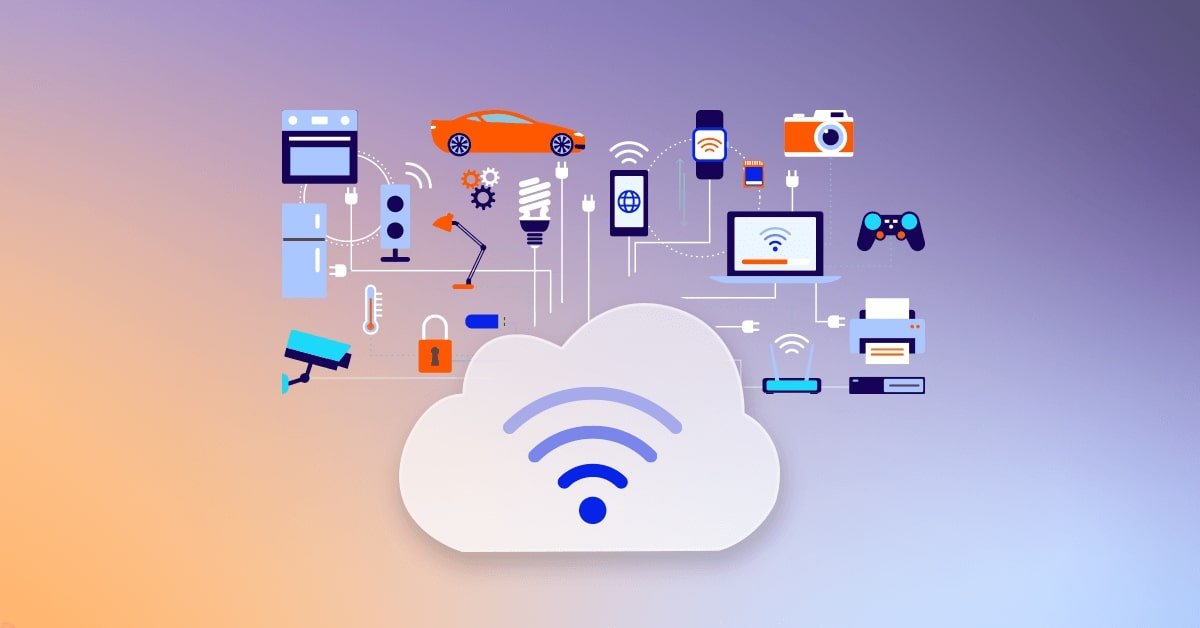

As manufacturers rush to connect everyday machines to the cloud, new research suggests that some of the most fundamental assumptions about device security may be flawed. A forthcoming presentation at Black Hat Europe outlines a model for hijacking IoT devices at scale—without exploiting software vulnerabilities, cracking passwords, or knowing a device’s IP address. Instead, the method turns the very structure of cloud management into a point of entry.
A New Attack Model With Old Assumptions in Its Crosshairs
In the coming weeks, security researchers Jincheng Wang of Nanjing University of Posts and Telecommunications and independent analyst Nik Xe will demonstrate an attack technique they say exposes a widespread blind spot: the authentication pathways that link Internet of Things (IoT) devices to their cloud-management platforms.
For years, security discussions around IoT have focused on firmware flaws, weak passwords, or exposed IP addresses. This research argues something more fundamental—that the trust relationship between devices and cloud servers can be manipulated in ways that circumvent traditional defenses. According to Wang, the channels through which devices communicate with the cloud are “still widely overlooked,” affecting millions of systems across homes, offices, and industrial facilities.
Unlike earlier attacks that require breaching a firewall or exploiting unpatched code, their proof of concept relies only on understanding how a device identifies itself to the cloud. In some cases, that identification is startlingly simple.
Algoritha Prepares You for Seamless DPDP Compliance — Contact Us for Complete Implementation Support
Static Identifiers: A Structural Weakness
Many IoT devices authenticate to cloud services using static identifiers—typically a serial number (SN) or MAC address. These data points are meant merely to distinguish one device from another, not to serve as hardened credentials. Yet cloud platforms often rely on them to decide whether a connection is legitimate. Wang and Xe found that an attacker needs just two things: The device’s identifier, and Knowledge of how the cloud server turns that identifier into an authentication credential.
Both can be acquired more easily than expected. Serial numbers and MAC addresses are often exposed through network interfaces, retrieved through local service ports, leaked by Wi-Fi access points, or derived from predictable manufacturing patterns. SNs tend to follow model-specific templates; MAC addresses encode an assigned manufacturer prefix, leaving only a few unpredictable characters.
In many cases, these identifiers can also be brute-forced—an issue compounded by the fact that some cloud apps retrieve SNs or MAC addresses automatically when binding devices to local networks. With the identifier in hand, an attacker can impersonate the targeted device and compete for its cloud session.
Hijacking the Cloud Channel, Silently
What makes this attack particularly difficult to detect is its resemblance to normal device traffic. Once an attacker impersonates a device, the cloud platform treats the malicious channel as legitimate. According to the researchers, attackers can even disconnect the gerçek device’s channel temporarily just long enough for the platform to accept the fake one before allowing the original connection to resume.
At that point, the malicious session can issue administrative commands through the cloud, which are relayed to the real hardware. The method works even if the physical device is located behind an enterprise firewall or on an isolated intranet.
Tracing such an intrusion is extraordinarily difficult. In Wang’s words, commands issued through these channels “are hard to distinguish from normal traffic,” leaving manufacturers with significant reputational and legal risk if attacks become public. As a result, the researchers believe incidents may be more widespread than reported, simply because vendors quietly patch issues rather than acknowledge them.
Reimagining Authentication for an Expanding Threat
The researchers argue that preventing this class of attack requires rethinking how devices authenticate—not patching individual bugs. Suggested changes include
- Introducing checks when device IP addresses change
- Adding secondary authentication during abnormal connection events
- Using randomized UUIDs instead of serial numbers or MAC addresses
- Binding authentication credentials to cryptographically secure identifiers
The goal, they say, is to ensure credentials cannot be inferred, brute-forced, or scraped from exposed interfaces.
