

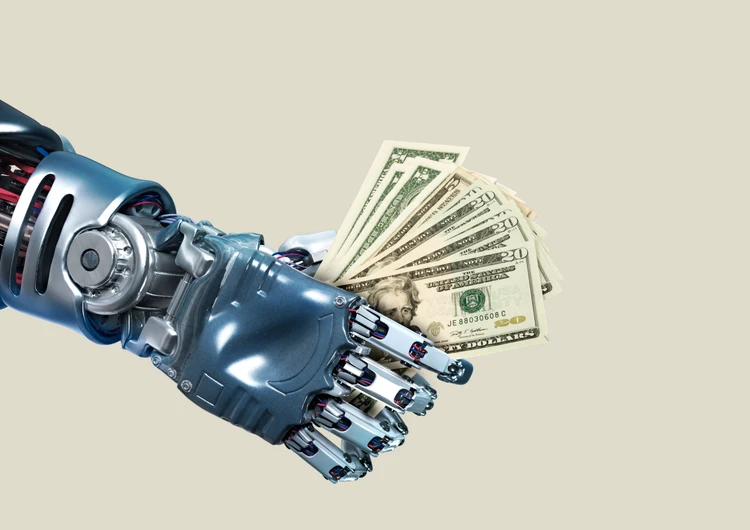

NEW YORK — Investors are growing increasingly uneasy as the country’s largest technology companies race into the U.S. bond market at a pace rarely seen outside moments of crisis. Since September, four of the nation’s dominant cloud and AI firms—Alphabet, Meta, Amazon and Oracle—have raised nearly $90 billion in public debt, a remarkable buildup intended to finance sprawling data-center expansions and the escalating costs of frontier artificial intelligence.
The abrupt borrowing binge marks a shift for Silicon Valley, where companies have long leaned on robust cash flows rather than the bond market. But the AI boom has created capital needs on an unprecedented scale, pushing tech firms into a torrent of debt issuance that is beginning to test the limits of investor appetite.
AI Spending Meets Bond Market Reality
The surge in borrowing arrives during an intense cycle of AI investment that has pushed corporate capital-expenditure projections to historic levels. Sage Advisory, a Texas-based investment manager, projects that AI-related capex could reach $600 billion annually by 2027, triple last year’s levels.
To fund that buildup, hyperscalers—companies operating the world’s largest cloud and AI platforms—have been aggressively tapping debt markets. Google’s parent company, Alphabet, alone issued $25 billion in bonds this fall; Meta followed with $30 billion, Oracle with $18 billion, and Amazon with $15 billion. Microsoft is the only one of the top five that has sat out the current wave.
While leverage remains low compared with the broader corporate landscape, investors are increasingly focused on whether the market can absorb this level of supply without forcing up borrowing costs—especially as AI business models remain unproven outside of a handful of early adopters.
Growing Worries Over Market Absorption and AI ROI
The flood of new debt has fed into a broader pullback in U.S. equities this month, ending a six-month rally in the S&P 500. Analysts point to rising concerns that AI spending—while transformative—may still be too speculative to justify the capital being deployed.
“You have all these hyperscaler issuance coming out,” said Brij Khurana, portfolio manager at Wellington Management. “The market is waking up to the fact that it’s not going to be private credit that funds AI. It’s all coming from public bond markets, and that money ultimately comes out of stocks.”
For some firms, the financing is particularly aggressive. Meta recently secured a $27 billion private financing deal to build its largest data center yet, underscoring the vast amounts of capital now required for AI infrastructure.
Investment strategists warn that while AI promises long-term returns, most companies have yet to demonstrate consistent profitability from their AI offerings—raising questions about how long Wall Street will continue to subsidize their expansion at low cost.
Can the Bond Market Keep Up With Silicon Valley’s Pace?
Despite the fears, analysts say the borrowing remains manageable. UBS estimates that 80–90% of future AI capex will still come from internal cash flow rather than debt. And hyperscalers—excluding Oracle—could take on up to $700 billion more in debt and still remain safely below the leverage levels typical of an A+-rated firm.
Even Nvidia, whose explosive chip sales have made it the financial engine of the AI boom, has trimmed its own debt load from $8.5 billion earlier this year to $7.5 billion today—an indication that not all tech giants are accelerating their borrowing.
Still, the recent deluge is already exerting pressure on investment-grade credit markets. Investors demanded higher premiums—roughly 10–15 basis points—on new issues from Alphabet and Meta versus their previous offerings, a sign that lenders want compensation for the growing supply.
“Credit spreads have been grinding tighter all year,” said Janus Henderson, a veteran credit analyst. “But this wave of tech issuance—especially tied to AI—may have changed the game.”
As AI reshapes the technological landscape, it is now reshaping financial markets as well. And the question echoing across trading desks is no longer whether the AI boom will arrive—but whether the debt markets can sustain it.
Follow for daily updates on cybercrime, corporate fraud, DFIR, hacking, investigations, and digital forensics
