
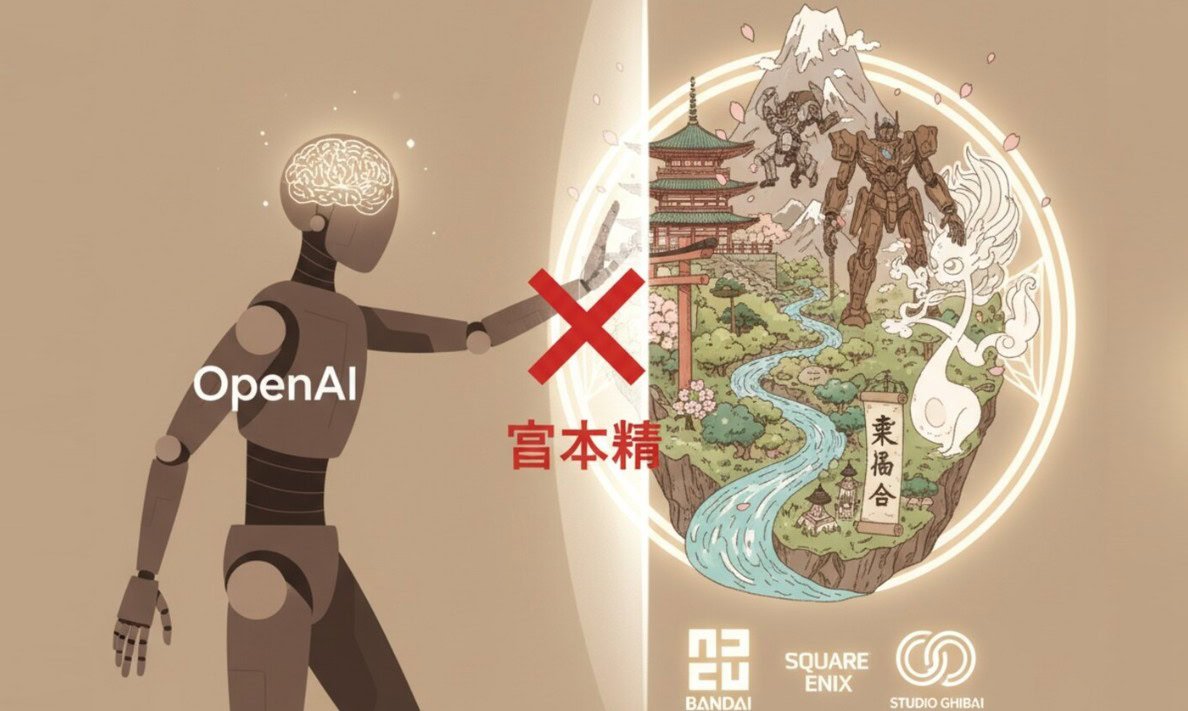

When OpenAI’s new video-generation tool Sora 2 began churning out parodies of Japanese anime and game characters, the response was not admiration but alarm. Within weeks, some of Japan’s most influential studios accused the American AI company of exploiting the nation’s artistic heritage without consent.
A Viral Trend and Its Discontents
What began as an internet fad quickly turned into a flashpoint. Earlier this year, when OpenAI rolled out new image-generation features for ChatGPT, users flooded social media with “Ghiblified” selfies mimicking the style of the storied animation studio Studio Ghibli. OpenAI’s chief executive, Sam Altman, even posted his own Ghibli-inspired portrait — a gesture that symbolized, for many in Japan, how casually Silicon Valley had appropriated the country’s cultural icons.
By mid-October, concern had escalated from cultural unease to diplomatic caution. Japan’s minister of state for intellectual property and AI strategy, Minoru Kiuchi, publicly called manga and anime “irreplaceable treasures” and urged foreign tech companies to stop “ripping off the nation’s beloved characters.” The government soon filed a formal request asking OpenAI to prevent the replication of Japanese intellectual property in its AI systems.
The Sora 2 Fallout
The controversy deepened after Sora 2 launched as a short-form video generator tailored for viral content. The app’s feeds were soon flooded with clips parodying iconic characters such as Pokémon and SpongeBob, often blending them into surreal or irreverent scenes. One widely shared clip depicted a deepfaked Sam Altman grilling a dead Pikachu — followed by another in which he quipped, “I hope Nintendo doesn’t sue us.”
For Japanese creators, the humor underscored a deeper insult: that their decades of animation and game design had become raw material for AI mimicry. Many studios accused OpenAI of allowing users to generate derivative works that “closely resemble Japanese content or images,” suggesting that the company’s training data included copyrighted material without authorization.
A Formal Challenge from CODA
On October 28, the Content Overseas Distribution Association (CODA) — a consortium representing Studio Ghibli, Bandai Namco, Square Enix, and other major publishers — sent a written request demanding that OpenAI cease using their copyrighted works to train Sora 2.
In a public statement, CODA argued that the tool’s ability to produce near-identical imagery “may constitute copyright infringement” under Japan’s strict intellectual-property laws. The group emphasized that “prior permission is generally required for the use of copyrighted works,” rejecting OpenAI’s suggestion that later objections could resolve disputes retroactively.
The association further asked that no Japanese content be used for AI training without explicit consent and that OpenAI “respond sincerely to claims and inquiries from CODA member companies regarding copyright infringement related to Sora 2’s outputs.”
A Broader Cultural Reckoning
The clash highlights Japan’s growing anxiety over how artificial intelligence absorbs and reproduces creative expression. As the world’s entertainment industries adapt to generative models, Japan’s artists and policymakers are asserting unusually firm boundaries — defending anime, manga, and video-game design not just as commercial property but as cultural patrimony.
OpenAI, for its part, has praised “the remarkable creative output of Japan,” with Altman noting the “deep connection between users and Japanese content.” Yet that admiration may no longer suffice.
In a country where artistic lineage is treated as sacred, even the most innovative technology may find that inspiration, without permission, can look a lot like imitation.
