

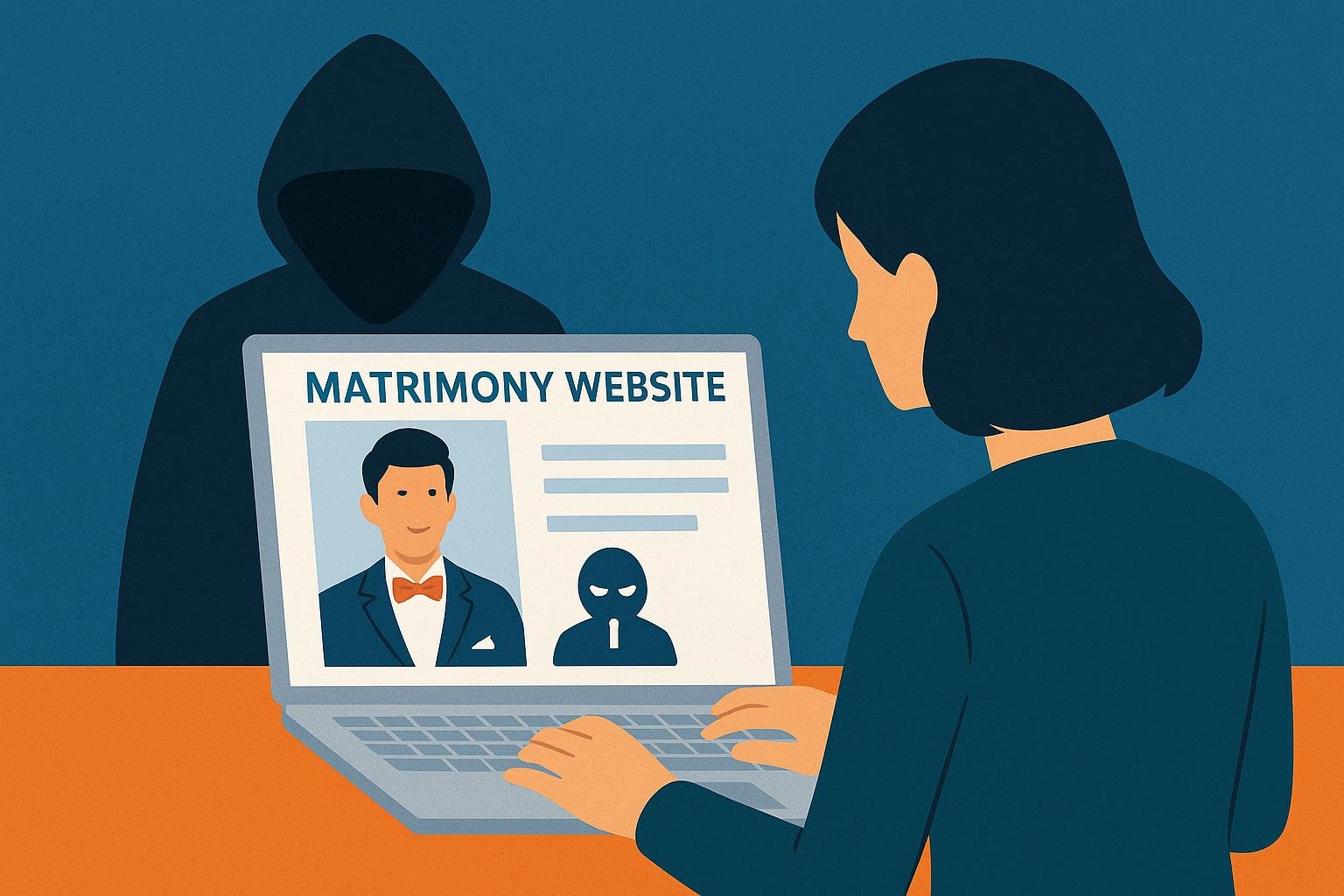

A candid social media post by writer and activist Ashwini Roopesh has shed light on a disturbing trend in India’s digital marriage marketplace matrimonial scams that prey on cultural pressures and emotional vulnerabilities. As matchmaking increasingly shifts online, cybercriminals are weaponizing trust, creating fabricated profiles to trap victims in elaborate frauds that leave families devastated.
The Digital Promise of Marriage Turns Into a Trap
In her widely circulated post on X (formerly Twitter), Ashwini Roopesh described how scammers are targeting unsuspecting users of matrimonial platforms by posing as prospective brides or grooms. Their profiles are often highly convincing, complete with professionally edited photographs, detailed family backgrounds, and seemingly genuine career information.
Once trust is established through long conversations, the fraudsters request money under socially believable pretexts: travel expenses to meet the family, urgent medical costs, or financial contributions toward wedding preparations. But once payments are made, the perpetrators disappear, leaving victims in shock.
FCRF Launches India’s Premier Certified Data Protection Officer Program Aligned with DPDP Act
What makes these scams particularly effective, Roopesh noted, is the emotional investment victims often make. In a country where marriage is both a personal milestone and a family duty, many overlook red flags in their eagerness to finalize a match.
Exploiting Cultural Pressures and Digital Vulnerabilities
Investigators say the problem is widespread and growing. A senior cybercrime officer in Bengaluru confirmed that complaints related to matrimonial fraud have risen sharply over the past three years, coinciding with the expansion of online matchmaking platforms.
“These scams are not random,” the officer said. “They are carefully designed around India’s marriage culture. Fraudsters exploit the urgency many families feel to marry off their children quickly, especially daughters. They know victims may not have the time or courage to question a seemingly good match.”
Cases have been reported across states like Maharashtra, Delhi, Karnataka, and Uttar Pradesh, with individual losses ranging from ₹50,000 to several lakhs. In some cases, scammers have even used stolen or AI-generated photographsto create fake identities, making detection harder.
A Wake-Up Call and the Road Ahead
Roopesh’s warning has been received as a public service announcement, urging families to exercise caution. She recommends:
-
Verifying identities through video calls and family introductions.
-
Requesting official documents such as Aadhaar or employment ID before sending money.
-
Reporting suspicious accounts directly to platforms and cybercrime police.
Experts also warn of a larger systemic problem. While matrimonial websites often tout their verification mechanisms, many do not have robust safeguards against fraudulent sign-ups. With generative AI making fake photos and deepfake videos increasingly easy to create, the line between genuine and fraudulent profiles is blurring rapidly.
For victims, the fallout is both financial and emotional. Many suffer lasting embarrassment, social stigma, and in some cases, depression. Legal remedies are complicated too: once money is transferred often via digital wallets or small bank accounts tracing the fraudsters becomes extremely difficult.
Cybersecurity experts stress the importance of public awareness campaigns and better regulatory oversight of online matrimonial platforms. “The real battle here is about trust in the digital age,” one expert said. “If people cannot trust online spaces meant for life decisions like marriage, the very foundation of digital platforms will crumble.”
