

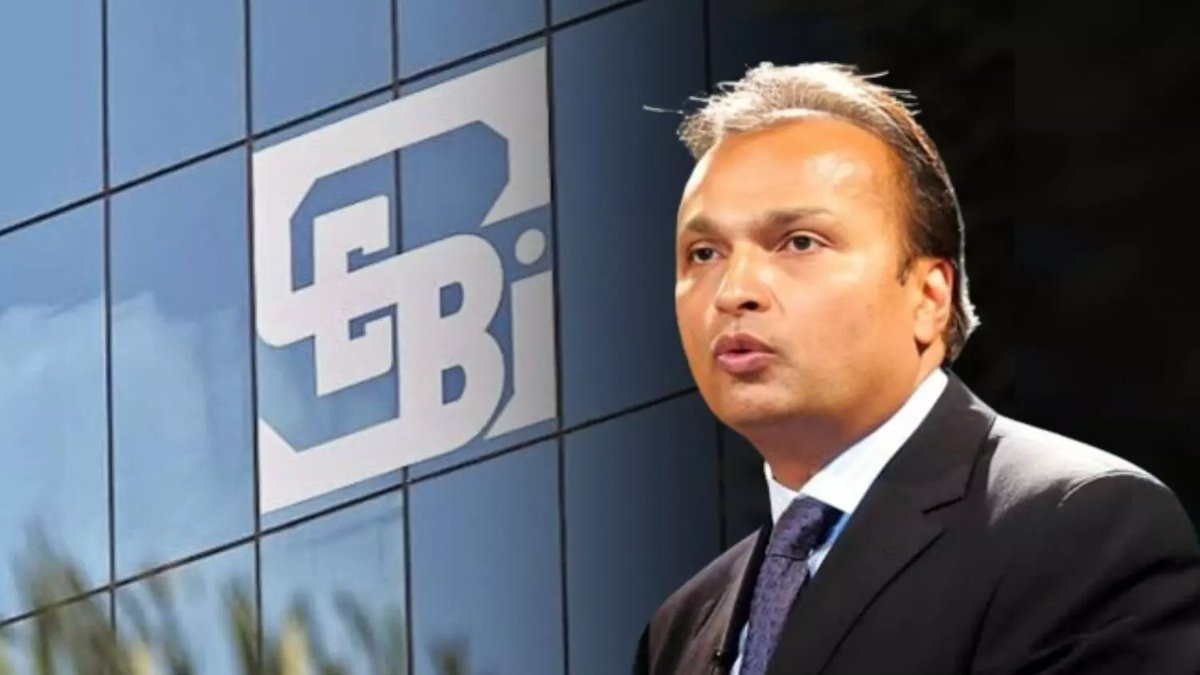

The Securities and Exchange Board of India (SEBI) has rejected his plea for settlement in the Yes Bank investment case, citing significant losses to investors. The decision has triggered a sharp fall in the shares of his companies Reliance Infrastructure and Reliance Power, further compounding his financial troubles.
SEBI’s rejection means Anil Ambani may now face penalties exceeding $200 million (approx. ₹1,660 crore), according to officials familiar with the matter.
Investments Worth ₹2,150 Crore Under Scanner
According to a Reuters report, SEBI’s probe found that Reliance Mutual Fund (Reliance MF), part of the Ambani-led Reliance Group, invested about $245.3 million (₹2,150 crore) in Yes Bank’s additional tier-1 (AT1) bonds between 2016 and 2019.
The investigation revealed that these investments were closely tied to loans extended by Yes Bank to other Reliance Group entities, raising concerns of bilateral arrangement deals rather than independent financial decisions.
Yes Bank collapsed in 2020 under the weight of bad loans, leaving investors and bondholders facing steep losses.
SEBI Flags Investor Losses and Policy Lapses
In its findings, SEBI concluded that Reliance MF’s actions resulted in a loss of $208.4 million (₹1,828 crore) to investors’ wealth. The regulator noted that the fund house failed to comply with internal investment policies and risk management frameworks while making such high-value commitments.
By rejecting Ambani’s settlement petition, SEBI underscored that the matter was too serious to be resolved through compromise, as it directly impacted market integrity and investor trust.
Data Protection and DPDP Act Readiness: Hundreds of Senior Leaders Sign Up for CDPO Program
Shares Tumble, Regulatory Heat Intensifies
The fallout was immediate in the stock market. Shares of Reliance Infra and Reliance Power witnessed steep declines as news of SEBI’s rejection spread among investors, signalling a loss of confidence in Ambani’s already strained business empire.
Adding to his troubles, sources told Reuters that SEBI has shared its findings with the Enforcement Directorate (ED), opening the door for potential money laundering or financial impropriety investigations.
Anil Ambani’s Mounting Legal Challenges
Anil Ambani, once among India’s most prominent business leaders, has faced a string of financial crises since the debt-driven collapse of several of his ventures. The Yes Bank case adds to a series of regulatory and legal challenges confronting him, particularly as Yes Bank had been a key lender to many of his group companies.
SEBI’s documents reportedly highlight non-compliance with internal guidelines, lapses in risk assessment, and ignored red flags in investment processes—all factors that could attract heavier penalties and stricter oversight going forward.
With the market regulator and ED both involved, Ambani faces an uphill battle to protect his businesses and personal reputation from further erosion.
