
Follow us on Google News

Delhi Police have uncovered details of a cyber fraud network involving around 70 bank accounts, 187 allegedly fraudulent SIM cards and suspicious financial transactions linked to complaints worth approximately ₹1.59 crore.
The Outer North District cyber police disclosed the findings on November 3 after investigating four separate cases that led to six arrests. Investigators linked the cases to 125 complaints registered on the National Cyber Crime Reporting Portal (NCRP).
Police also reported that ₹74.94 lakh had been returned to cyber fraud victims through the recovery mechanism. The investigation has exposed how criminals allegedly obtained bank accounts and mobile connections through intermediaries before using them to facilitate online fraud.
The cases involve suspects operating in Delhi and alleged connections extending to Hyderabad, Jalandhar and other locations. Investigators are continuing to trace the people responsible for receiving and moving money collected from victims.
Bank Accounts Opened Through False Promises
One investigation began with allegations that residents of Delhi’s Shahbad Dairy area were persuaded to open bank accounts in exchange for insurance benefits and financial incentives.
According to police, the accused subsequently collected banking kits, including ATM cards and account documents, and supplied them to a suspected cybercrime network operating from Hyderabad.
Investigators arrested 19-year-old Devendra, also known as Sachin, on October 24. His alleged associate, Mohit, was identified during the investigation and is currently lodged in Tihar Jail in connection with another case.
Police said the suspects had arranged approximately 70 bank accounts and allegedly retained around 10 per cent of the money passing through them as commission.
Nine cybercrime complaints involving approximately ₹14.51 lakh have been linked to this part of the investigation.
Such accounts are commonly called mule accounts because they are used to receive, transfer or withdraw money on behalf of other people. Cybercriminals can use them to conceal the destination of stolen funds and complicate investigations.
A person who hands over control of a bank account may therefore become involved in a criminal money trail even without directly contacting a fraud victim.
Telecom Dealer Allegedly Issued SIM Cards Without Consent
A second investigation uncovered allegations that a telecom dealer misused customers’ photographs and identity documents to obtain additional SIM cards without their knowledge.
Police identified the dealer as Atul and arrested him along with two alleged associates, Sameer, also known as Sam, and Pankaj.
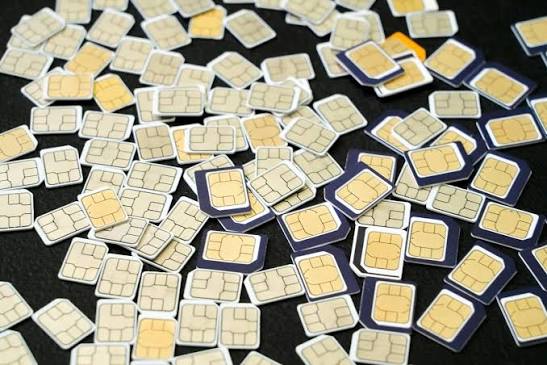
Investigators said the SIM cards were supplied to associates for approximately ₹1,500 each. Around 187 connections were allegedly obtained through the arrangement during 2026.
This operation has been linked to 114 cybercrime complaints involving approximately ₹1.40 crore.
Fraudulently issued SIM cards can allow criminals to operate mobile numbers registered in someone else’s name. These connections may be used for impersonation, fraudulent communications and other activities that make identifying the actual user more difficult.
The alleged misuse of customer identification documents also raises questions about how telecom retailers verify applications and prevent unauthorised connections.
In another case, police arrested a suspect named Sumit for allegedly supplying three bank accounts to an associate, Vicky Chauhan, for ₹20,000.
Investigators linked those accounts to two cyber fraud cases involving approximately ₹4.5 lakh. Police are searching for Chauhan and other suspected associates.
Separate APK Fraud Trail Reaches ₹3.73 Crore
The fourth investigation concerned an APK-based cyber fraud operation allegedly involving a financial handler identified as Sourav.
Police arrested him in Punjab’s Jalandhar on August 18. Examination of his mobile phone reportedly revealed details of 124 banking and card entries, including 29 bank accounts, 85 debit and credit cards, and 10 masked cards.
Investigators alleged that Sourav handled approximately ₹3.73 crore in suspected cyber fraud proceeds through online gold purchases, gift cards and credit card payments.
Police are also examining a bakery factory and a vehicle suspected of having been acquired using proceeds from the operation.
An APK is an Android application installation file. Criminals sometimes distribute malicious APKs outside official application stores to trick users into installing software capable of stealing information or compromising devices.
However, the exact technical method used in every incident connected to this investigation has not been publicly established.
The ₹3.73 crore transaction trail relates to the separate APK investigation and should not be confused with the ₹1.59 crore linked to the 125 complaints identified in the other cases.
During the investigations, police recovered banking documents, electronic devices, ATM cards, cash and other materials believed to be relevant to the suspected networks.
The cases show how cyber fraud can depend on multiple intermediaries, including account suppliers, telecom dealers and individuals who convert or transfer stolen funds. Police are continuing to examine the wider network and the roles of additional suspects.
What This Means For You:
Never hand over your bank account, ATM card or banking credentials in exchange for a commission or promised benefit. You can also check mobile connections registered in your name through the government’s Sanchar Saathi portal and report unauthorised numbers.