
Follow us on Google News

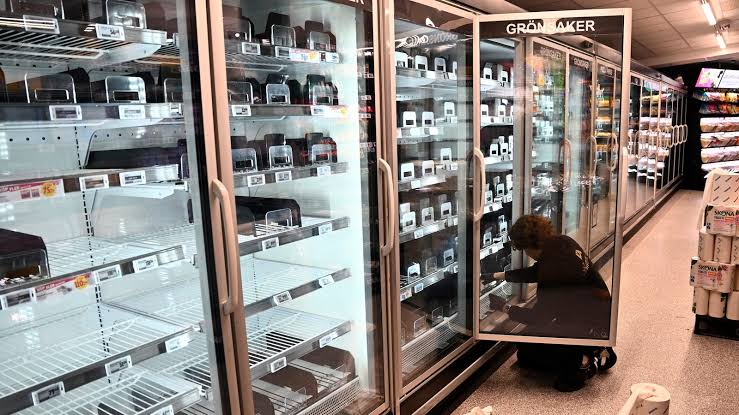
Supermarkets across several European countries reported cyberattacks on refrigeration systems on November 2, after hackers allegedly interfered with temperature controls in stores across Sweden, Belgium, Luxembourg and other markets. The incidents forced retailers to remove or discard perishable food after refrigerators and freezers stopped maintaining safe temperatures.
The affected retailers included Sweden’s ICA and Coop, Belgium-based Colruyt and Ahold Delhaize, Carrefour and IKEA. Ireland’s Musgrave Group also reported disruptions at 13 SuperValu stores, while an Estonian supermarket outlet was affected by an attack on its refrigeration control system.
In at least one Swedish store, freezer temperatures reportedly reached 50 degrees Celsius. The incidents have renewed concerns about the security of equipment that businesses increasingly connect to the internet for remote monitoring and maintenance.
The attacks come weeks after hackers compromised refrigeration systems at hundreds of supermarkets in France. However, investigators have not established whether the latest incidents are connected to the French attack or were carried out by the same people.
Retailers Across Europe Report Disrupted Cooling Systems
Sweden’s ICA said a limited number of its stores were affected by an overnight incident involving refrigeration and freezer systems. One ICA franchise store in Stockholm reported that all its freezers had reached 50 degrees Celsius, destroying its frozen stock.
The Swedish grocery chain Coop also reported problems. Seven of its approximately 800 stores were affected, according to the company, while earlier reports from the retailer had put the number at six.
In Belgium and Luxembourg, Ahold Delhaize reported an IT incident affecting refrigeration systems in several dozen stores. Colruyt Group said five of its shops had experienced attacks on their refrigeration systems.
Carrefour reported that 15 of its more than 700 stores in Belgium were affected. IKEA also said one Belgian store had experienced an incident and that it could not rule out disruption at other locations.
Ireland’s Musgrave Group said 13 SuperValu stores were affected, forcing staff to remove some chilled and frozen products from sale. In Estonia, a computer controlling a supermarket’s refrigeration system was accessed and its temperature settings were altered. The issue was addressed within minutes, with no significant damage reported.
The scale of the disruption varied across retailers. Some stores discarded food, while others were able to restore their systems and limit losses.
How Internet-Connected Refrigeration Systems Can Be Hacked
Modern supermarkets often use centralised control systems to monitor and manage refrigerators, freezers and cold-storage units. These systems allow maintenance teams to check temperatures and adjust settings remotely without having to visit every store.
The same convenience can create a security weakness if control panels are exposed to the internet without adequate protection. If an attacker gains access, changing a temperature setting or altering a defrost cycle can disrupt equipment that is essential for preserving food.
These systems are examples of operational technology, or OT. Unlike conventional IT systems that primarily handle information, operational technology controls physical equipment and industrial processes.
A compromised office computer may expose business records or customer information. A compromised refrigeration controller can directly affect the physical environment, spoil food and potentially damage equipment.
At least some of the refrigeration units affected in the latest incidents used temperature-control technology supplied by Danish company Danfoss. The same company’s equipment was also involved in the French supermarket attack last month.
Danfoss said it had been working with customers to implement fixes. However, the precise method used in the latest incidents and the full extent of the vulnerabilities have not been publicly established.
French Attack Raises Questions About A Wider Vulnerability
The latest incidents echo the October cyberattack in France, when hackers remotely altered refrigeration settings at hundreds of supermarkets and independent stores. Temperatures in some units rose to around 50 degrees Celsius, resulting in spoiled food and fires at several locations.
French investigators examined systems running older or outdated software, while cybersecurity authorities warned about the risks posed by exposed refrigeration controllers. The earlier incident also highlighted how weaknesses in equipment used by multiple retailers could create risks beyond a single company.
No group has publicly claimed responsibility for the latest attacks. Reuters also reported that investigators had not established whether the incidents were connected to the French operation.
The European Commission described the repeated incidents as a threat to food supply chains and consumer confidence. Belgian cybersecurity authorities also warned that remotely controlled systems remain vulnerable, particularly as more equipment becomes connected to business networks.
For retailers, the problem extends beyond protecting payment terminals, customer databases and office computers. Refrigeration controls, heating systems, security cameras and access panels can all become entry points if they are poorly secured.
What this means for you:
Cybersecurity risks can affect everyday services and essential goods, not just personal data or online accounts. Retailers and businesses using connected equipment need to secure remote access, update supported systems and replace devices that no longer receive security updates.