



Microsoft’s latest round of layoffs has sparked backlash after a woman shared how Microsoft fired her husband a loyal employee of 25 years on his 48th birthday, selected by a computer algorithm.
Microsoft Fired a loyal employee
The tech giant confirmed that it cut around 6,000 jobs, or 3% of its global workforce, on May 13 as part of a company-wide restructure aimed at streamlining management and integrating artificial intelligence. However, emotional fallout from the layoffs has taken over social media, with the most viral story coming from a post on Reddit.
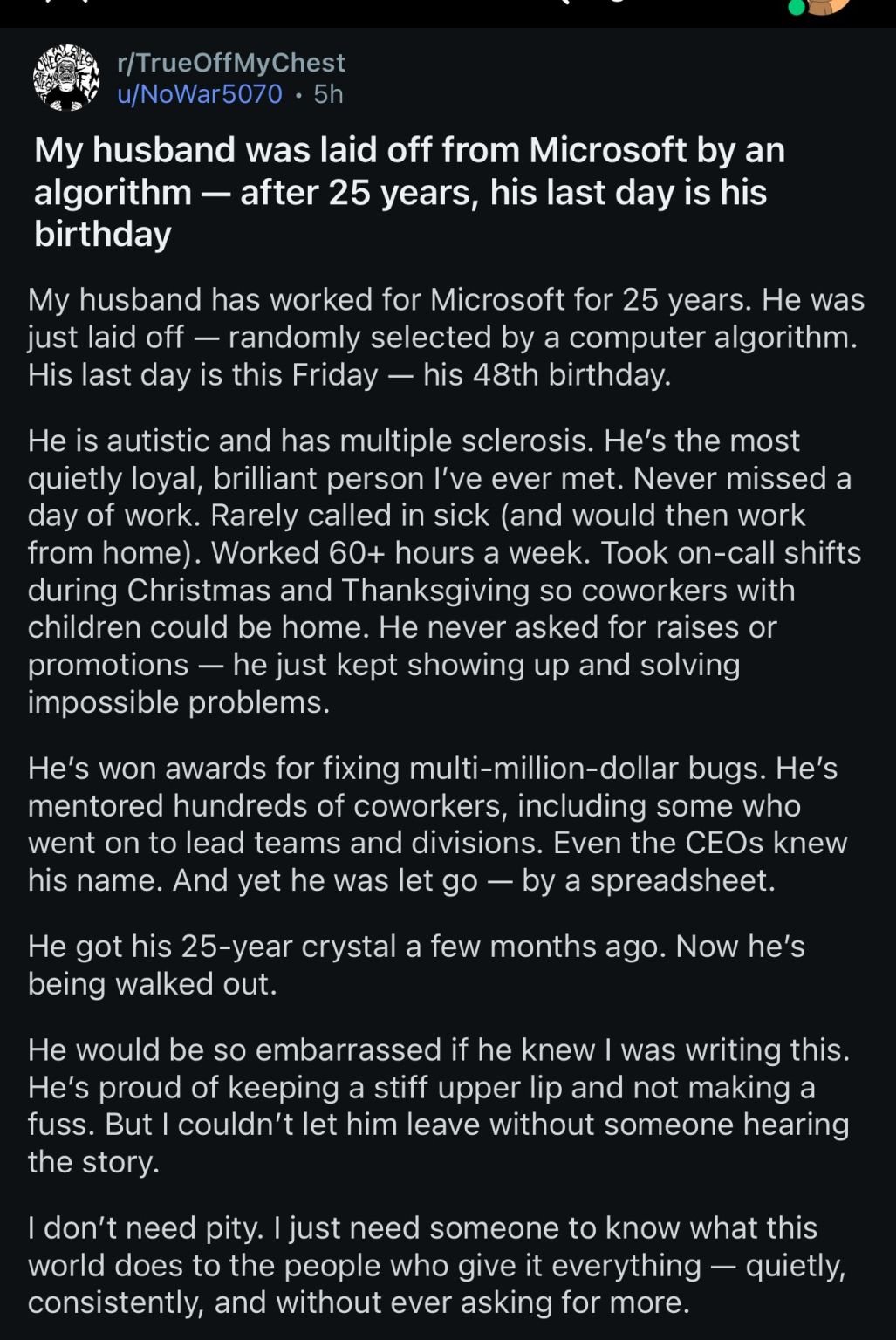
The woman described her husband as autistic and living with multiple sclerosis yet never missing a day of work, often covering shifts during holidays so colleagues with families could take time off, consistently worked over 60 hours a week, never asked for raises or promotions, and quietly solved high-stakes technical problems, he also received awards, mentored colleagues, and earned recognition from company leadership.
“He got his 25-year crystal a few months ago. Now he’s being walked out,” she wrote. “He would never tell how Microsoft fired himself. But someone should.”
Also Read: Attention Startups! Showcase Your Smart Policing Solutions on India’s Biggest Stage
She called the decision impersonal, claiming a spreadsheet not a manager determined his fate.
The post sparked outrage online. Users criticized Microsoft for valuing automation over loyalty. One comment asked how many of those laid off were over 40 or had chronic health conditions. Another summed up the sentiment: “This is why no one should be loyal to an employer.”
How Microsoft defended itself
Microsoft defended the layoffs as necessary for future growth, saying the company plans to remove unnecessary management layers and focus on high-value work by integrating AI more deeply into operations.
Yet, for employees like this 25-year veteran, the transition has come with a personal cost one that no algorithm can measure.
About the author – Ayush Chaurasia is a postgraduate student passionate about cybersecurity, threat hunting, and global affairs. He explores the intersection of technology, psychology, national security, and geopolitics through insightful writing.
