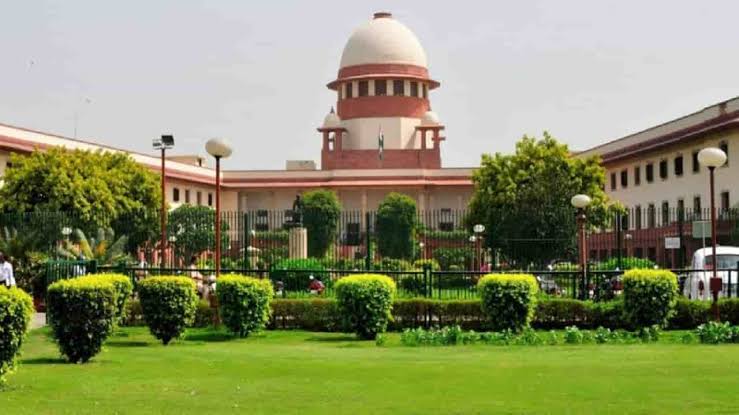

The Supreme Court has flagged delays in CAPF cadre reviews and directed the Centre to submit its proposal by November 30.
What Did the Supreme Court Direct?
A bench comprising Justices Manoj Mishra and Ujjal Bhuyan observed on Wednesday that the Centre had violated its earlier directions concerning cadre reviews in the Central Armed Police Forces (CAPFs).
Additional Solicitor General Aishwarya Bhati informed the court that the forces had submitted their cadre review proposals and that the Cadre Review Committee was examining them. She assured the bench that the committee would submit its proposal for approval by November 30.
The court also directed the Centre to file an affidavit detailing the deputation of Indian Police Service (IPS) officers up to the Senior Administrative Grade (SAG) in each force, both as of May 23, 2025, and at present.
https://the420.in/fcrf-certified-chief-ai-officer-second-cohort-november-2026/
Why Did the Court Find Non-Compliance?
The dispute concerns cadre reviews that had reportedly been due since 2021. Under the Supreme Court’s May 23, 2025, judgment, the exercise was required to be completed within six months.
After examining the original files, the bench observed that its directions had not been followed. Senior advocate Guru Krishnakumar, representing the contempt petitioners, argued that the earlier judgment required a gradual reduction in IPS deputations. He alleged that such postings had increased instead.
The court clarified that its previous direction did not require eliminating IPS deputations entirely. It sought comparative figures to determine whether the government had complied with the judgment.
What Is the Dispute Over IPS Deputations?
The proceedings concern five forces: the Border Security Force, Central Reserve Police Force, Central Industrial Security Force, Indo-Tibetan Border Police and Sashastra Seema Bal. Bhati submitted that among 13,491 Group A posts across these forces, 213 were sanctioned for IPS deputation, while IPS officers currently occupied 129 posts.
The Central Armed Police Forces (General Administration) Act, 2026, which came into force on October 8, provides for 50 per cent of inspector general posts and at least 67 per cent of additional director general posts to be filled through IPS deputation. It also provides for deputation to the posts of special director general and director general.
The court had earlier declined to impose interim restrictions on IPS deputations, observing that such directions without adequate data could create an administrative vacuum.
What Happens at the Next Hearing?
The court was hearing petitions challenging the new CAPF legislation alongside contempt proceedings concerning alleged non-compliance with its May 2025 judgment. The contempt proceedings were initiated against Union Home Secretary Govind Mohan. The court had previously sought an explanation regarding the deputation of 46 IPS officers following its earlier directions.
The Centre must now submit the cadre review proposal and provide detailed deputation figures through an affidavit. The matter has been listed for further hearing on December 9.
The420 Insight: The proceedings centre on compliance with judicial directions governing cadre reviews and IPS deputations. The requested figures will help the Supreme Court assess whether the Centre has implemented its earlier judgment.