



Lucknow, March 24, 2025 — In a concerted effort to bolster cybersecurity awareness and improve IT practices in the banking ecosystem, the Future Crime Research Foundation & Banking Institute of Rural Development Conducted a full-day DFIR Bootcamp for BFSI professionals at BIRD, the Apex Training Centre of NABARD, Lucknow, successfully hosted a one-day workshop titled “Best Practices in IT Space” on Monday, 24th March 2025. The event brought together prominent cybersecurity professionals, forensic experts, regulatory advisors, and thought leaders to deliberate on the growing challenges and innovations in the domain of information technology, with a specific focus on the banking sector.
Programme Highlights
The workshop commenced at 10:00 AM with the inauguration ceremony and lamp lighting led by the Joint Director and Programme Directors. The welcome address was delivered by the Smt. Shefali Agrawal, Joint Director, setting the stage for a day filled with insights and practical discussions.
Context Setting by Cybercrime Expert
Prof. Triveni Singh, Ex-IPS, a nationally recognized authority in the field of cybercrime investigation, set the tone for the workshop with a compelling context-setting session. Drawing from his extensive experience in law enforcement and his tenure as a top cybercrime officer, Prof. Singh provided participants with a panoramic view of the rapidly evolving digital threat landscape. He emphasized how financial institutions are increasingly becoming prime targets for sophisticated cyberattacks, including phishing scams, ransomware, data breaches, and insider threats.
Highlighting real-world cases and investigative experiences, Prof. Singh underlined the urgent need for the banking sector to adopt best practices in IT infrastructure, data protection, and cyber resilience. He spoke about the rising trend of tech-enabled frauds, the role of organized cybercriminal networks, and the exploitation of vulnerabilities.
Session on Governance and Regulatory Compliance
CA Uday Kulkarni, an esteemed expert in compliance and regulatory affairs, delivered a highly informative session on Governance, Compliance, and the Evolving Regulatory Landscape in the banking and financial services sector. With the ever-increasing reliance on digital infrastructure, he emphasized that compliance is no longer just a legal obligation but a strategic necessity for banks striving to build trust and resilience in a digitally interconnected world.
He elaborated on the critical role of governance frameworks in ensuring accountability, data integrity, and transparency across all levels of an institution. CA Kulkarni detailed how financial institutions can strengthen their IT governance models by aligning them with the Reserve Bank of India (RBI) guidelines, especially those related to cybersecurity frameworks, digital banking, and operational risk management.
In addition, he explained the key provisions of the Information Technology (IT) Act, particularly sections dealing with data protection, cyber offenses, and legal recognition of digital transactions. Through case studies and real-world examples, he reinforced the message that compliance must be embedded into the culture and day-to-day operations of banking institutions to ensure sustainable digital growth and customer trust.
Now Open: Pan-India Registration for Scam Reporters & Fraud Investigators!
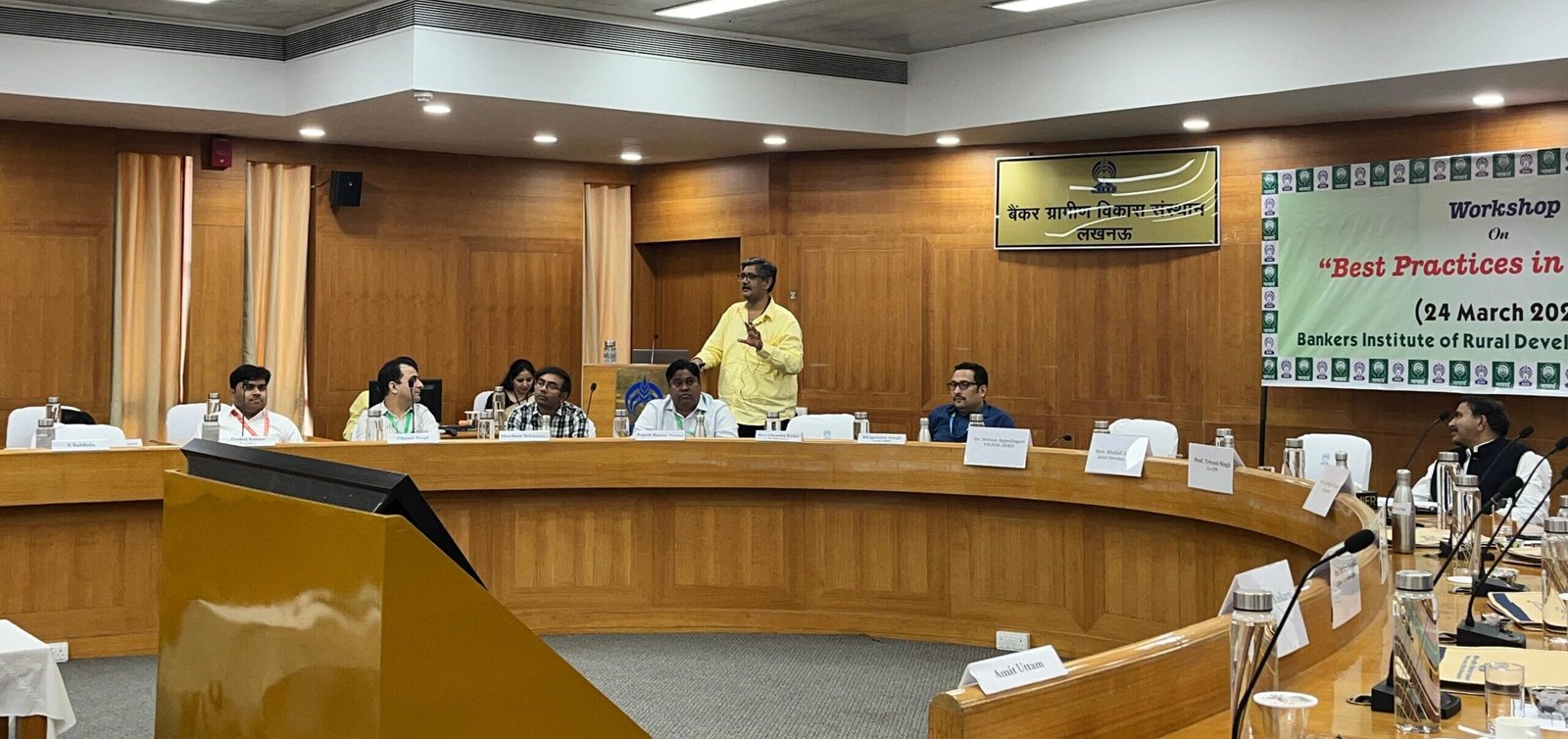
Session on Best practices in IT
Shri Ravi Kant, a well-respected Cyber Security Expert, delivered an insightful and highly practical session on Best Practices in IT, focusing on how banks and financial institutions can build a secure, resilient, and compliant IT infrastructure in today’s rapidly digitizing landscape.
Shri Ravi Kant illustrated several case studies of IT failures and successful defense strategies, highlighting how a proactive security posture—supported by policies, automation, and skilled personnel—can significantly reduce risk. His session provided actionable insights that were both strategic and technical, empowering participants to take back concrete practices to strengthen their respective organizations’ IT frameworks.
Session on Emerging Threats and Countermeasures
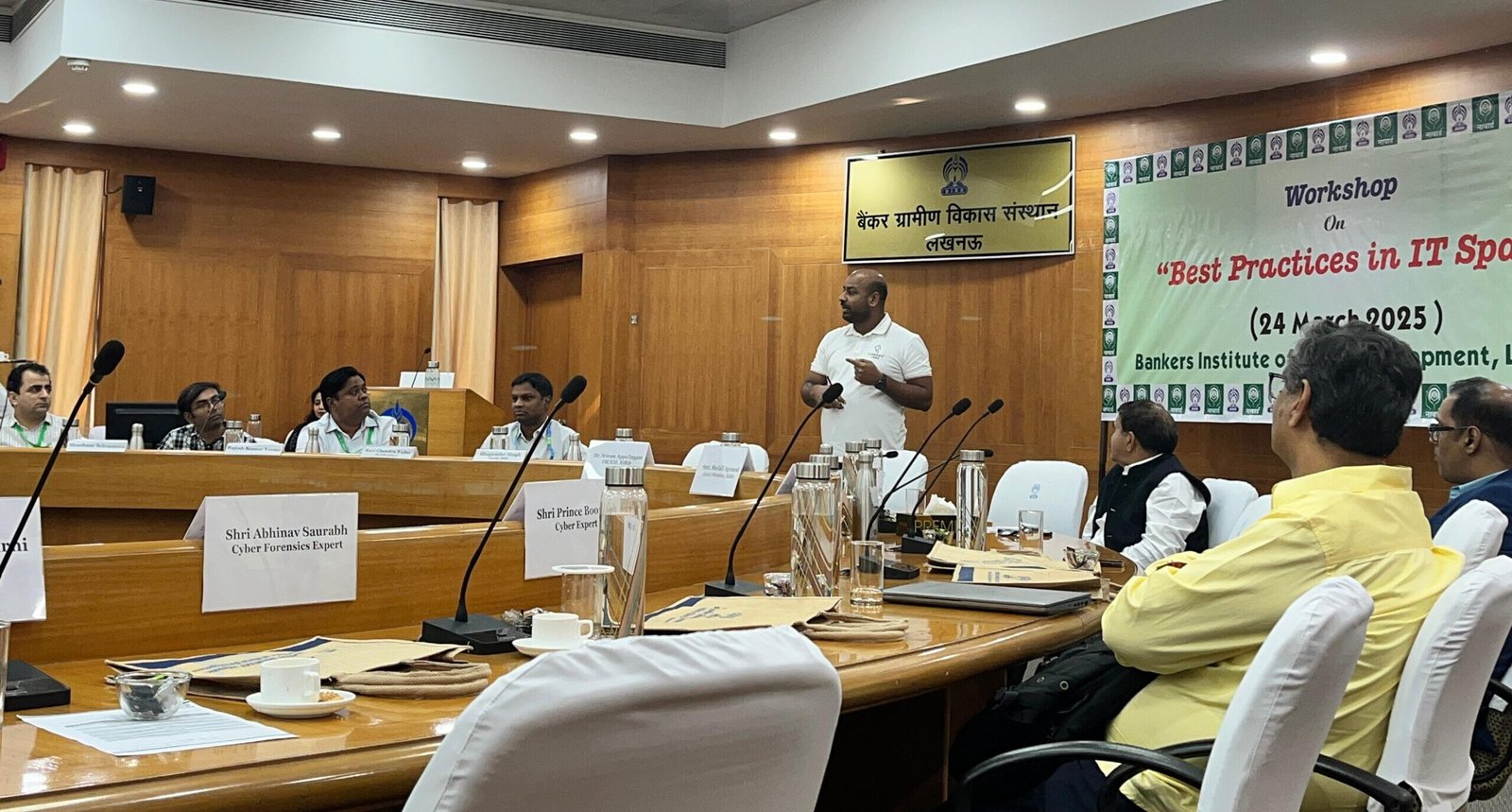
Shri Prince Boonlia, a Cybersecurity Expert, delivered a thought-provoking and technically rich session on Emerging Cyber Threats and Countermeasures, shedding light on the fast-evolving nature of cyber risks facing the banking sector. His session provided a deep dive into some of the most pressing and sophisticated threat vectors that are increasingly targeting financial institutions.
He began by highlighting the rise of AI-driven frauds, where cybercriminals are leveraging artificial intelligence to automate attacks, craft highly convincing phishing emails, deepfake voices, and even simulate real-time conversations to manipulate victims. Shri Boonlia explained how machine learning algorithms are now being misused to bypass traditional fraud detection systems, making it imperative for banks to upgrade their defenses with AI-powered monitoring solutions.
Concluding his session, Shri Boonlia recommended a combination of advanced threat detection tools, robust access controls, real-time monitoring, regular security audits, and a well-documented incident response plan as essential components for any bank’s cyber defense strategy. His insights were especially relevant for IT heads, CISOs, and banking professionals looking to future-proof their infrastructure against a dynamic and increasingly aggressive threat environment.
Session on Digital Forensics and Incident Response (DFIR)
After a short tea break, Shri Abhinav Saurabh, a Cyber Forensics Expert, conducted the second technical session of the workshop, focusing on the crucial theme of Digital Forensics and Incident Response (DFIR) in the context of banking security. With years of hands-on experience in handling cybercrime investigations and forensic examinations, Shri Saurabh brought a unique blend of technical depth and practical relevance to his presentation.
He began by explaining the growing importance of DFIR capabilities in the banking sector, where financial institutions are frequently targeted by a wide range of cyber threats including insider fraud, malware intrusions, data breaches, and targeted attacks by advanced persistent threat (APT) groups. He emphasized that a timely and well-coordinated incident response can significantly minimize financial loss, reputational damage, and legal liability for banks.
One of the most engaging parts of his session was his discussion on real-world challenges in digital investigations, such as encrypted devices, remote attacks via anonymizing networks (like VPNs and Tor), anti-forensic techniques used by attackers, and jurisdictional hurdles in cross-border data access. He also highlighted the limitations that banks often face, such as lack of skilled manpower, inadequate logging practices, and delayed reporting of incidents.
Valedictory Session
The workshop concluded with a programme valediction by the Dr. Nirupam Mehrotra- Director, Smt. Shefali Agrawal- Joint Director, and Programme Directors, who thanked all speakers and participants for their enthusiastic engagement. The event reinforced BIRD’s commitment to capacity-building and continuous learning for banking professionals in rural and semi-urban sectors.
Follow The420.in on
Telegram, Facebook, Twitter, LinkedIn, Instagram and YouTube
