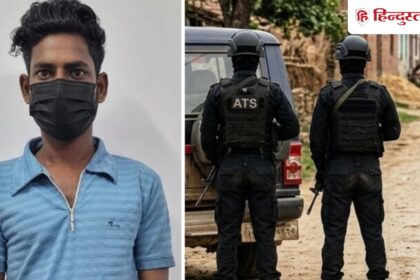

Delhi Police have arrested three men accused of running a cyber-fraud network from a moving SUV to evade location tracking.
How Was the Cyber-Fraud Network Exposed?
The alleged operation came to light following a complaint by Neelesh Vishwakarma, a resident of Umaria district in Madhya Pradesh, who claimed he was cheated of ₹65,000 while attempting to recover ₹45 lakh invested in insurance policies.
An FIR was registered in east Delhi, and investigators began examining financial transactions connected to the suspected fraud. During the investigation, a bank account linked to one of the accused, Himanshu Rathore, came under scrutiny after suspicious transactions were flagged on the National Cyber Crime Reporting Portal.
Police said the financial trail helped identify other suspected members of the network. Rathore was subsequently apprehended, and technical analysis and field surveillance were used to trace his alleged associates.
https://the420.in/fcrf-certified-chief-ai-officer-second-cohort-november-2026/
How Did the Moving Call Centre Operate?
According to investigators, the accused operated from a car that served as a mobile call centre. They allegedly changed locations frequently to avoid detection while contacting potential victims and carrying out fraudulent financial transactions.
The vehicle was eventually intercepted in the Old Kondli area of east Delhi, resulting in the arrest of two other suspects and the recovery of material considered relevant to the investigation. The three arrested individuals have been identified as Lokesh Tomar, Himanshu Rathore and Tushar, all residents of Delhi.
Police suspect the vehicle allowed the group to coordinate calls and banking activities without maintaining a fixed operational location. Investigators are examining the extent of the network and its suspected involvement in other cyber-fraud cases.
What Roles Did the Three Accused Play?
Police suspect Lokesh Tomar coordinated the operation and arranged mule bank accounts to route money allegedly obtained through fraudulent activities. His possible connections with cyber-fraud cases in Mumbai and Telangana are also being investigated.
Tushar allegedly contacted prospective victims while impersonating officials or representatives. Investigators believe he persuaded individuals to disclose sensitive banking information, including account credentials and one-time passwords.
Himanshu Rathore is suspected of providing bank accounts for receiving and transferring money in exchange for commissions.
Police are also examining whether certain accounts were opened using false residential addresses before being handed over to other members of the suspected network.
What Did Police Recover During the Operation?
Investigators recovered seven mobile phones, 15 bank, debit and Metro cards, six cheque books and three passbooks during the operation. Other seized materials included five PAN cards, four Aadhaar cards or copies, a signed cheque, two rental agreements, 11 passport-size photographs and nine pages containing a customer list. Police also recovered a suspected forged National Payments Corporation of India (NPCI) stamp, which forms part of the material being examined.
The investigation remains focused on tracing financial transactions, identifying additional suspected participants and determining whether the arrested individuals were connected to other reported frauds.
The case highlights how suspected cybercriminals may combine impersonation, mobile operations and mule bank accounts to conceal their activities. Investigators are continuing to examine the recovered documents and financial records to establish the network’s wider reach.