
Centre for Police Technology (CPT) presents a 31-Day Cybersecurity Knowledge Series for police personnel, law enforcement agencies (LEAs), corporate investigators, digital forensics professionals and cybersecurity practitioners.
A ransomware attack shuts down a hospital’s systems. A bank discovers suspicious transactions. A government network is compromised, or sensitive customer data appears online. In these situations, the biggest question is not simply how the attack happened, but how quickly the organisation can contain the damage, protect evidence and restore operations.
Cyber crisis response is the coordinated process of managing major cyber incidents to minimise harm, investigate the attack and recover safely. A delayed or disorganised response can turn a manageable security incident into a serious operational, financial or national security crisis.
What Is Cyber Crisis Response?
Cyber crisis response involves the people, procedures and technical capabilities needed to handle significant cybersecurity incidents. It brings together IT and security teams, senior management, legal advisers, communications teams, external specialists and, where necessary, law enforcement and relevant government agencies.
Unlike routine troubleshooting, a cyber crisis may affect multiple departments, interrupt essential services, expose sensitive information and require urgent decisions. Effective response therefore needs predefined responsibilities, clear escalation procedures and a tested crisis management plan.
In India, CERT-In has developed the Cyber Crisis Management Plan (CCMP) framework to support coordinated responses to cyberattacks and cyberterrorism.
https://the420.in/fcrf-certified-chief-ai-officer-second-cohort-november-2026/
How Cybercriminals Trigger a Crisis
Cyber incidents can escalate rapidly when attackers target critical systems or exploit weaknesses in an organisation’s response arrangements.
- Ransomware: Criminals encrypt systems and may threaten to publish stolen information unless a ransom is paid.
- Business email compromise: Attackers impersonate executives or suppliers to manipulate employees into transferring funds.
- Data breaches: Stolen credentials or exploited vulnerabilities may expose customer records, financial information or confidential documents.
- Distributed denial-of-service attacks: Large volumes of malicious traffic can make websites and online services unavailable.
- Supply-chain compromise: An attack on a service provider or software supplier may affect multiple connected organisations.
- AI-assisted deception: Deepfake voices, fabricated videos and convincing phishing messages can mislead employees during an already stressful incident.
Criminals may deliberately create urgency and confusion. Organisations that lack clear decision-making authority or communication procedures can struggle to respond effectively.
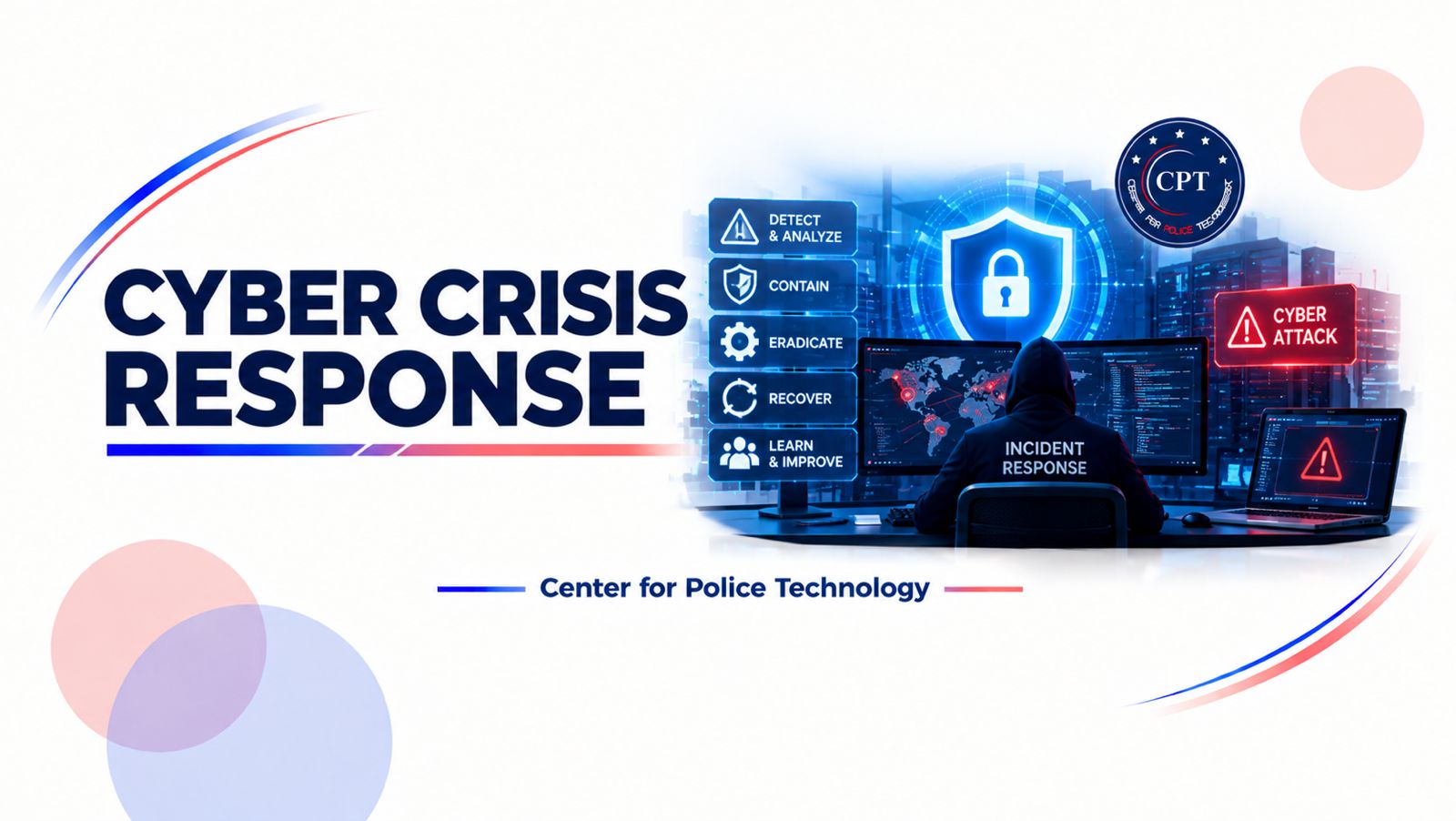
The Five Essential Phases of Cyber Crisis Response
1. Preparation
Before an incident occurs, organisations should identify critical systems, assign response roles, maintain secure backups and establish communication and escalation procedures. Incident response plans should be tested through tabletop exercises and realistic simulations.
2. Detection and Analysis
Security teams must identify suspicious activity, determine whether an incident has occurred and assess its severity and scope. Relevant logs, endpoint alerts, network traffic and user reports help establish what may have been compromised.
Early findings should be treated cautiously. Investigators need to distinguish confirmed facts from assumptions and update their assessment as evidence emerges.
3. Containment
The immediate objective is to prevent further damage. Depending on the incident, this may involve isolating affected devices, disabling compromised accounts, revoking exposed credentials or restricting network access.
Containment decisions must balance security with operational needs. Unplanned shutdowns can disrupt essential services or destroy valuable evidence, so actions should be coordinated and documented.
4. Eradication and Recovery
After controlling the incident, teams identify and remove the underlying cause, close exploited vulnerabilities, reset compromised credentials and restore systems from trusted backups.
Recovery should be gradual and verified. Systems must be checked for remaining attacker access, and monitoring should continue after services resume. Restoring operations without addressing the original weakness can allow the attacker to return.
5. Lessons Learned
Following the crisis, organisations should review the timeline, response decisions, communication gaps and technical failures. Findings should lead to concrete improvements in security controls, staff training, incident procedures and recovery planning.
The Role of Police and Digital Forensics Teams
Law enforcement and digital forensic professionals play a vital role when cyber incidents involve suspected criminal activity.
Investigators may examine system logs, malicious files, access histories, network records, email headers and financial transactions. These artefacts can help reconstruct the attack, identify affected systems and develop leads about the individuals or infrastructure involved.
Evidence must be preserved lawfully, with appropriate forensic procedures and chain-of-custody records. Organisations should avoid unnecessary changes to affected devices and coordinate evidence collection with qualified responders.
Technical indicators can connect an incident to known infrastructure or previous attacks, but they do not independently prove the identity of the person responsible. Attribution requires corroboration from multiple sources.
Cyber Crisis Response in India
CERT-In serves as India’s national agency for cybersecurity incident response under Section 70B of the Information Technology Act, 2000. Its Cyber Crisis Management Plan supports coordination across government bodies and other relevant organisations.
CERT-In’s directions of 28 April 2022 require specified entities to report listed cyber incidents within six hours of noticing them or being informed of them. Organisations should consult the applicable directions and FAQs to understand reporting requirements and ensure that crisis teams can meet relevant deadlines.
For critical infrastructure and regulated sectors, additional procedures and reporting obligations may apply. Crisis plans should identify the appropriate reporting channels before an incident occurs.
Building a Cyber-Resilient Organisation
Organisations should maintain an up-to-date incident response plan, secure offline or otherwise protected backups, reliable logging, tested recovery procedures and a current contact list for internal and external responders.
Senior leaders must know who can authorise emergency actions, communicate with affected stakeholders and make operational decisions. Employees should know how to report suspicious activity without delay.
Regular drills help reveal weaknesses that policies alone cannot uncover. Plans should also address ransomware, cloud outages, compromised suppliers, data theft and AI-enabled impersonation.
Conclusion
A cyberattack may be unavoidable, but a poorly managed response can make its consequences far worse. Preparation, rapid detection, coordinated containment, reliable evidence preservation and tested recovery procedures are essential to limiting damage.
In a cyber crisis, resilience is measured not only by how well an organisation prevents attacks, but also by how effectively it responds, recovers and learns when its defences are breached.
Day 30 — Cyber Crisis Response
31 Days | 31 Key Topics | October 2026
Follow Centre for Police Technology (CPT) for the complete 31-Day Cybersecurity Knowledge Series.