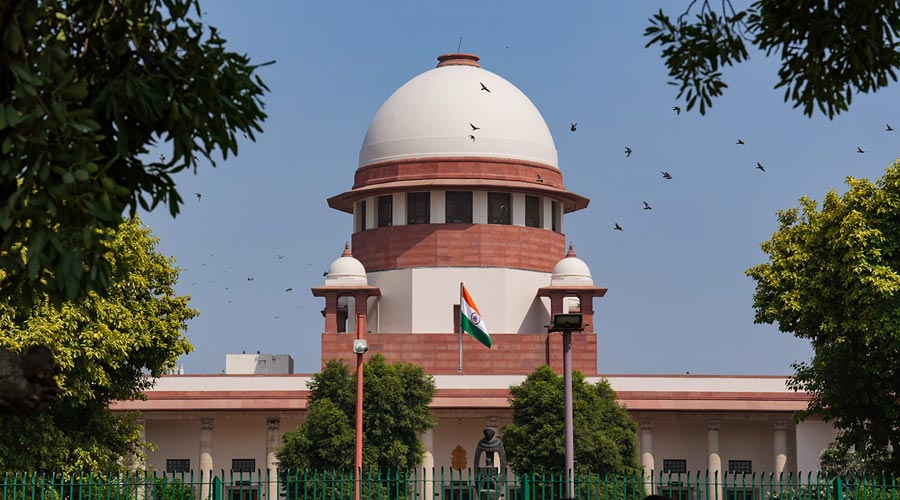

The Supreme Court has called for stricter accountability of banks in digital arrest fraud cases, observing that financial institutions should compensate victims for their entire losses when fraud occurs because of failures in banking safeguards.
The court also asked the Reserve Bank of India (RBI) to introduce stronger regulations to prevent suspicious transactions and ensure that bank officials involved in facilitating cyber fraud face prosecution.
A bench comprising Chief Justice of India Surya Kant and Justices Joymalya Bagchi and V Mohana made the observations while examining measures to tackle digital arrest scams, which have caused substantial financial losses across the country.
Why Does the Court Want Banks Held Liable?
The Supreme Court observed that banks must accept responsibility when inadequate due diligence allows fraudsters to transfer customers’ money.
The bench said the RBI’s proposed regulatory framework should require financial institutions to compensate victims with an amount not less than their actual financial loss whenever negligence by the institution contributes to the fraud.
The court questioned why banks had mechanisms to recover their own losses but customers lacked equally effective remedies. It also referred to cases involving builder-bank arrangements where homebuyers had allegedly been left without adequate relief despite existing regulatory directions.
What Changes Is the RBI Preparing?
The RBI is finalising revised Know Your Customer (KYC) guidelines concerning the responsibilities of banks in preventing financial fraud.
The guidelines are expected to be notified by November 30, 2026. The Supreme Court has expressed its intention to examine the draft before finalisation. The bench questioned existing compensation provisions for electronic banking fraud, which provide compensation of up to ₹25,000 for eligible losses not exceeding ₹50,000.
The court maintained that compensation arrangements must adequately protect customers when financial institutions fail to exercise necessary safeguards.
https://the420.in/fcrf-certified-chief-ai-officer-second-cohort-november-2026/
How Can Banks Prevent Suspicious Transactions?
The Supreme Court suggested introducing systems to identify unusually large withdrawals or transfers that do not match an account holder’s previous transaction history.
It said banks should immediately flag suspicious activity and temporarily withhold transactions until their authenticity is established. For senior citizens, the court suggested that local police could be contacted to verify suspicious transfers directly with account holders.
The proposed measures aim to prevent substantial amounts from reaching fraudsters before customers realise they have been deceived.
What Do the Latest Cyber Fraud Figures Reveal?
According to figures submitted by the Indian Cybercrime Coordination Centre (I4C), India recorded 21,928 digital arrest complaints involving more than ₹647 crore during the first eight months of 2026. The number of complaints stood at 1,23,672 in 2024 and 58,239 in 2025.
Attorney General R Venkataramani informed the court that an interdepartmental committee and I4C were examining the problem. He also said the Ministry of Home Affairs was preparing a standard operating procedure addressing bank liability.
What Directions Were Issued to WhatsApp and Investigators?
The court permitted WhatsApp to participate in the proceedings and asked the messaging platform to suggest additional preventive measures.
Senior advocate Kapil Sibal informed the bench that WhatsApp had independently banned 9,400 accounts and was coordinating with the government. The court also discussed whether prolonged video calls associated with digital arrest scams could be interrupted through technical safeguards.
Separately, law enforcement agencies, including the CBI, were directed to provide progress reports on their investigations. The CBI had earlier been instructed to investigate digital arrest cases involving ₹10 crore or more.
The420 Insight: What Does This Mean?
The Supreme Court’s observations could significantly change how banks respond to digital arrest fraud. If stronger compensation requirements are introduced, financial institutions may face greater responsibility for identifying suspicious transactions and protecting customers.
The proposed framework, however, remains under consideration, and its final provisions will depend on the RBI’s revised guidelines and subsequent court directions.