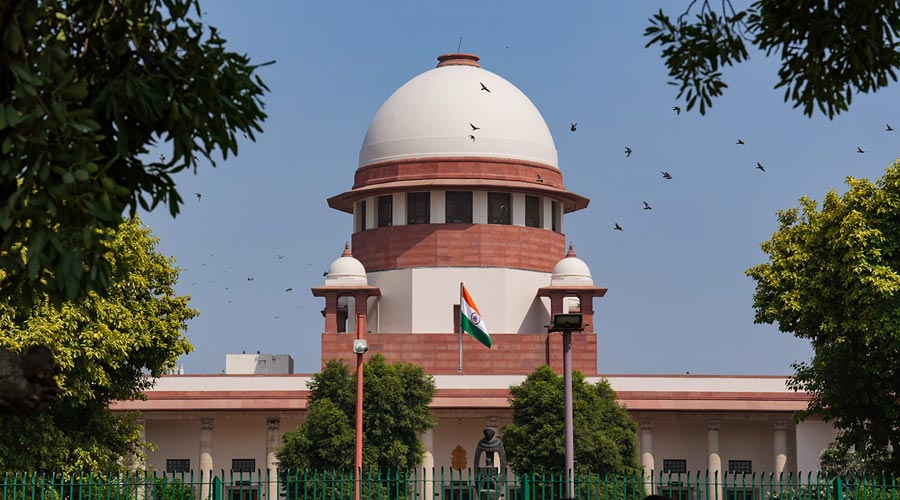

The Supreme Court has questioned the Centre over substantial differences between the maximum retail price (MRP) of medicines and the prices at which retailers purchase them. Expressing concern over the financial burden on patients, the court criticised the functioning of the National Pharmaceutical Pricing Authority (NPPA) and questioned whether existing regulations were benefiting manufacturers rather than consumers.
What Did the Supreme Court Question?
A bench comprising Justices Vikram Nath and Sandeep Mehta examined the pricing system while hearing two petitions concerning affordable medicines. The judges cited an example of a medicine purchased by retailers for Rs 15 but carrying an MRP of Rs 250.
Questioning the enormous difference, the bench asked the government to explain how such pricing could be justified.
The court also criticised the NPPA, describing it as a dysfunctional regulatory body.
https://the420.in/fcrf-certified-chief-ai-officer-second-cohort-november-2026/
What Was the Centre’s Response?
Additional Solicitor General Aishwarya Bhati, representing the Centre, defended the government’s approach to pharmaceutical regulation.
The Centre maintained that medicine prices in India were among the lowest globally because of competition among pharmaceutical companies. It also argued that regulatory measures required a balanced approach.
However, the bench questioned why the pricing framework appeared to favour manufacturers despite the financial difficulties faced by patients.
Why Did the Court Raise Patient Concerns?
The judges observed that patients lacked bargaining power when purchasing essential medicines.
They questioned the government’s emphasis on commercial considerations while patients were being charged substantially higher prices. The bench also referred to a cancer patient who was charged Rs 1.30 lakh for an injection available to a distributor for Rs 11,000. The court stressed that patients’ interests should not be weighed against commercial benefits.
What Did the Court Say About Cancer Drugs?
The hearing also examined the Centre’s decision to limit trade margins on anti-cancer medicines to 30% of their MRP.
The bench questioned why a uniform trade margin of 16% could not be introduced for all medicines. It also asked why the government had taken so long to address pricing concerns.
At an earlier hearing on October 12, the court had questioned the adequacy of the Centre’s response. The government estimated that the 30% margin cap could save patients approximately Rs 2,500 crore annually.
What Are the Petitions Seeking?
One petition seeks stricter enforcement of medicine pricing regulations under the Drugs (Prices Control) Order, 2013. It also calls for measures against alleged excessive pricing and disproportionate profits within the pharmaceutical supply chain.
The second petition seeks disciplinary action against medical practitioners who fail to prescribe generic medicines. The Supreme Court has reserved its verdict on both petitions.
The420 Insight: What Does This Mean?
The proceedings highlight concerns over medicine affordability and the effectiveness of pharmaceutical price regulation. The court’s observations place particular emphasis on protecting patients from excessive pricing while questioning whether existing regulatory mechanisms adequately serve public interests.