
Follow us on Google News

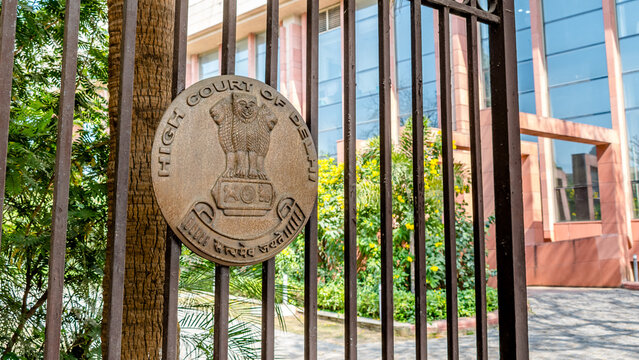
The Madhya Pradesh High Court has strongly criticised the State government for relying on artificial intelligence tools to draft legal pleadings after discovering that a purported Supreme Court judgment cited by the respondents did not exist.
Justice Vivek Kumar Singh, in an order dated November 17, described the practice as reckless and observed that submitting fabricated judicial precedents without verifying their authenticity amounted to wasting judicial time and bordered on actively misleading the court.
The High Court also asked the office of the Advocate General to ensure that legal propositions and judicial citations are thoroughly verified before affidavits are sworn and filed.
FCRF Launches Certified Chief Risk Officer (CRO) Program for India’s Risk Leaders
How Did the Court Discover the Fabricated Judgment?
The matter arose during the hearing of a writ petition filed by a Madhya Pradesh Police officer challenging his dismissal from service without a departmental inquiry.
In its submissions, the State had extensively relied on a purported Supreme Court judgment titled State of Andhra Pradesh v. S.S. Mohammad Nisar, cited as 2008 5 SCC 230.
However, upon examining the citation, the High Court discovered that no such judgment existed. The reference instead corresponded to an unrelated case concerning the suspension of a sentence in a criminal appeal.
The court observed that the respondents had blindly relied on artificial intelligence tools while drafting their pleadings, resulting in the inclusion of a fabricated case name alongside an unrelated legal citation.
High Court Warns Against Reckless Use of AI
Expressing serious concern over the incident, Justice Singh emphasised the professional responsibility of legal practitioners to verify judicial precedents before relying on them in court proceedings.
“Pleadings filed before a Constitutional Court are solemn documents,” the court observed.
The bench further noted that the casual inclusion of fictitious case laws without undertaking the basic professional duty of cross-checking citations not only wastes valuable judicial time but also borders on actively misleading the court.
The High Court strictly cautioned the respondents and the State machinery against engaging in such reckless practices while preparing legal submissions.
Advocate General’s Office Asked to Ensure Verification
The High Court placed particular emphasis on the responsibility of the Advocate General’s office to ensure the accuracy and authenticity of legal submissions prepared by drafting counsel.
“The office of the Advocate General is expected to ensure that all legal propositions and citations are meticulously verified by the drafting counsel before they are sworn on affidavit and placed on the record of this Court,” the bench observed.
The court’s observations highlight the risks associated with unchecked reliance on artificial intelligence in legal drafting. While AI tools may assist in preparing legal documents, the responsibility for verifying judicial precedents, statutory references and legal propositions continues to rest with the professionals submitting them before courts.
About the author — Suvedita Nath is a science student with a growing interest in cybercrime and digital safety. She writes on online activity, cyber threats, and technology-driven risks. Her work focuses on clarity, accuracy, and public awareness.