
Follow us on Google News

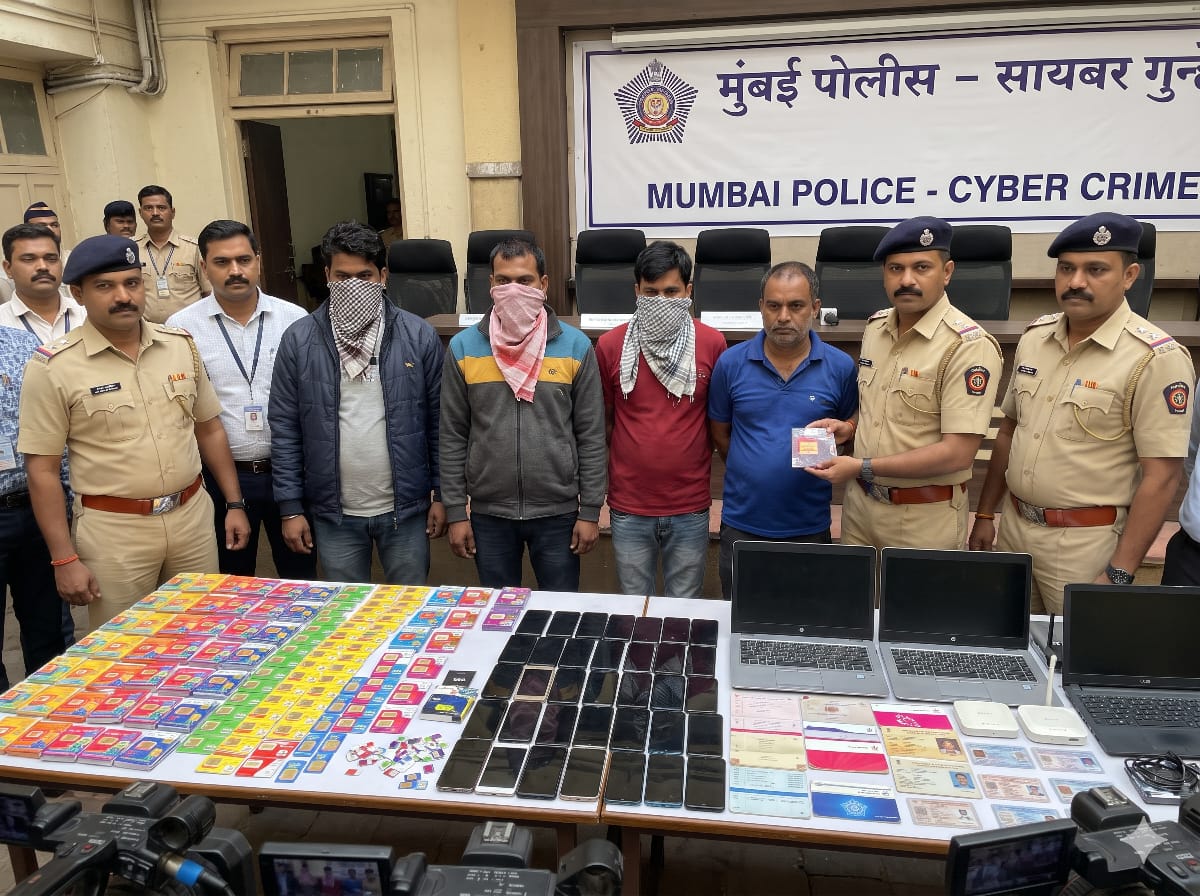
PUNE: The Pimpri Chinchwad Cyber Police have busted an interstate network supplying Indian SIM cards to cyber fraudsters operating out of Dubai, arresting four more accused in connection with the racket. According to the investigation, the syndicate supplied between 10,000 and 12,000 SIM cards registered under the Mumbai telecom circle to scammers in Dubai. These numbers were used to create fake mobile applications and email accounts, as well as to send fraudulent links to Indian bank account holders. With these latest arrests, the total number of people taken into custody in the case has reached seven.
The four recently arrested accused include two SIM card vendors from Mumbai and two couriers who smuggled the cards to Dubai. Police identified the suppliers as Suraj Chikwa (32), a resident of Vikhroli in Mumbai, and Raja Kumar (31) from Thane. Those arrested for transporting the SIM cards abroad are Manish Wadhwa (44) of Ambernath and Mahesh Chauthamani (60) of Kalyan. The alleged mastermind of the operation, Sumant Dasare (26), was arrested last month after being extradited to India from Dubai.
Duplicate SIM Cards Smuggled to Dubai
According to police investigators, the vendors obtained SIM cards from the Mumbai telecom circle using the names of individuals visiting the city. To avoid handing over active connections to the genuine customers, the sellers cited excuses such as OTP issues or server errors. During this process, they misused the original customer’s KYC details and identity documents to issue additional active SIM cards in the same name without the customer’s knowledge.
Investigators found that Manish Wadhwa and Mahesh Chauthamani, who ran shops selling used mobile phones, met Sumant Dasare through an acquaintance about a year and a half ago. They subsequently began purchasing these unauthorized SIM cards from Chikwa and Kumar. The duo traveled to Dubai roughly twice a month, concealing the SIM cards in their luggage or on their bodies before handing them over to Dasare. The operation generated substantial profits, as Wadhwa and Chauthamani bought each SIM card for around Rs 700 in Mumbai and sold it to Dasare in Dubai for nearly Rs 7,000, making a margin of about Rs 6,300 per card alongside payments for each trip.
Money Routed Through 150 Bank Accounts
The network came to light during the interrogation of Sumant Dasare, who was allegedly running the cyber fraud operations in Dubai with the assistance of Chinese nationals. Investigators discovered that the proceeds from online scams were routed and layered through nearly 150 bank accounts. Police are currently examining the entire financial trail, the account holders involved, and the flow of defrauded funds.
Dasare’s name had initially surfaced during an earlier Pimpri Chinchwad Cyber Police probe in which Tushar Chaudhary (29) of Chikhali and Adarsh Waghmare (27) of Akurdi were arrested for allegedly receiving proceeds of cyber fraud. Questioning those two accused and following leads from their case led investigators to Dasare, eventually uncovering the Dubai-linked SIM supply racket.
Investigation Into Digital Trail Continues
Police have initiated a forensic examination of the seized SIM cards and associated digital data to determine how many cybercrime cases utilized these numbers and to identify victims who received fraudulent links. Investigating agencies are also working to ascertain the exact number of fake mobile applications and email IDs created using the smuggled connections.
Officials suspect that several more individuals beyond the seven arrested accused may be part of the syndicate. The roles of various operatives involved in procuring SIM cards, issuing duplicate connections, smuggling them overseas, and laundering fraud proceeds through bank accounts are under scrutiny. Police stated that further clarity on the scale of the scams and additional suspects will emerge once the analysis of digital evidence is completed.