
Follow us on Google News

A cyberattack involving unauthorized access to the operating system of Japan’s flagship Fugaku supercomputer has raised concerns that personal information and sensitive research data belonging to 4,597 users may have been compromised. Following the breach, Japan’s state-backed research institute Riken temporarily suspended operations of the supercomputer while investigators work to determine when the intrusion occurred, how it was detected, and the extent of the damage.
Scope of the Breach and External Intrusion Attempts
Japan’s Ministry of Education, Culture, Sports, Science and Technology has instructed Riken to conduct a comprehensive investigation and restore system security. According to the ministry, Riken first reported the incident as an information security breach on Friday, subsequently confirming that Fugaku had been taken offline and that stored data risked exposure.
The investigation centers on the management and operational system used to access and control the supercomputer. A compromise of this system leaves user-related records vulnerable, with the exact scale of potential exposure depending on the types of information individual users stored on the platform, which could include scientific research files.
Despite these concerns, Riken stated that it has not yet confirmed any instance of research findings reaching external parties. According to the institute, there is currently no concrete evidence proving that research results were leaked outside the system, though concerns over data security remain until the inquiry concludes.
Based on Riken’s preliminary assessment, up to 4,597 users could be affected by the incident. The institute also disclosed that data obtained during the intrusion was used in attempts to gain unauthorized access to computer systems outside Riken. This indicates that the attackers did not limit their efforts to Fugaku’s internal network, although the actual impact on external systems remains unclear.
Strategic Role of the Fugaku Supercomputer
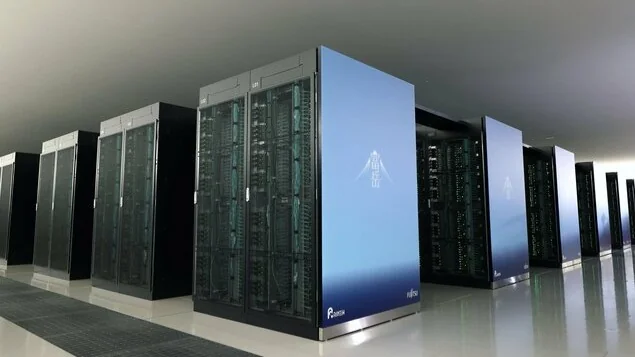
Fugaku was jointly developed by Riken and technology firm Fujitsu, beginning full-scale operations in March 2021. It was built to replace Japan’s earlier K supercomputer, which was decommissioned in 2019, and serves as critical infrastructure for the country’s scientific and technological research capabilities.
Housed at the Riken Center for Computational Science in the western Japanese city of Kobe, the supercomputer is utilized for complex scientific calculations, advanced simulations, and industrial technology development. It supports research requiring massive computing power and large-scale data processing, and its capabilities can also be applied to research related to the development of military technologies.
Named after Mount Fuji, Fugaku ranked as the world’s fastest supercomputer by computing speed at the time it entered full service. Given its status as one of Japan’s premier scientific research platforms, the unauthorized access to its management system is being treated not merely as an institutional security lapse, but as a significant cybersecurity issue affecting critical national research infrastructure.
Ongoing Investigation and Recovery Timeline
Riken investigators are currently working to trace the exact entry point used by the attackers and establish how much information was accessed. The probe will also clarify the full impact on user accounts, research files, and external computer networks.
While the education and science ministry has urged Riken to restore the system as quickly as possible, no specific timeline has been announced for resuming operations until a thorough assessment of security risks is completed.