
Follow us on Google News

A joint INTERPOL and United Nations report has raised concerns over the use of brain monitoring in police interrogations.
How Does Neurotechnology Work?
The report, jointly published by INTERPOL and the United Nations Office on Drugs and Crime (UNODC), examines the use of neurotechnology in criminal justice and its scientific, legal and ethical implications. Neurotechnology encompasses devices capable of reading and decoding information from the human nervous system, including brain-computer interfaces.
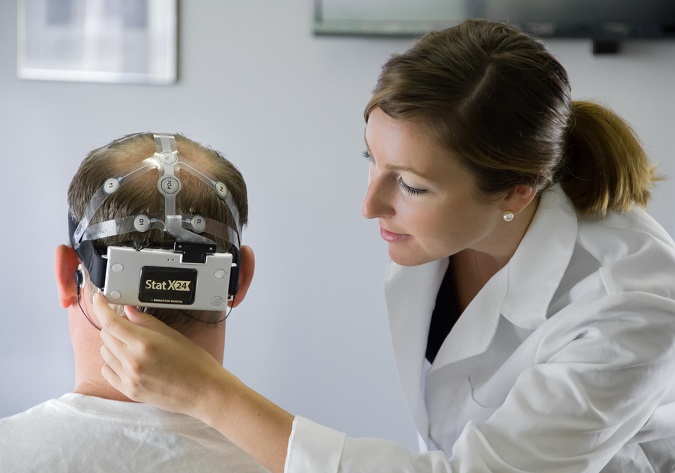
Police forces in countries including India and the United Arab Emirates are reportedly using neurotechnology during criminal investigations to determine whether suspects possess knowledge of a crime. One method involves using an electroencephalogram (EEG) headset to monitor brain activity associated with recognition. Another technique involves neural lie detectors, which are purportedly capable of identifying brain activity associated with deception.
FCRF’s Chief AI Officer Certification Returns on November 14 to Prepare Future AI Leaders
What Are the Human Rights Concerns?
The report states that neither approach has been scientifically proven to be effective. Researchers have also raised concerns about insufficient testing of neural monitoring devices to establish their reliability in criminal justice settings, particularly when used to obtain evidence against suspects.
Even if these technologies are eventually proven effective, their application during police interrogations could potentially violate fundamental human rights. These include the right to privacy, protection against self-incrimination and freedom of thought. Compulsory memory retrieval, coercive neural lie detection and involuntary treatment have also been identified as areas of concern.
Can Brain Monitoring Evidence Be Used in Court?
In India, evidence obtained through a Brain Electrical Oscillations Signature test was previously used in the murder conviction of a 24-year-old student, Aditi Sharma. In 2010, the Supreme Court ruled that evidence obtained through the involuntary use of such technology was inadmissible in court. However, police reportedly continue to use it during investigations.
In Australia, the admissibility of neural evidence remains legally untested. Existing legislation in New South Wales restricts the use of lie detectors but does not explicitly address all forms of neural monitoring. Under certain circumstances, Australian judges may have discretion to admit unlawfully obtained evidence after considering the seriousness of the offence, police misconduct and infringement of individual rights.
What Safeguards Has the Report Recommended?
The INTERPOL and UNODC report recommends that countries establish clear and legally binding frameworks governing the use of neurotechnology by law enforcement agencies. It emphasises that any responsible application of these technologies must meet rigorous, transparent and independently verifiable scientific standards.
The Australian Human Rights Commission has also recommended a moratorium on the use of neurotechnology in this context, pending further review by the Australian Law Reform Commission. The report highlights the gap between the claimed capabilities of neural monitoring devices and their demonstrated reliability. It calls for stronger regulatory oversight, scientific validation and institutional preparedness to prevent technological advances from undermining human rights and the rule of law.