
Follow us on Google News

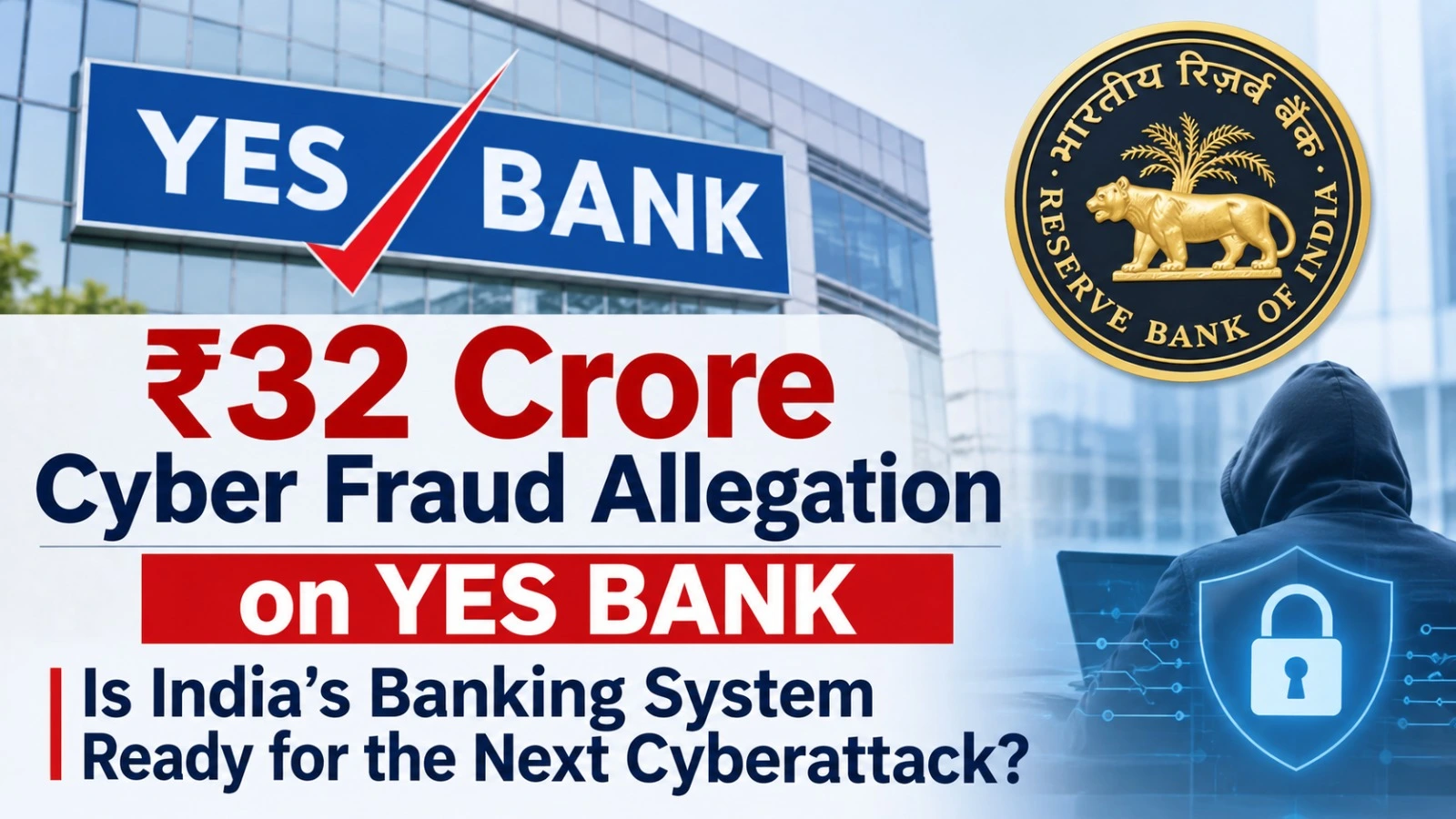
A reported ₹32-crore cyber fraud involving YES BANK has been strongly denied by the lender, bringing renewed attention to cybersecurity risks across India’s banking and financial sector. The allegations have raised questions about the protection of government accounts, digital payment systems and financial infrastructure, although the bank maintains that no breach or financial loss occurred.
According to a report published by The Banker on November 13, YES BANK had allegedly suffered a cyber-fraud loss of up to ₹32 crore involving government accounts. The report drew attention to the potential exposure of banking operations to cyberattacks and the security of accounts linked to government transactions.
YES BANK, however, strongly rejected the allegations, stating that no government accounts had been impacted, its systems had not been compromised and no related financial loss had occurred. The reported incident therefore remains disputed and cannot be treated as a confirmed cyber breach or financial loss.
Despite the bank’s denial, the allegations have renewed discussion about cybersecurity preparedness across India’s financial sector. Other banks and non-banking financial companies (NBFCs) have also been associated with reports of unauthorised transactions and fund transfers, raising broader questions about the security of digital banking operations.
Why Are Banking Cybersecurity Incidents Raising Concerns?
The YES BANK allegations have brought attention to several other reported financial cyber incidents involving banks and NBFCs. These cases involve different circumstances but highlight concerns about unauthorised transactions, corporate banking accounts and the security of digital payment infrastructure.
Central Bank of India has been associated with reports of approximately ₹13.97 crore in unauthorised transactions. Spandana Sphoorty reportedly faced the diversion of around ₹7.8 crore through 82 unauthorised transactions involving its corporate banking account.
SG Finserve also disclosed unauthorised transfers amounting to ₹5.1 crore through a banking payment application programming interface (API). In addition, other NBFCs have reportedly faced incidents involving unauthorised transfers through payment systems such as Real Time Gross Settlement (RTGS), Immediate Payment Service (IMPS) and API-based infrastructure.
These incidents should not automatically be interpreted as evidence of security failures by the banks holding the affected accounts. Their circumstances may differ, and each case requires separate examination. However, the reported transactions have brought the effectiveness of payment authorisation, transaction monitoring and fraud detection systems into focus.
Are Banking APIs And Payment Systems Adequately Protected?
The growing use of digital banking infrastructure has made API security and automated fund transfers important areas of cybersecurity oversight. Payment systems that facilitate financial transactions require effective authentication, access restrictions and monitoring to identify suspicious activity.
Unauthorised transactions involving corporate banking accounts and payment APIs raise questions about how financial institutions verify transactions, restrict access to sensitive systems and identify unusual patterns. Particular attention is being directed towards whether abnormal or high-value transactions can be detected before funds leave an account.
Another concern is whether banks and NBFCs regularly test their transaction-security arrangements to identify weaknesses. Independent assessments and continuous monitoring can help institutions evaluate whether their existing controls are functioning as intended.
The available information does not establish a common technical vulnerability or method behind the reported incidents. It would therefore be inappropriate to assume that all the cases resulted from the same type of cyberattack or security weakness.
Who Should Be Accountable For Financial Cyber Incidents?
The reported incidents have also raised questions about accountability when unauthorised financial transfers occur. Banks and financial institutions operate systems that handle sensitive customer information and financial transactions, making the effectiveness of their security arrangements an important issue.
Transparency surrounding confirmed cyber incidents is another area of concern. Questions have emerged about how much information should be disclosed publicly, how quickly investigations should be conducted and what measures should be taken to recover funds following unauthorised transfers.
Regulatory oversight, independent cybersecurity audits and regular assessments of payment infrastructure are among the measures highlighted in the wider discussion. Real-time fraud detection, multi-factor authentication, privileged access management and continuous monitoring through security operations systems are also important safeguards.
The discussion has placed the role of the Reserve Bank of India, the Ministry of Finance, the Government of India and CERT-In in focus, particularly regarding stronger oversight and accountability across the financial sector.
FCRF Launches CP-FRM to Build India’s Next Generation of Fraud Risk Professionals
What Should India’s Banking Sector Do Next?
Strengthening cybersecurity requires more than adopting security technologies. Financial institutions also need to ensure that their existing controls are implemented effectively and tested continuously. The measures identified in the broader discussion include AI-assisted fraud detection, secure API architecture, stronger transaction authorisation and Zero Trust security arrangements.
Multi-factor authentication, behavioural analytics, independent cybersecurity audits and regular reviews of payment controls are also among the suggested safeguards. These measures are intended to strengthen the ability of financial institutions to identify unusual activity, restrict unauthorised access and respond to potential threats.
The issue also raises a broader question about the standards expected from financial institutions. Banks routinely require customers to complete extensive Know Your Customer (KYC) procedures, documentation and verification before providing financial services. Whether banks and other financial institutions demonstrate equally rigorous standards in protecting accounts and payment infrastructure remains an important part of the discussion.
The YES BANK allegations remain disputed, with the lender maintaining that neither its systems nor government accounts were affected. However, the other reported incidents underline the importance of examining cybersecurity preparedness across India’s financial sector. Public confidence in the country’s digital economy depends not only on regulatory compliance but also on the effectiveness of security controls when financial systems face actual threats.