
Follow us on Google News

India must retain ‘kill switch’ control over satellite networks, avoid single-company reliance: Sunil Mittal
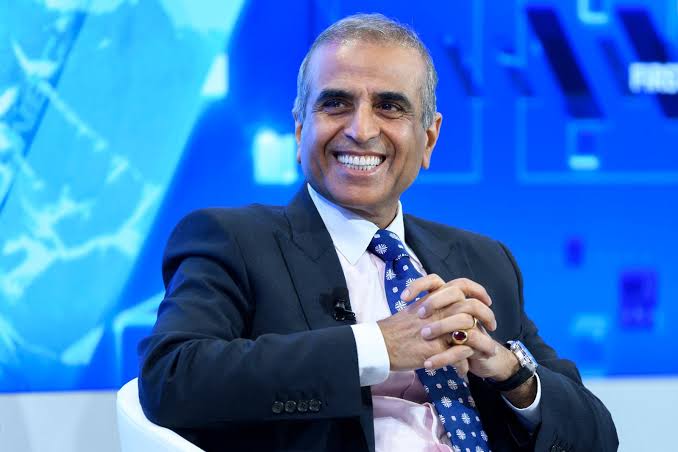
Ahead of the rollout of satellite internet services in India, national security and control over communication networks have emerged as critical priorities for the telecommunications sector. Bharti Enterprises Chairman Sunil Bharti Mittal has stated that the “kill switch” for satellite communication networks operating within Indian borders must remain under domestic control. He warned that leaving this authority in the hands of a foreign company or country could disrupt India’s vital communication services during a war, security crisis, or national emergency. Mittal also advised that the country should maintain options across multiple satellite service providers rather than relying on a single company or nation.
Speaking in an interview marking 50 years of Bharti Enterprises, Mittal emphasized that the kill switch of a satellite network must not be located outside India. According to him, India needs to retain control over its space and communication future. Without naming any specific company, he noted that critical technical powers linked to national security should not depend on external control mechanisms.
How a satellite kill switch works and the Ukraine lesson
In satellite communications, a kill switch refers to a technical mechanism that can completely shut down network services or restrict their speed and availability. Through this mechanism, satellite internet can be controlled for an individual user terminal, a specific region, or an entire country, typically operated via the provider’s control centers and ground gateways. While governments view this capability as essential for blocking suspicious communications during security crises, foreign control over these gateways could leave Indian military, emergency, and civilian connectivity vulnerable to external decisions.
Citing the Ukraine war, Mittal highlighted the growing role of satellite communications in modern military operations, noting that Ukraine relies on both Starlink and OneWeb. Last month, Ukraine accused Elon Musk’s SpaceX of throttling Starlink connectivity speeds, which allegedly affected its military operations as well as offensive and interceptor drones. Mittal added that future warfare involving drones, cyberattacks, and guided missiles will heavily depend on space-based systems, making domestic control over communication networks a strategic necessity.
Call for multiple operators and domestic gateways
Mittal urged India to avoid dependence on a single company or country for satellite connectivity, noting that multiple service providers ensure stronger network availability and strategic flexibility. He stressed the need to secure satellite terminals, ground infrastructure, and communication equipment. Furthermore, he emphasized that all satellite traffic must route through India via domestic gateways to allow lawful monitoring in line with national security rules, a framework the government is currently finalizing before permitting commercial operations.
Meanwhile, Mittal pointed out that Eutelsat OneWeb, in which the Bharti Group holds a significant stake, is technically ready in India and its terminals are already used by the government during certain emergencies. Having received the first license and fulfilled regulatory requirements, OneWeb is awaiting final security clearance to begin commercial services. Currently, Jio, OneWeb, and Starlink hold satellite communication licenses in India with provisional spectrum allocation, and Mittal also highlighted OneWeb’s role in Europe’s 14 to 15 billion euro secure satellite network initiative.
Complement to mobile and fiber networks
According to Mittal, satellite broadband will complement rather than replace existing mobile and fiber networks. Its primary utility will lie in regions where laying fiber or installing mobile towers is difficult, including hilly terrains, border areas, dense forests, remote villages, maritime zones, and aviation routes.
He noted that satellite services remain relatively expensive and require satellite replacements every five to six years, ensuring that terrestrial fiber and mobile networks will continue to dominate where available. However, during natural disasters and in remote areas, satellite communication offers a vital alternative, making it imperative for India to balance service rollout with national security and strategic control.