
Follow us on Google News

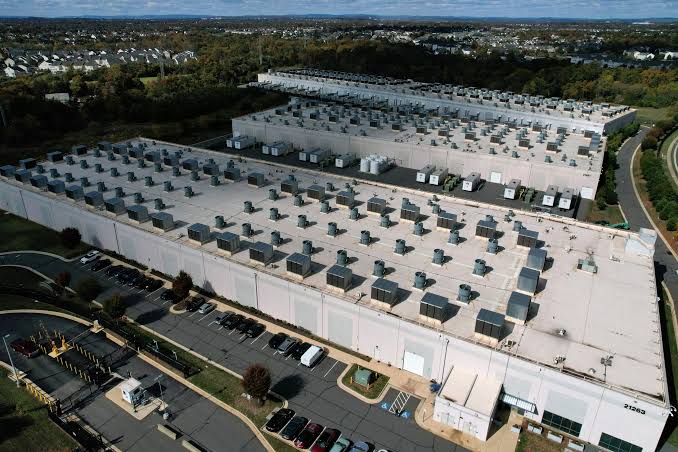
Banks and institutional investors are becoming increasingly cautious about lending money to artificial intelligence companies, raising concerns about how the industry’s rapidly expanding data-centre projects will be financed.
The shift follows a sharp decline in technology stocks that reportedly erased approximately $2.5 trillion in market value from the Nasdaq 100 in a single trading session.
The sell-off has prompted lenders to examine whether the enormous amounts being borrowed for AI infrastructure are supported by reliable future income. Some are reportedly reluctant to finance additional projects even when major technology companies are involved.
Lenders Reconsider Their Exposure To AI Projects
For much of the past year, banks and private credit investors have been eager to finance companies building AI data centres and purchasing advanced computing equipment.
These projects require substantial upfront investment in specialised chips, electricity infrastructure, buildings and cooling systems.
Companies often borrow money to meet these costs, expecting future customers to generate enough revenue to repay the loans.
However, the recent market decline has raised questions about whether demand for AI services will grow quickly enough to justify the scale of spending.
Financial institutions are now examining the risks more closely before agreeing to new loans.
According to banking and credit market sources, some lenders have become reluctant to increase their exposure even when financing arrangements have support from major companies such as Google and Anthropic.
Neither company provided substantive comments on the reported change in lending sentiment.
The concern is not that every AI project is financially unsound. Rather, investors are questioning how much additional risk they should accept in a sector that already represents a substantial share of their lending portfolios.
Why AI Data Centre Financing Is Becoming Riskier
Many AI infrastructure projects involve complicated financial arrangements.
For example, a company may borrow money to buy advanced Nvidia processors and install them in a data centre.
The company then rents that computing capacity to businesses developing or operating AI models.
Its ability to repay the loan depends heavily on whether customers continue paying for those services.
Some financing agreements include guarantees from larger technology companies, making them appear safer to lenders.
However, a guarantee does not eliminate every possible risk.
Construction delays, unexpected operating expenses or changes in customer demand can still affect the project’s financial performance.
Banks are therefore examining expected cash flows, construction deadlines and the contractual rights of major customers more carefully.
One concern involves agreements that allow customers to reduce or terminate their commitments under certain conditions.
If a large customer withdraws, the data-centre operator could be left with expensive equipment and substantial outstanding debt.
Smaller AI Cloud Companies Face Greater Pressure
The tightening lending environment may particularly affect companies that specialise in renting computing capacity to AI developers.
These businesses are sometimes called neocloud providers.
Unlike large technology companies with established businesses generating substantial revenue, some neocloud operators depend heavily on borrowing and long-term customer contracts to fund expansion.
CoreWeave is among the companies facing increased scrutiny.
Its shares have fallen significantly during 2026, while the prices of its bonds have also weakened.
Another AI infrastructure company, Nebius, reportedly explored a high-yield bond offering in September before deciding against proceeding with it in October.
The company separately secured a $3.5 billion senior secured loan facility from Citigroup in October to support data-centre development and purchases of graphics processing units.
These developments illustrate how companies may continue securing financing while facing more selective investors.
The higher borrowing costs and stricter conditions could make some projects less financially attractive.
AI Borrowing Expected To Increase Despite Concerns
Despite the caution, the AI industry’s financing requirements remain enormous.
Goldman Sachs Research estimates that global debt issuance by major cloud infrastructure providers could reach approximately $420 billion in 2027.
That would represent an increase of more than 60% from its estimated $250 billion in 2026.
Meanwhile, borrowing costs for some major technology companies have increased relative to safer benchmark investments.
The development matters because higher financing costs can eventually affect how quickly companies build new data centres and expand computing capacity.
The Bank of England had already warned in September that rapidly increasing AI-related borrowing could create vulnerabilities in financial markets.
Its concerns included complicated financing structures and the possibility that expectations about future AI earnings could prove overly optimistic.
The latest reports suggest that some of those concerns are now influencing lending decisions.
However, there is no evidence that the entire AI financing market has stopped functioning. Large technology companies continue investing heavily, while lenders remain willing to support projects that demonstrate dependable revenues and manageable risks.
What This Means For You
Investors considering AI-related companies should examine their debt levels, repayment obligations and dependence on a small number of customers. Rapid growth in AI demand does not automatically guarantee that every infrastructure project will generate enough income to repay its borrowing.