
Follow us on Google News

BHUBANESWAR — The Odisha government has expressed its desire to house five baby orangutans rescued from a forest in Balasore district at the Nandankanan Zoological Park, even as Indonesia has staked a claim over the rare primates without providing documentary proof of their geographic origin. Odisha Forest Minister Ganesh Ram Singh Khuntia stated on Sunday that while the Indonesian government has submitted a routine claim, international wildlife trade regulations mandate that any claimant nation must substantiate that the animals originated within its borders. The minister confirmed that comprehensive details regarding the rescued animals have been submitted to the Union government for necessary diplomatic and regulatory review.
Quarantined Primates Show Steady Recovery at Nandankanan
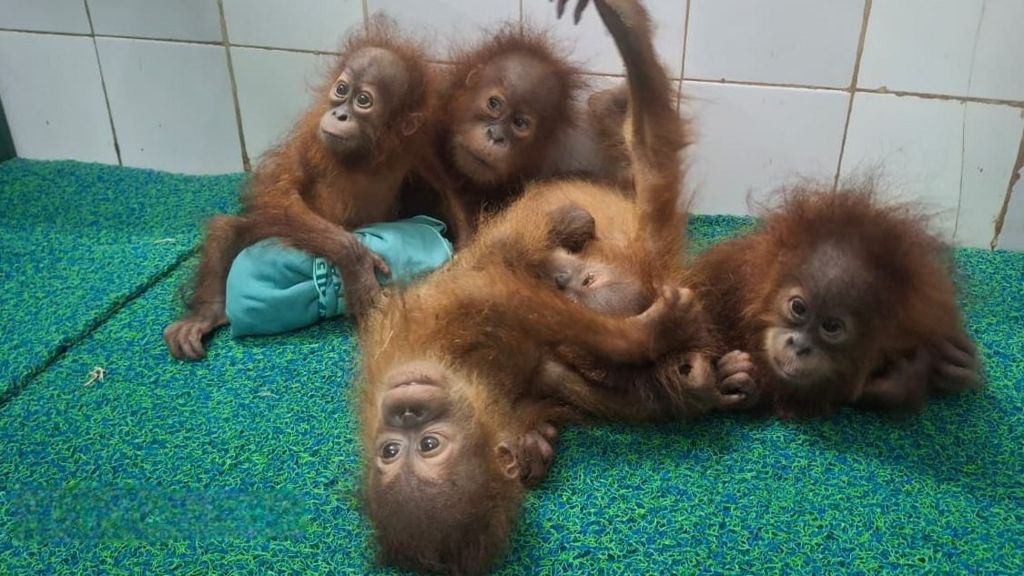
The five baby orangutans were rescued on September 8, 2026, from the Bichitrapur forest area in Balasore district and subsequently transferred to the Nandankanan Zoological Park in Bhubaneswar. Park authorities have placed them in a temperature-controlled quarantine facility to monitor their physiological well-being and allow them to acclimatize to local environmental conditions. Officials noted that the sudden transition from wild conditions into human care can induce behavioral stress, prompting continuous observation of their dietary needs, routine activities, and social dynamics.
Veterinary staff reported that the animals are healthy, growing normally, and exhibiting typical developmental behaviors, including active play, brief episodes of irritability, and a consistent tendency to cling to one another. Caretakers view this clinging behavior as a natural group coping mechanism to derive comfort and security within their new surroundings. Nandankanan previously housed a female orangutan brought from a Pune zoo in 2003, but the dedicated enclosure has remained unoccupied since her death in 2019 at the age of 41. Zoo authorities may reuse the vacant enclosure once the infants complete their mandatory quarantine and health assessments.
Authorities Demand Documentary Proof Under Trade Protocols
Addressing the international custody issue, Forest Minister Khuntia emphasized that the young primates should not be subjected to unnecessary disruptions and that the state wishes to keep them at Nandankanan, where visitors could eventually view them. However, the state government will ask Indonesia to furnish verifiable documentary evidence confirming their geographic origin. If conclusive documentation proves that the orangutans were brought illegally from Indonesian territory, authorities will consider repatriating them in accordance with established international wildlife conventions.
Orangutans rank among the most vulnerable and endangered primate species globally, with their natural distribution limited to parts of Southeast Asia. Encroachment, deforestation, and illicit commercial capture have placed severe pressure on wild populations, making the discovery of five infants inside an Indian forest a matter of grave conservation concern.
Joint Enforcement Agency Probes Trafficking Nexus
A combined investigative team comprising the Odisha Police Special Task Force and the Wildlife Crime Control Bureau is conducting a thorough inquiry into the incident. The joint investigation seeks to reconstruct the transit route taken by the perpetrators, identify those who abandoned the infants in the Bichitrapur forest, and establish whether an organized transnational wildlife smuggling syndicate facilitated their illegal entry into India. The final decision regarding the custody and long-term future of the animals remains contingent on the outcome of the ongoing criminal inquiry and whether any claimant country can furnish concrete proof of origin under international law.