Follow us on Google News

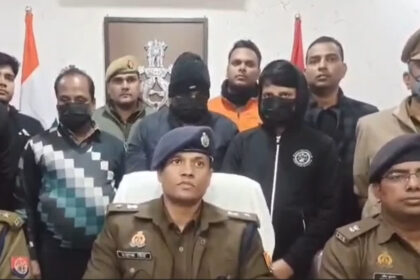
Ghaziabad Police have uncovered a large-scale illegal pharmaceutical network operating across the National Capital Region (NCR), allegedly supplying codeine-based cough syrups, banned under the Narcotic Drugs and Psychotropic Substances (NDPS) Act.
A total of eight individuals have been arrested, including Saurabh Tyagi, the treasurer of the Ghaziabad Chemist and Druggist Association.
During the raids, police seized over 150,000 bottles of the banned syrup, estimated to be worth around ₹3 crore in the illicit market.
https://the420.in/centre-for-police-technology-launched-as-common-platform-for-police-oems-and-vendors-to-drive-smart-policing/
The Dangerous Nexus Between Legal Trade and Illicit Distribution
Investigations revealed that Tyagi, a licensed pharmacist from Makanpur, had built a sophisticated network linking legitimate pharmaceutical supply chains with black-market distributors.
He allegedly purchased large consignments of syrup from authorized wholesalers and later resold them to illegal dealers under the guise of “returned stock” or “repackaged consignments.”
According to police sources, the network spanned Delhi, Meerut, and Varanasi, involving transport operators and warehouse managers. The consignments were smuggled in trucks concealed beneath industrial lime sacks to evade inspection.
How the Operation Functioned
Police investigations show that the operation originated in industrial zones, where fake documents were used to procure large quantities of codeine syrup. These consignments were repackaged and shipped to smaller distributors.
To maintain a façade of legality, the traffickers attached forged invoices, counterfeit bills, and falsified transport documents to each shipment, labeling them as “medical supplies” or “routine cargo.”
The racket came to light when a truck was intercepted in Sonbhadra, prompting simultaneous raids in Meerut, Ghaziabad, and Noida, which led to the network’s exposure.
Major Seizures and Arrests
Police seized two trucks, two containers, a car, ₹20 lakh in cash, 10 mobile phones, fake IDs, and forged SIM cards. Authorities also recovered fake drug licenses and suspicious banking documents linked to money laundering.
Officials suspect that the network’s connections may extend to Bangladesh and Nepal, raising concerns that this could be part of a broader cross-border narcotics trade.
Abuse of Authority: When Professional Trust Turns into Exploitation
The most alarming aspect of the case is that the primary accused, Saurabh Tyagi, held a position of trust as the treasurer of the Ghaziabad Chemist and Druggist Association.
Association sources described Tyagi as a “trusted and active member,” which allowed him to use his professional standing to lend legitimacy to his illicit operations.
A senior police official commented:
“This was a well-structured criminal enterprise operating under the cover of legitimate pharmaceutical trade. The case exposes glaring loopholes in regulatory oversight and how easily legal pharma channels can be exploited for drug trafficking.”
Financial and Legal Action Underway
Police have begun tracing the financial transactions linked to the racket. Bank accounts suspected of holding drug proceeds are being frozen.
The case has been referred to the Narcotics Control Bureau (NCB) and the State Drug Control Department for prosecution under the NDPS Act and the Drugs and Cosmetics Act.
This case highlights the fragile boundary between legitimate pharmaceutical trade and narcotic crime in India’s vast medical supply ecosystem.
When licensed professionals and trade associations themselves become complicit, it points not only to an enforcement failure but also to a deeper ethical collapse within the healthcare economy.
“When profit begins to outweigh public health, regulation becomes irrelevant — and medicine ceases to heal; it begins to harm.”