
Follow us on Google News

The founder of messaging platform Telegram, billionaire entrepreneur Pavel Durov, has made an extraordinary announcement on inheritance and sperm donation that has triggered intense discussion across the worlds of technology, bioethics and law. Durov has said that children born through his sperm donations will be entitled to an equal share of his estimated $17 billion fortune—provided they can prove their biological relationship through DNA testing.
According to international media reports and recent interviews, the 41-year-old Russian-born tech entrepreneur has contributed to the birth of more than 100 biological children across at least 12 countries over the past decade, all through sperm donation. Durov maintains that the decision is not a publicity move but an attempt to create a transparent, future-oriented inheritance framework.
How the sperm donation journey began
Durov has said that he began donating sperm around 2010, initially to help a close friend conceive a child. Over time, the process became more structured and expanded internationally. He later started anonymous sperm donations at Moscow-based AltraVita Fertility Clinic, from where the programme gradually extended to multiple countries.
Reports indicate that in the summer of 2024, the clinic launched an unusual marketing campaign, describing Durov’s biological material as having “high genetic compatibility.” As part of this initiative, women below the age of 37 were offered free IVF (in-vitro fertilisation)—a move that intensified public scrutiny and debate.
Legal safeguards and participant profile
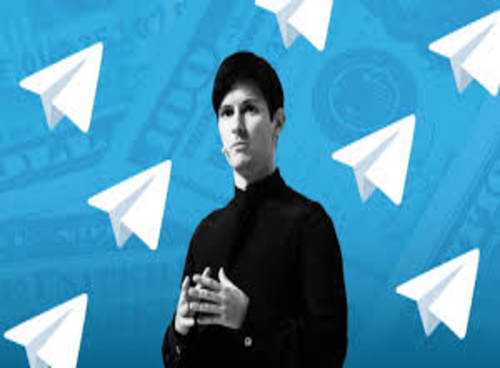
A former doctor associated with the clinic said that, to avoid legal complications, participation was restricted to unmarried women. The doctor added that most participants were well-educated and physically healthy. The clinic’s website reportedly displayed Durov’s photograph alongside the Telegram logo, promoting his sperm as being “in high demand”—a detail that later drew criticism for blurring ethical boundaries.
DNA verification as a mandatory condition
In interviews with a French magazine and later on the Lex Fridman Podcast, Durov made it clear that inheritance rights would apply only after DNA verification.
“As long as they can prove shared DNA with me—perhaps 30 years from now, after I’m gone—they will have the right to an equal share of my estate,” he said.
According to Forbes, Durov’s net worth is estimated at $17 billion, much of it linked to Telegram. He has previously indicated plans to eventually transfer the platform to a non-profit foundation. In addition, reports suggest he owns an undisclosed amount of Bitcoin purchased in 2013.
Hint at ‘open-sourcing’ DNA
Following the announcement, Durov said he received thousands of messages from individuals claiming to be his biological children. He has hinted at the possibility of “open-sourcing” his DNA in the future, allowing biological offspring to identify and connect with one another—an idea that has raised serious questions around privacy, consent and genetic security.
Linking the move to a global sperm crisis
Durov has framed his actions as a response to what he calls a global health challenge—the declining availability of healthy sperm and rising rates of male infertility worldwide. In a 2024 post, he wrote that the shortage of healthy sperm is becoming a serious issue and said he was “proud to contribute” toward addressing it.
This DNA-verified inheritance model is far more than a story about wealth distribution. It raises complex questions at the intersection of technology, bioethics, family structures and inheritance law. While supporters describe it as a transparent and modern approach, critics see it as a legally and socially fraught experiment. What is certain is that this fusion of biological identity and digital-era wealth will remain a subject of global debate for years to come.