
Follow us on Google News

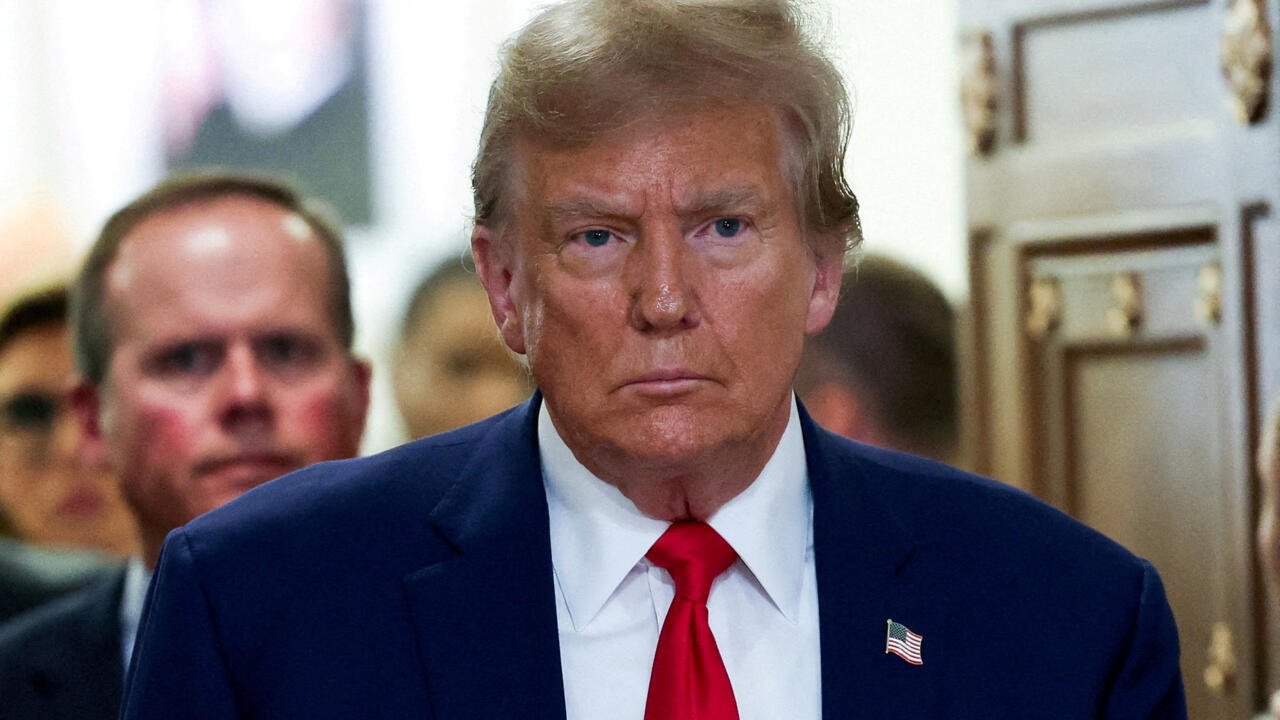
Washington/London: US President Donald Trump has filed a ₹40,000-crore defamation lawsuit against Britain’s public broadcaster BBC, accusing it of deliberately misrepresenting his remarks in a documentary to portray him as inciting violence. The suit has been filed in a federal court in Miami, escalating Trump’s long-running confrontation with major international media organisations.
Speaking to reporters at the White House, Trump said the broadcaster had “put words in my mouth that I never said.” He alleged that selective editing and sequencing of his remarks altered their meaning, falsely linking him to the January 6, 2021 US Capitol violence—a charge he has consistently denied.
Core of the Documentary Dispute
The lawsuit centres on a BBC Panorama documentary that aired selected excerpts from Trump’s speech delivered shortly before the Capitol breach. According to Trump’s legal team, the programme stitched together phrases from different parts of the speech, including “walk to the Capitol” and “fight with everything you have,” to imply a call for violent action.
Trump maintains that phrases such as “fight like hell” were rhetorical and political, not literal. His lawyers argue that the documentary omitted portions of the same speech in which Trump urged supporters to act peacefully and lawfully, thereby stripping the remarks of context and intent.
https://the420.in/fcrf-certified-grc-professional-program-governance-risk-compliance-training-india/
BBC Admits Error, Declines Compensation
In November, BBC chairman Samir Shah acknowledged that an edited clip used in the 2024 Panorama episode created a misleading impression of Trump’s remarks. Following an internal review, the broadcaster issued a public apology, withdrew the programme from its platforms, and announced corrective editorial steps.
However, the BBC refused to offer financial compensation. Sources say Trump initially sought damages of about ₹8 crore, later escalating the claim sharply to ₹40,000 crore, prompting the filing of the lawsuit.
Allegation of Deliberate Reputational Harm
Trump’s lawyers contend that the BBC’s actions were deliberate and malicious, aimed at damaging his reputation and shaping the political narrative in the United States. The filing alleges the broadcaster proceeded with the edited content despite knowing it could mislead viewers, and points to what it calls a pattern of adversarial coverage of Trump by the BBC over several years.
High Legal Threshold for Public Figures
Legal experts note that defamation cases involving public figures face a stringent standard under US law. Trump must prove “actual malice”—that the BBC knowingly published false information or acted with reckless disregard for the truth—a threshold set by US Supreme Court precedent and widely regarded as difficult to meet.
The case also raises jurisdictional questions, as the documentary was not broadcast in the United States and was reportedly geo-blocked for US audiences, complicating arguments around demonstrable harm within US courts.
History of Media Litigation
Trump has a long record of legal confrontations with major media outlets. In recent years, CBS and ABC have opted for out-of-court settlements in defamation-related disputes. Lawsuits involving the New York Times and the Wall Street Journal, with claims running into thousands of crores, are also reported to be ongoing.
What Lies Ahead
The case is at an early stage, with the BBC yet to file its formal response in the Miami federal court. Observers say the lawsuit could become a significant test of editorial discretion, contextual editing, and defamation law, especially where political speech and documentary journalism intersect.
Beyond the courtroom, the dispute is expected to reignite debate on media accountability, the ethics of editing politically charged material, and the legal risks involved in interpreting public speeches.