
Follow us on Google News

A retired civic official from Mumbai has fallen victim to a meticulously planned cyber fraud, losing ₹16.5 lakh after fraudsters impersonating officials from national security agencies falsely linked him to a fabricated Delhi bomb blast case, police said.
The fraud took place in December when the senior citizen received a threatening phone call claiming that his bank account was under investigation for alleged money laundering linked to a terror case. The callers introduced themselves as officers from central agencies and warned him of immediate arrest if he failed to cooperate.
According to the police complaint, the first call was received on December 11, during which the victim was accused of having financial links to a Delhi bomb blast conspiracy. To make the threat appear credible, the fraudsters instructed him to download the Signal messaging application, claiming that further communication would take place through a secure channel.
Certified Cyber Crime Investigator Course Launched by Centre for Police Technology
Soon after, the victim received a video call from a person impersonating an officer of the National Investigation Agency (NIA). The caller appeared in official attire and spoke authoritatively, informing the victim that his bank accounts and investments were under scrutiny for suspected money laundering.
The fraudsters told the retired official that his assets needed to be “verified” to establish whether his deposits and investments were from legitimate sources. He was assured that the money would be returned after verification, while being repeatedly warned that failure to comply could lead to immediate arrest and prosecution.
Under sustained pressure and fearing arrest, the victim transferred ₹16.5 lakh to multiple bank accounts shared by the callers. Soon after the transfers were completed, the fraudsters stopped responding to calls and messages, prompting the victim to realise that he had been cheated.
An FIR has been registered, and police are analysing the bank account trails and working to identify those involved in the fraud.
Surge in ‘digital arrest’ frauds
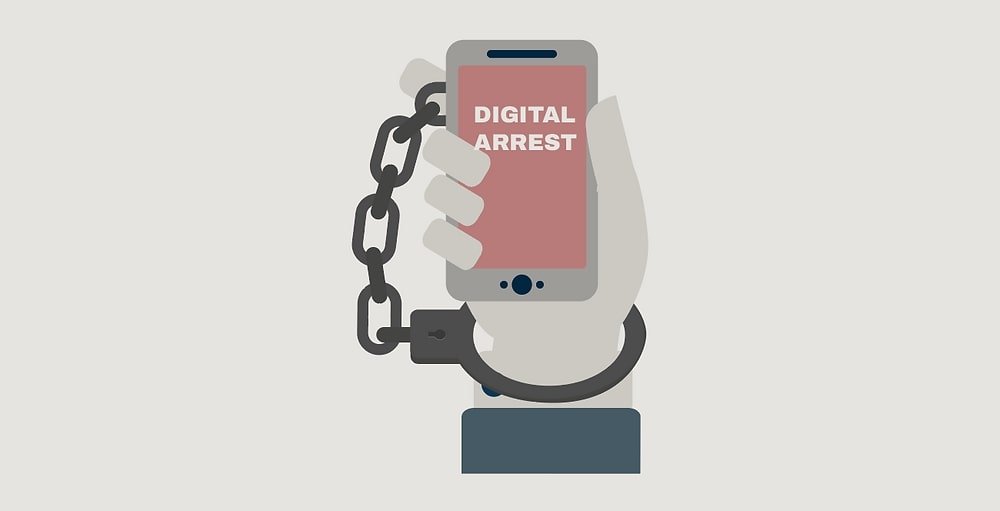
Police officials said the case highlights the sharp rise in ‘digital arrest’ scams, a cybercrime pattern in which fraudsters impersonate law enforcement or central agencies to intimidate victims into transferring money.
In such cases, victims are falsely accused of involvement in serious crimes such as terrorism, drug trafficking or money laundering. Fraudsters often claim that arrest warrants have been issued or bank accounts are about to be frozen, creating panic and pushing victims into hurried financial decisions.
Investigators said criminals increasingly rely on encrypted apps, fake video calls, forged documents and scripted conversations to make the deception appear authentic.
“These crimes are entirely driven by fear and urgency,” an official said. “Once panic sets in, victims stop questioning the process.”
FCRF flags organised cybercrime syndicates
According to the Future Crime Research Foundation (FCRF), digital arrest scams are now being run by organised cybercrime syndicates operating across states and, in some cases, internationally.
FCRF has flagged that senior citizens are emerging as the most vulnerable group, as criminals exploit their respect for authority, fear of legal consequences and limited familiarity with evolving cybercrime techniques.
The foundation said such cases are no longer isolated incidents but part of a structured ecosystem involving impersonation, mule accounts and rapid diversion of funds.
Prof Triveni Singh explains psychological manipulation
Former IPS officer and nationally renowned cybercrime expert Prof Triveni Singh said the use of terror-related narratives and central agencies is a calculated psychological strategy.
“Fraudsters deliberately invoke agencies like the NIA or ATS and link victims to bomb blasts or money laundering to shut down rational thinking,” Singh said. “Once fear takes control, verification stops.”
He underlined that no investigative agency in India conducts arrests, interrogations or financial verification through video calls or messaging apps. Singh added that fraudsters often keep victims engaged continuously for hours to isolate them from family members or external advice.
“The moment fear overwhelms logic, the crime succeeds,” he said.
Senior citizens on the radar
Police said retired officials and elderly citizens are being selectively targeted as they are perceived to have savings, pensions and fixed deposits, while being relatively less aware of emerging cyber fraud techniques.
Investigations have also revealed that fraudsters use publicly available information to profile victims, making calls appear personalised and credible.
Probe underway
Authorities are analysing transaction trails and digital evidence to identify beneficiaries and determine whether the fraud is linked to a larger cybercrime network.
Police said cybercriminals are constantly refining their methods, with frauds invoking national security or terrorism increasingly being used to exploit fear and compliance.
About the author – Rehan Khan is a law student and legal journalist with a keen interest in cybercrime, digital fraud, and emerging technology laws. He writes on the intersection of law, cybersecurity, and online safety, focusing on developments that impact individuals and institutions in India.